



Relief Carved Stoneware
Relief carved stoneware pieces are robust vessels and planters shaped in dense ceramic, offering tactile surface ornament that rewards close handling.
Relief Carved Stoneware
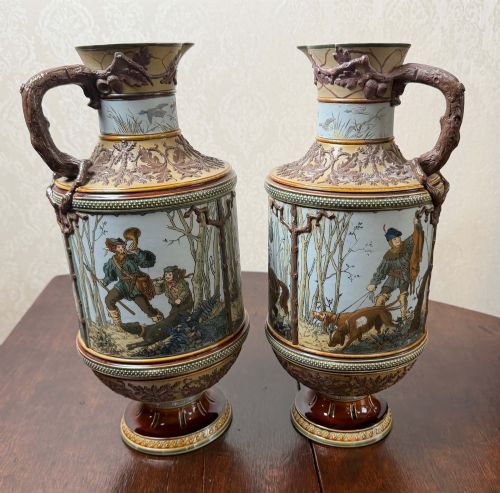
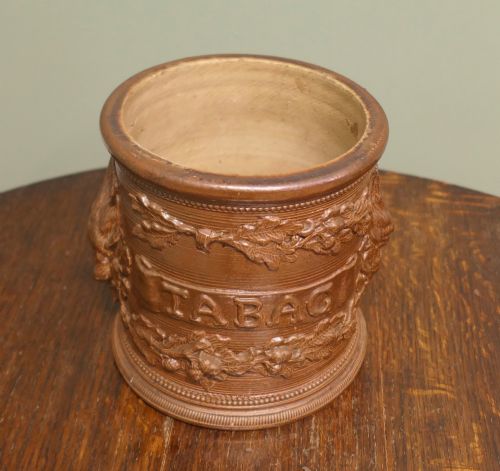
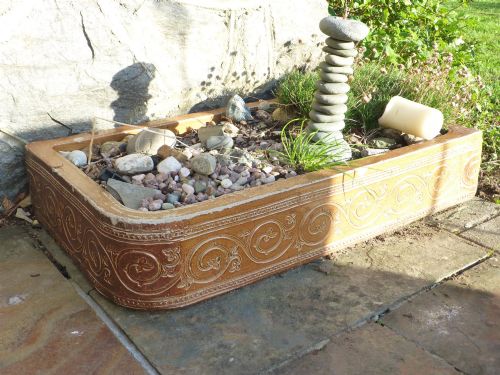
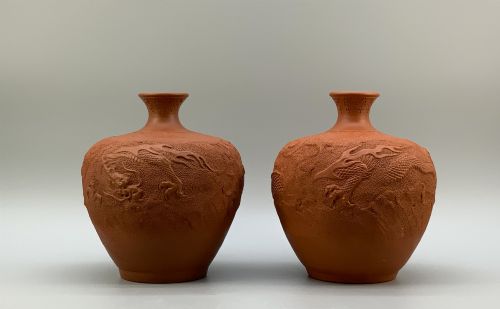
Relief carved stoneware objects on this page encompass functional vessels, jardinieres and planters spanning the nineteenth and early twentieth centuries. These items reflect diverse global traditions, including German salt glazed pitchers, Japanese red clay vases and English commemorative jugs.
The most frequent examples encountered here are robust pitchers, jugs and decorative planters that utilise dense, vitreous ceramic bodies. Makers applied surface ornament either by incising the raw clay before firing or through applied sprigged reliefs.
Originating from British workshops like Doulton Lambeth alongside continental and Asian kilns, these objects serve as both utilitarian containers and decorative centrepieces. Collectors seek them for their enduring durability and the rich variety of their textured surface motifs.
How they were made
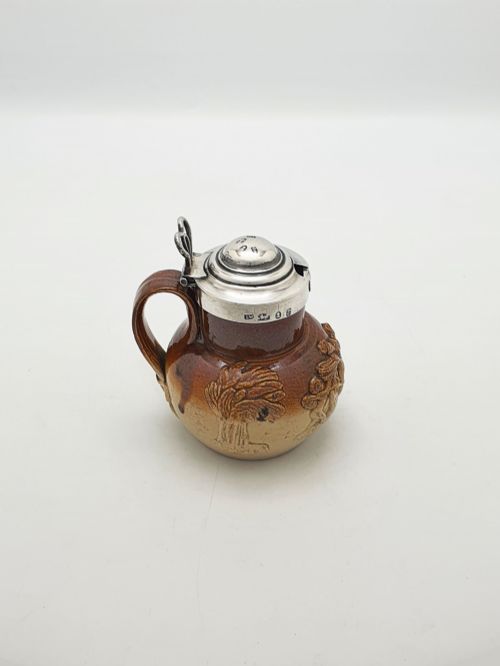
Makers shaped these pieces primarily from dense stoneware and red clay bodies, often applying salt glazing during the high-temperature kiln firing to produce a distinctive orange-peel texture. Some forms incorporate supplementary elements such as sterling silver collars and hinged lids fitted securely to the ceramic neck.
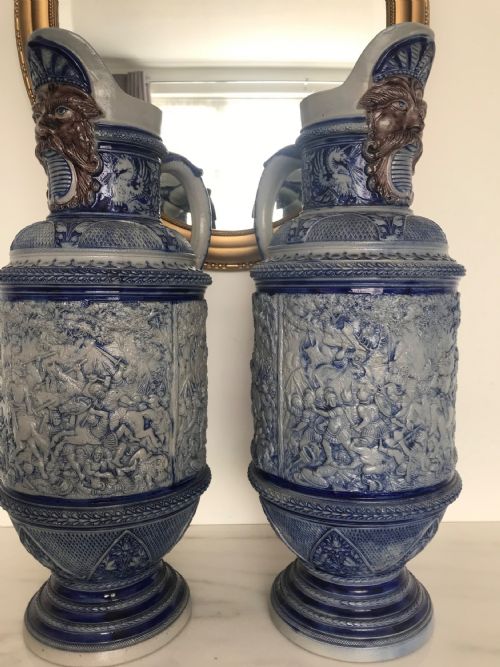
Surface ornament relies on incised carving into the leather-hard clay or the application of separate moulded motifs in contrasting colours, as seen in jasper ware productions. Cobalt blue pigments frequently highlight the incised Roman battle scenes and floral patterns on German salt glazed vessels.
Relief Carved Stoneware Retail Price Guide 2026
Typical asking prices for relief carved stoneware among the pieces listed under this phrase on Sellingantiques today, from the lower quarter to the upper quarter. They describe what is for sale here now, not the wider market.
Roman battle scenes march tirelessly around nineteenth-century German jugs, proving miniature warfare fits comfortably on the dinner table.
What varies in quality
Quality in these items rests upon the crispness of the carved or moulded surface detail and the precision of the potter's initial throwing. Pieces with deeply undercut ornament and clean, sharp lines demonstrate superior craftsmanship compared to softer, blurred impressions.
The integration of secondary materials, such as well-fitted sterling silver mounts and crisp salt glazing, distinguishes finer studio and factory productions from standard utilitarian wares.
Simon Peter Gerz·Doulton Lambeth·Wedgwood·Makuzu Kozan II
The Relief Carved Stoneware Glossary
- Stoneware
- A robust, vitrified ceramic fired at high temperatures until non-porous. It resists moisture entirely without requiring a traditional glaze.
- Salt-Glazed Stoneware
- Ceramic finished by throwing common salt into the kiln during firing, which reacts with the silica to form a glossy, textured surface. This technique produces a durable finish resembling orange peel.
- Jardiniere
- A large ornamental pot or stand designed to hold a growing plant or floral display. These vessels often feature prominent relief carving around the exterior body.
- Sprigged Relief
- A decorative technique where separately moulded clay motifs are applied to the surface of a vessel before firing. This method builds up tactile, three-dimensional designs.
Relief Carved Stoneware: Frequently Asked Questions
What is relief carved stoneware?
Relief carved stoneware comprises ceramic vessels and planters adorned with raised or incised surface patterns shaped directly into the clay body before firing. These pieces combine utilitarian strength with intricate sculptural ornamentation.
Makers across Europe and Asia utilised this medium to produce everything from salt-glazed pitchers to decorative jardinieres. The resulting objects display lasting durability alongside varied textures.
How do I care for antique stoneware?
Clean antique stoneware gently using lukewarm water and a soft cloth to protect the ceramic body and any applied relief details. Avoid harsh chemical cleaners that might damage historical salt glazes or porous clay.
Inspect any metal mounts, such as silver collars, to keep them dry and prevent tarnishing. Proper placement away from direct heat sources helps preserve the structural integrity of the piece.
How do I identify salt glazing?
Salt glazing exhibits a slightly pebbled texture reminiscent of orange peel across the surface of the stoneware vessel. This finish occurs when salt vaporizes inside the kiln during high-temperature firing.
The resulting glaze bonds directly with the clay body, creating a durable sheen that resists weathering. This characteristic helps distinguish traditional salt-glazed pieces from smooth, dipped earthenware.
Were these vessels used daily?
Many of these pieces served practical functions in domestic and social settings, including holding water, serving liquids or storing provisions. Robust materials like stoneware made them ideal for everyday utilitarian demands.
Other examples, such as commemorative jubilee jugs or decorative window planters, were created primarily for display. Their survival reflects both their sturdy construction and their aesthetic appeal.