
Victorian Sterling Spoon
A victorian sterling spoon brings nineteenth-century silverwork to the table through serving pieces, caddy spoons, and fitted presentation sets.
Victorian Sterling Spoon
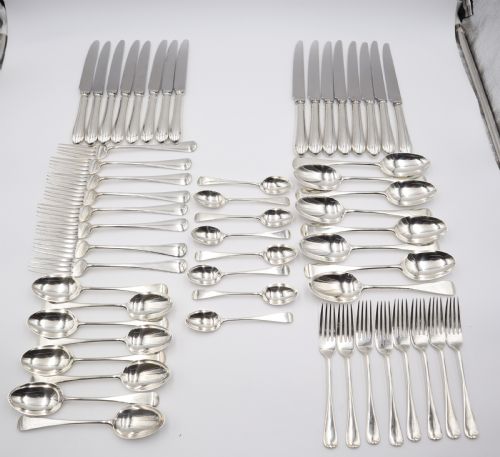
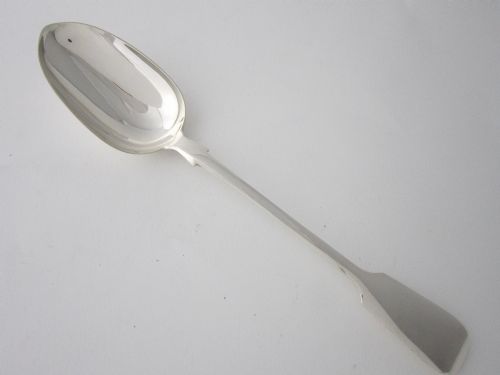
The victorian sterling spoon covers a broad array of domestic silver originating from nineteenth-century Britain. Pieces range from single caddy and jam spoons to matched serving pairs and comprehensive cutlery sets.
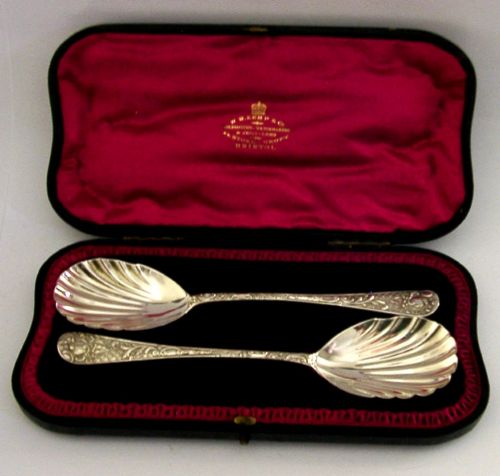
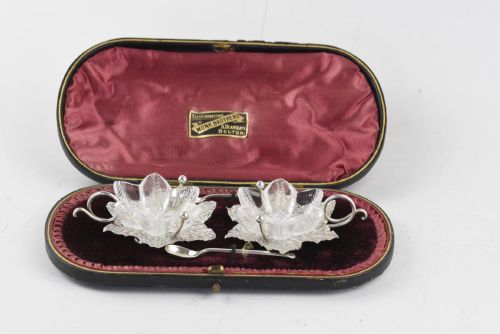
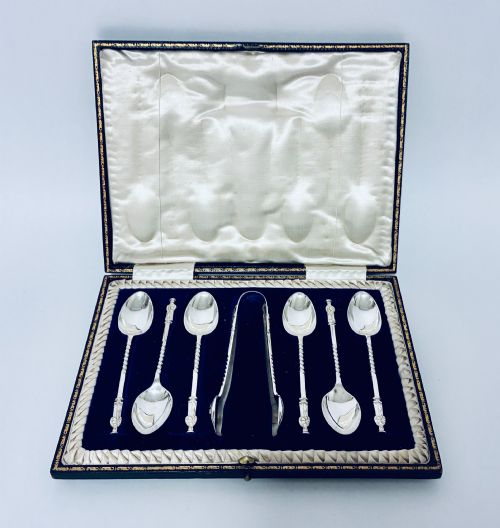
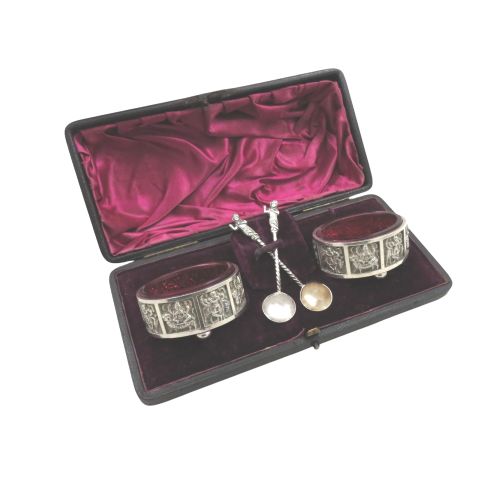
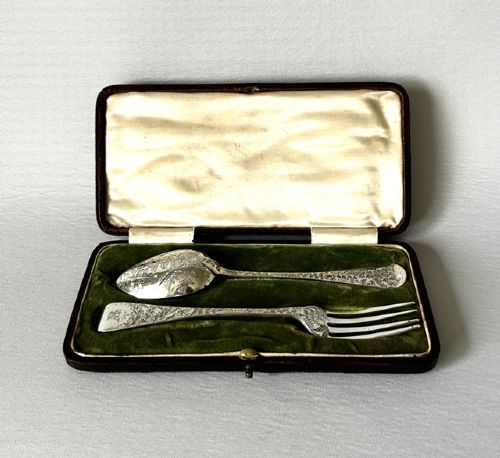
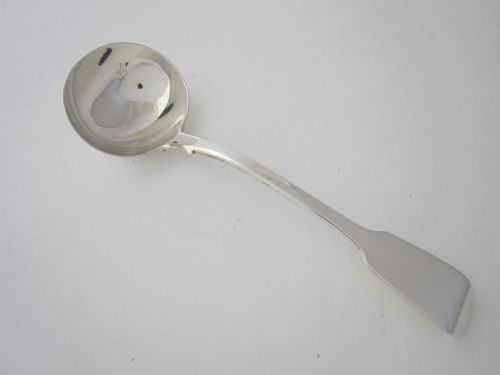
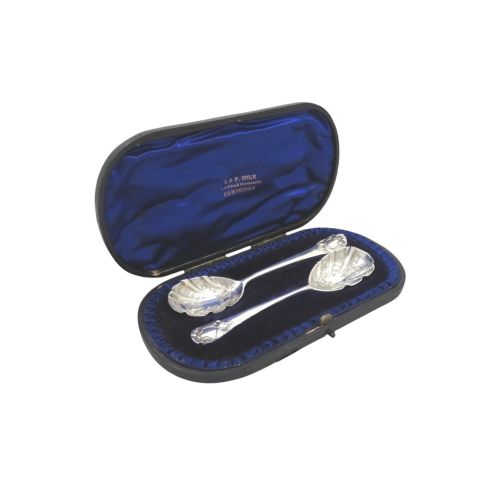
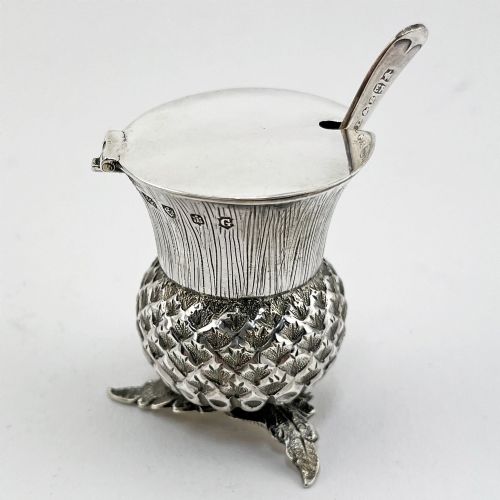
Buyers encounter specialised forms including berry spoons, sugar sifters, mustard ladles, and marrow scoops alongside standard flatware. Many surviving examples emerge within fitted presentation cases lined with velvet, silk, or satin.
Origins span provincial makers in Scotland and regional English assay offices as well as major London workshops. Design influences draw from early Georgian traditions through the Aesthetic Movement and Victorian Rococo Revival.
Materials and Technique
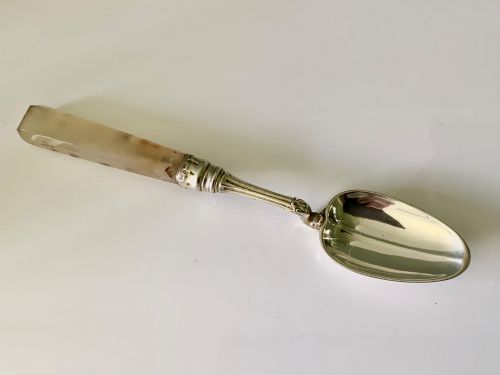
Items are formed primarily from solid sterling silver, frequently paired with glass liners in salt cellars or organic handles carved from agate. Presentation boxes utilise structural leather or leatherette over wooden frames.
Manufacturing combines traditional hand-hammering and piercing with cast decorative elements such as figural handles, floral motifs, and religious or mythological reliefs. Assay office hallmarks stamped directly into the metal record the exact year and place of creation.
Certain Victorian caddy spoons take the literal form of camels and birds, turning tea preparation into a small sculptural menagerie.
Assessment of Quality
Differentiation lies in the weight of the silver and the crispness of chased, engraved, or cast ornamentation upon the bowl and handle. Heavily cast figural designs and intricate pierced work represent higher tiers of craftsmanship.
The presence of original fitted cases lined with silk or velvet alters the context of survival. Matched sets and complete cased collections retain greater historical integrity than isolated utensils.
Martin Hall & Co·John Walton·Charles & George Fox·William Comyns·Hamilton & Inches
The Victorian Sterling Spoon Glossary
- Sterling silver
- A silver alloy containing 92.5 percent pure silver by weight, standardised for British tableware.
- Caddy spoon
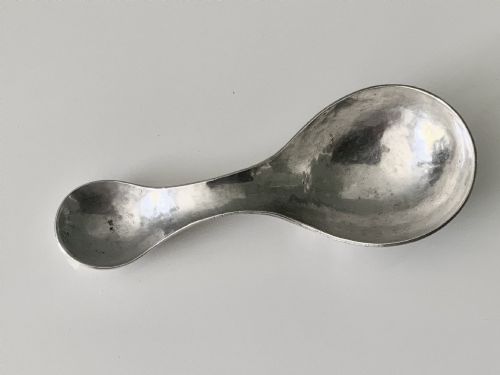
- A short-handled spoon specifically designed for measuring loose tea leaves from a caddy.
- Berry spoon
- A large serving spoon with fruit chased or repousséed onto the bowl, often produced in pairs.
- Fiddle pattern
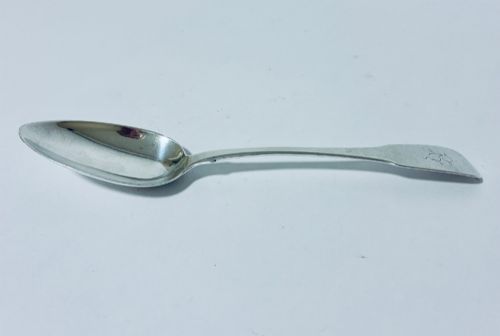
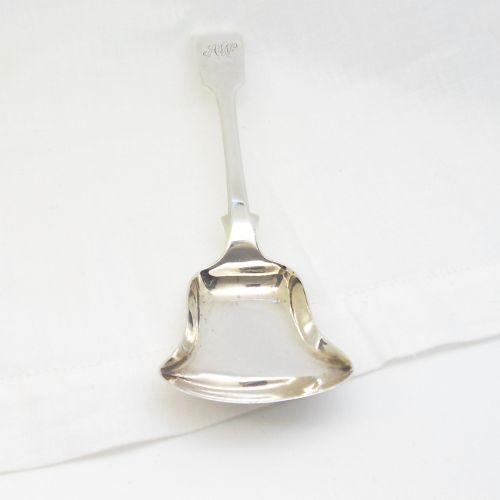
- A nineteenth-century flatware style featuring an outlined stem widening toward a squared, shoulders-peaked terminal.
- Hallmark
- A series of official marks stamped on precious metals indicating the maker, assay office, and year of testing.
Victorian Sterling Spoon: Frequently Asked Questions
What is a caddy spoon used for?
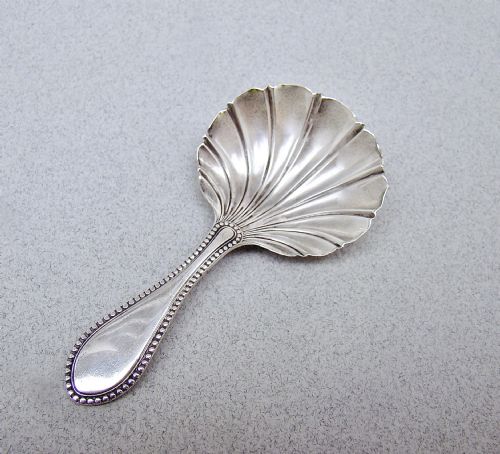
A caddy spoon measures loose tea leaves from a storage canister into a teapot. These small utensils feature wide bowls and short handles designed for tight spaces.
Victorian examples frequently display shell, leaf, or novelty motifs that distinguish them from standard flatware. They remain popular decorative items for collectors of small silver.
How do I identify a Victorian silver spoon?
Identification relies on locating the official hallmarks stamped into the metal. These marks indicate the assay office, the standard of silver, and a date letter corresponding to the year of manufacture.
Stylistic indicators such as fiddle handles or heavy cast ornamentation also point to nineteenth-century production periods.
Were these spoons meant for daily use?
Many items served specific dining functions such as serving berries, sifting sugar, or portioning mustard. Specialised forms catered to formal Victorian dining rituals and afternoon tea.
Cased sets were often presented as christening gifts or wedding presents, intended for display or ceremonial use rather than rough everyday handling.
Why are some spoons found in presentation cases?
Fitted boxes lined with velvet, silk, or satin protected delicate serving sets and christening gifts. These cases preserved multi-piece collections of spoons, forks, and tongs together.
The presence of an original leather or leatherette case often indicates a gift intended for momentous family occasions.