
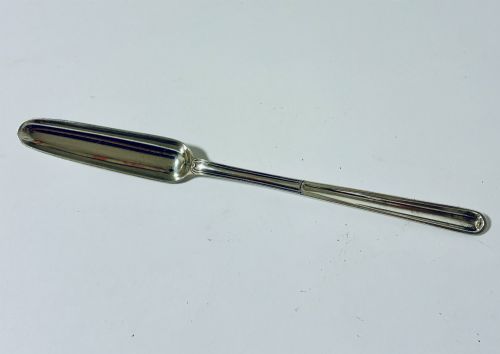
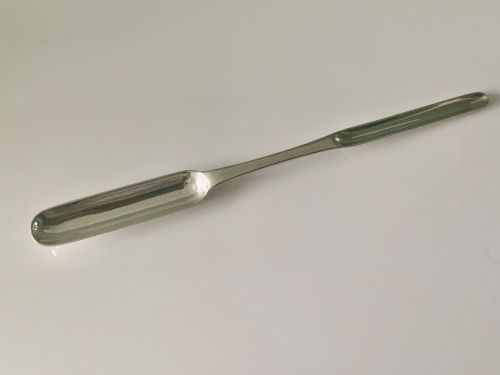
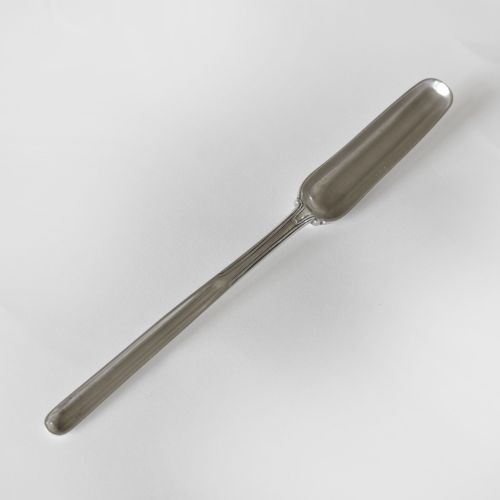
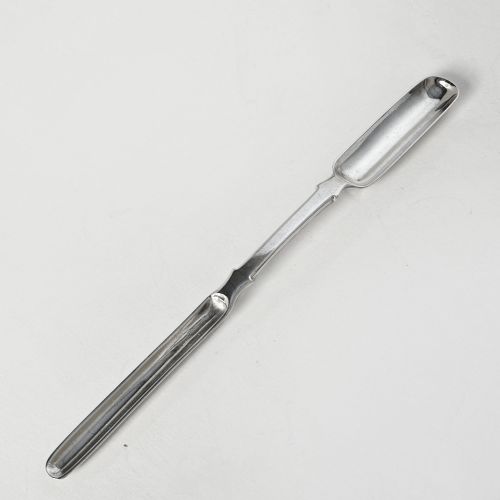
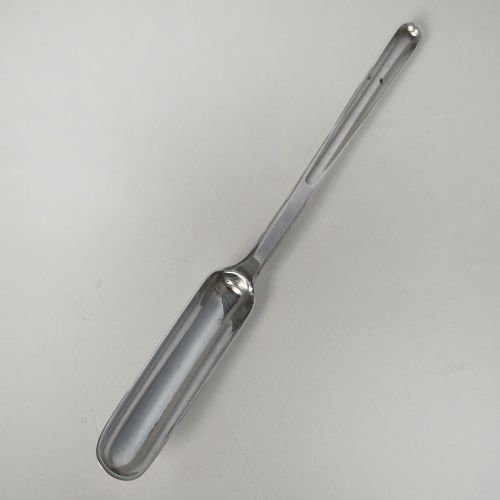


Silver Double Ended Spoon
These silver double ended spoon items span Georgian and Victorian periods, offering solid silver craftsmanship for everyday use.
Silver Double Ended Spoon
A silver double ended spoon brings together functional cutlery items such as marrow scoops and medicine spoons from past centuries. When you search for a silver double ended spoon, you encounter items shaped from sterling silver and solid silver designed for specific dining and medicinal tasks.
The selection ranges from early George II period items to later Victorian examples. Each piece demonstrates the practical domestic requirements of its original period.
Materials and methods of construction
Makers shaped these objects using sterling silver and solid silver, hammering and forming the metal to create dual-purpose bowls and scoops. The physical weight of the solid silver gives each item a substantial feel in the hand.
Makers utilised traditional silversmithing techniques to forge the long stems and dual ends characteristic of marrow scoops and medicine spoons. Assay office marks stamped into the silver record the London and Birmingham origins of manufacture.
A folding medicine spoon offered a Victorian traveller the exact dose without the rattle.
Distinctions in quality
Quality rests upon the crispness of the maker marks and the preservation of the original bowl shapes against centuries of use. Clear hallmarks from London or Birmingham provide secure attribution.
The finesse of the shaping along the narrow central stem and the balance of the double-ended design separate standard domestic items from superior examples.
Edward Power·Jonathan Hayne·Thomas Johnson·Henry Holland·George Unite
The Silver Double Ended Spoon Glossary
- Marrow scoop
- A dual-ended piece of cutlery featuring a small bowl at one end and a longer, trough-like scoop at the other for extracting bone marrow. This form represents the primary style found in the current selection.
- Medicine spoon
- A specialised spoon featuring enclosed bowls or covered sections designed to measure and administer liquid pharmaceuticals safely. Victorian examples demonstrate this specific domestic utility.
- Solid silver
- A material descriptor indicating the object is made throughout from precious metal rather than plated base metal. Pieces described this way carry full silver weight.
- Sterling silver
- An alloy comprising silver and other metals, traditionally regulated for standard quality in British cutlery and silverware. Hallmarks often confirm this standard.
- Hallmark
- A set of official marks stamped onto silver items to denote the maker, assay office, and year of manufacture. These marks date the piece precisely.
Silver Double Ended Spoon: Frequently Asked Questions
What is a silver double ended spoon used for?
These items served specific domestic functions at the dining table or in the sickroom. Marrow scoops extracted marrow from bones, while medicine spoons measured liquid doses.
The dual-ended design allowed a single implement to handle different tasks or varying quantities during meal service or medicinal preparation.
How do I identify a Georgian piece?
Georgian pieces date from the reigns of the Hanoverian kings and are identified through assay office marks and stylistic conventions. London hallmarks from the eighteenth and early nineteenth centuries frequently appear.
Examination of the typography in the maker marks and the specific form of the marrow scoop aids in determining the exact period of manufacture.
Are medicine spoons different from marrow scoops?
Medicine spoons feature enclosed or covered bowl designs intended for dispensing liquids accurately. Marrow scoops utilise open, trough-like channels tailored for solid food extraction.
Both types utilise solid silver construction but serve entirely different domestic roles within historical households.
How should I care for antique silver cutlery?
Antique silver requires gentle cleaning with appropriate silver cloths to preserve the surface finish and the integrity of the hallmarks. Avoid abrasive materials that might wear down the stamped assay marks.
Storing pieces in dry, tarnish-resistant environments protects the metal from excessive oxidation over time.