



Victorian Sterling Milk Jug
These Victorian sterling milk jug examples bring undeniable weight and polish to the tea table, rooted firmly in nineteenth-century British silverwork.
Victorian Sterling Milk Jug
A victorian sterling milk jug is a solid silver vessel designed for service alongside tea, appearing in various forms throughout the nineteenth century. Buyers searching this phrase encounter pieces ranging from simple domestic creamers to elaborate pedestal designs and components of larger tea sets.
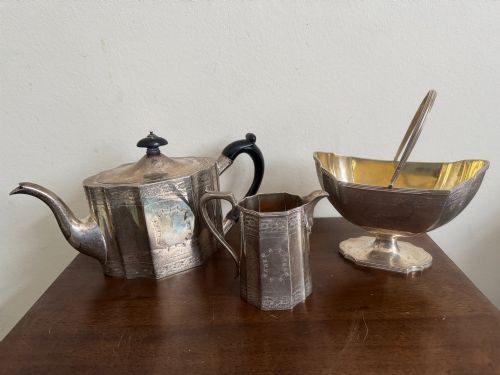
The selections available span the decades of the Victorian era, including specific dates from the mid to late nineteenth century alongside general Victorian classifications. Forms vary from standalone cream jugs to matching sugar and cream pairs and complete three-piece tea services.
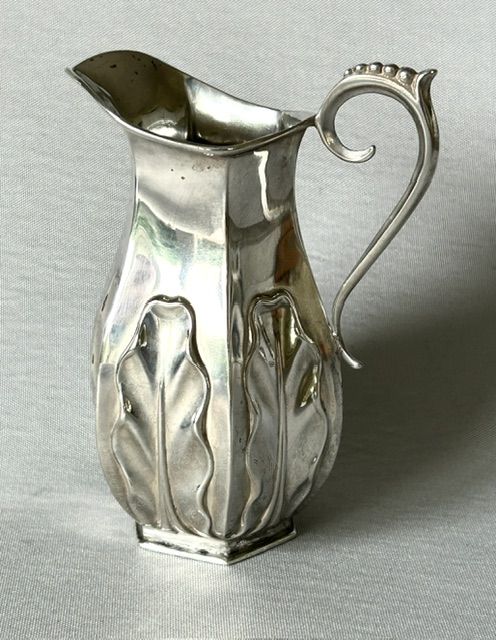
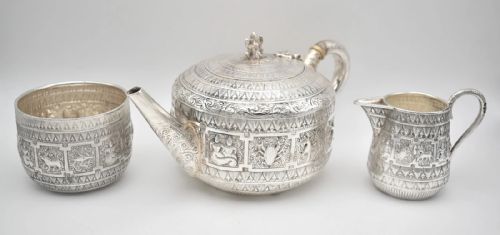
Stylistic influences across these pieces draw on traditional Victorian aesthetics, alongside distinct revivals such as rococo, naturalist designs with organic motifs, and Anglo-Indian patterns. Most examples originate from major assay offices like London and Chester, with occasional Scottish provincial pieces.
Materials and construction
Every piece in this category is wrought from solid sterling silver, utilising the official standard of silver purity enforced by British assay offices. Makers shaped these jugs through traditional smithing and casting methods, often incorporating applied handles and pedestals.
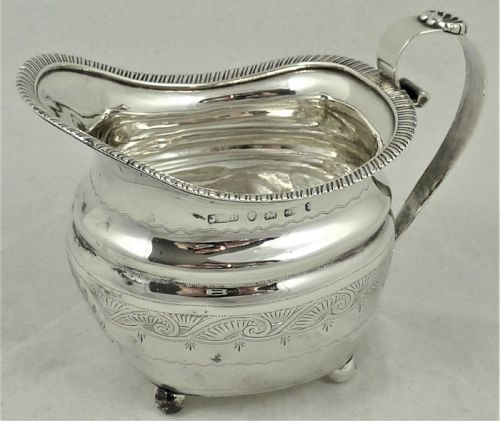
Surface decoration relies on skilled hand-chasing, repoussé work, and engraving to render the intricate naturalist, rococo, or Indianesque motifs seen on the metal. Interior surfaces occasionally feature gold gilding to protect the silver from tarnishing through contact with dairy.
Certain handles integrate contrasting materials like ebony to provide insulation and a secure grip during service. Hallmarks stamped directly into the silver record the assay town, date letter, and maker's mark for verification.
Materials appearing in current and past stock include sterling silver, ebony handles, and gold gilding.
Distinctions in craftsmanship
Quality in a victorian sterling milk jug rests on the crispness of the chasing and the weight of the solid silver used in its construction. Finer pieces display deeply rendered decorative relief and balanced proportions that maintain structural integrity without feeling overly heavy.
The distinction between standard domestic creamers and masterworks often lies in the ambition of the design, such as specialised naturalist casting or comprehensive matching tea services. Maker attribution also plays a role, with documented silversmiths commanding attention for superior finishing and design originality.
John Rawlings·George Fox·Robert Hennell
The Victorian Sterling Milk Jug Glossary
- Sterling Silver
- An alloy consisting of ninety-two point five percent silver by mass, with the remainder composed of copper or other metals. This standard guarantees the durability and intrinsic worth of antique British plate.
- Hallmark
- A series of official marks stamped on precious metals by an assay office. These punches indicate the metal standard, the city of assay, the year of manufacture, and the silversmith.
- Repoussé
- A metalworking technique where the silversmith shapes the design by hammering from the reverse side. This method creates raised ornamental motifs on the exterior of the jug.
- Pedestal
- A raised foot or stem supporting the main body of the jug. This architectural feature elevates the vessel above the table surface.
- Gilding
- A thin layer of gold applied to the interior surface of the silver jug. This historical treatment prevents the acid in milk or cream from reacting directly with the silver.
Victorian Sterling Milk Jug: Frequently Asked Questions
How do I date a silver milk jug?
Dating relies primarily on the assay office hallmarks stamped into the metal, which include specific date letters corresponding to the year of manufacture.
Stylistic cues such as rococo scrolls or naturalist flora also help narrow down the decade within the nineteenth century.
Can I use an antique silver jug daily?
Solid sterling silver stands up well to careful, regular use for serving milk or cream at the table.
Hand washing with mild soap and immediate drying keeps the silver and any interior gilding in sound condition.
What is the difference between a milk jug and a cream jug?
Milk jugs were traditionally produced in slightly larger capacities to hold the quantity of milk required for family tea service.
Cream jugs tend to be smaller vessels designed for rich cream, though the terms often overlap in antique descriptions.
How do I clean a Victorian silver jug?
Cleaning requires a specialised silver cloth or a gentle liquid polish designed specifically for antique precious metals.
Avoid harsh abrasive pastes that can wear away hand-chased details or thin the silver over time.