

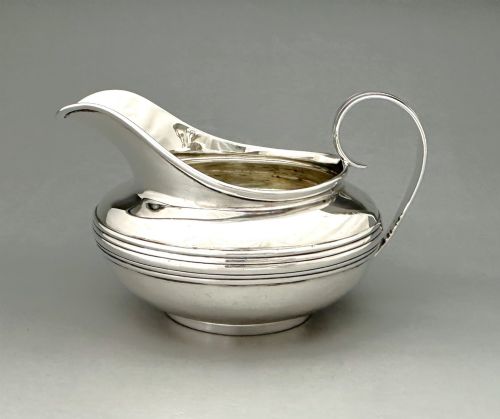
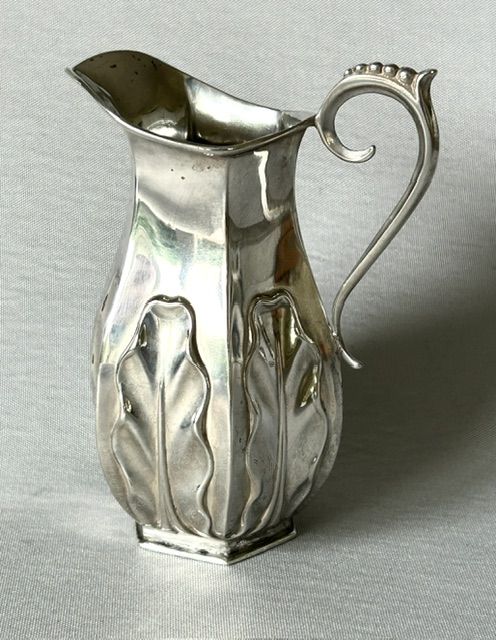


Silver Tea Service Pitcher
A silver tea service pitcher serves tea with style, bringing elegance and historic charm to the table.
Silver Tea Service Pitcher
A silver tea service pitcher represents an essential component of historical beverage sets, encompassing cream jugs, milk jugs, and hot water pots. These vessels form part of broader teaware collections and service sets spanning multiple eras.
Originating from workshops across distinct periods, these items include pedestal forms and naturalist designs alongside standard serving containers. Each vessel reflects the domestic customs and silversmithing standards of its respective era.
How they were made
Silversmiths shaped these vessels using sterling silver, solid silver, and silver plate, sometimes applying gold gilt or copper elements for interior contrast and structural support. Wood components occasionally appear in handles to insulate against heat.
Manufacturing techniques combined traditional smithing methods with period-specific decoration, ranging from plain polished surfaces to elaborate chased naturalist motifs and engraved details.
Listings feature items from the Georgian, Victorian, Edwardian, and Regency periods, using sterling silver, silver plate, gold gilt, and copper.
What varies in quality
The distinction between standard examples and superior work lies in the crispness of the hallmarking, the weight of the metal, and the balance of the spout and handle. Maker marks from notable silversmiths elevate an item's standing.
Finishing touches such as gilding interiors, the precision of chased decoration, and the integrity of soldered joints separate ordinary production from exceptional craftsmanship.
John Emes·Peter and Ann Bateman·George Fox
The Silver Tea Service Pitcher Glossary
- Sterling silver
- A silver alloy containing 92.5 percent pure silver by mass, standard for quality British plate and hollowware.
- Silver plate
- A base metal such as copper coated with a thin layer of silver, common in nineteenth-century and Edwardian tea sets.
- Hallmark
- An official stamp applied to precious metals indicating the standard of purity, the assay office, and the year of manufacture.
- Pedestal
- A raised foot or base supporting the body of a jug, frequently seen in Victorian designs.
- Gilt
- A thin layer of gold applied to the interior surface of a silver cream jug or sugar bowl.
Silver Tea Service Pitcher: Frequently Asked Questions
What is a silver tea service pitcher?
A silver tea service pitcher refers to hollowware used for pouring cream, milk, or hot water during tea service.
These vessels include cream jugs, milk jugs, and hot water pots made from sterling silver or silver plate.
How do I identify a Georgian cream jug?
Georgian cream jugs display styles characteristic of the eighteenth and early nineteenth centuries, often featuring clear hallmarks and distinct handle shapes.
Items from this period frequently show simpler classical lines or early neoclassical engraving.
What is the difference between silver and silver plate?
Solid silver pieces consist of precious metal throughout, such as sterling standard, whereas silver plate applies a thin silver layer over a base metal.
Hallmarks usually indicate whether a piece is solid silver or plated.
How should I care for antique silver teaware?
Care involves gentle cleaning with appropriate silver polish and soft cloths to preserve the metal and any engraved details.
Avoiding harsh abrasives protects both sterling surfaces and thin silver plate.