


Victorian Staffordshire Platter
A victorian staffordshire platter is a robust ceramic serving piece from the nineteenth century, prized for generous proportions and bold transfer-printed scenes that anchor a dining table.
Victorian Staffordshire Platter
A victorian staffordshire platter takes several practical forms, most frequently appearing as a large meat platter or serving dish designed for carving joints. Alongside these standard platters, listings include specialised variations such as meat drainers with integrated reservoirs and charger plates intended for display.
The periods and origins span the nineteenth century, encompassing early Victorian pieces as well as examples stretching back into the Georgian era. These items originate from English potteries, often featuring prominent topographical or exotic patterns transferred onto the clay body.
Materials and Techniques
Potters utilised earthenware, ironstone, pearlware, and stoneware to form the substantial bodies of these serving vessels. Ironstone provided particular durability for heavy daily use, while pearlware and earthenware offered a smoother base for intricate decoration.
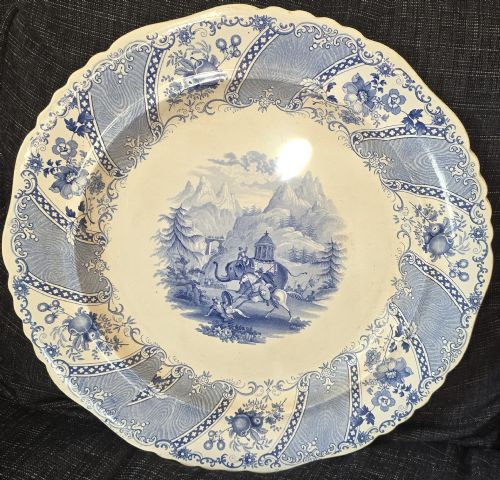
Decoration relied heavily on blue and white transfer printing, a technique where engraved copper plates transferred detailed landscape, architectural, or Chinoiserie scenes onto the ceramic surface before glazing. Enamel highlights and flow blue effects also appear, creating rich depth beneath the clear glaze.
Plates depicting the Mausoleum of Sultan Purveiz Allahabad bring an unexpectedly grand Mughal monument straight to a Victorian Sunday roast.
Judging Quality
Quality rests primarily on the crispness of the transfer print and the balance of the composition across the surface of the platter. Finer pieces show sharp, clear lines without blurring or smudging in complex patterns such as castles, cathedrals, or Chinese gardens.
The weight and stability of the ceramic body also distinguish finer examples, particularly with heavy ironstone dishes and pearlware platters featuring reservoirs. Superior potting ensures the large serving surface remains flat and even, capable of supporting heavy joints of meat without warping.
John Ridgway·Minton·Mason·Elkin Knight and Bridgwood
The Victorian Staffordshire Platter Glossary
- Transferware
- Earthenware or ironstone decorated by transferring a printed design from an engraved copper plate onto the ceramic surface. This technique allowed intricate pictorial scenes to be produced consistently on large serving platters.
- Flow blue
- A style of cobalt blue transfer printing where lime or ammonia vapour was introduced into the kiln during firing. This caused the blue pigment to blur slightly into the white glaze, creating a soft, hazy aesthetic.
- Ironstone
- A heavy, durable type of feldspathic stoneware patented in the nineteenth century. It resists chipping and cracking far better than standard earthenware, making it ideal for large meat plates.
- Meat drainer
- A ceramic insert pierced with holes or slots that sits inside a recessed well in the platter. It allowed meat juices to drain away from the joint during carving.
- Pearlware
- A refined form of earthenware developed in the late eighteenth century featuring a subtle bluish glaze that pooled in crevices. It bridged the gap between creamware and later white ironstone.
Victorian Staffordshire Platter: Frequently Asked Questions
How do I care for antique pottery?
Wash these nineteenth-century ceramics gently by hand using warm water and mild soap. Avoid modern dishwashers, as harsh detergents and high heat can damage the old glaze and enameled details.
Store large platters flat or securely upright in a stable cabinet to prevent accidental tipping. Take care with heavy ironstone pieces to protect both the dish and your countertops.
How can I date a transferware platter?
Dating relies on a combination of ceramic body type, glaze characteristics, and the style of the printed transfer. Pearlware and early earthenware bodies typically suggest earlier nineteenth-century production, while dense ironstone became more common later in the Victorian period.
Porter marks, registry diamonds, and specific named patterns like castle or cathedral views also help narrow down the decade of manufacture.
What is flow blue pottery?
Flow blue is a distinct type of nineteenth-century transfer-printed ceramic where the cobalt blue pigment purposefully bled into the surrounding white glaze. Potters achieved this effect by introducing volatile substances into the kiln atmosphere during firing.
The resulting hazy, atmospheric appearance became highly fashionable for domestic dining wares and child's service sets alike.