
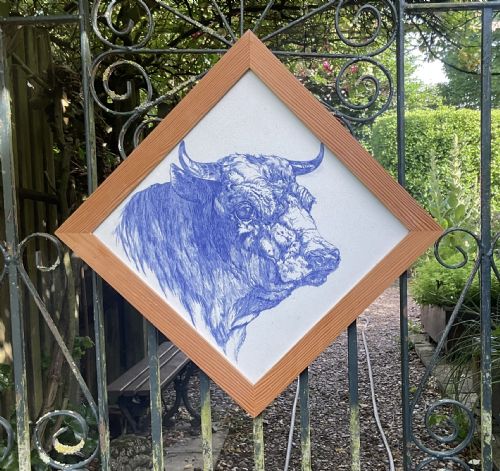


Antique Blue Printed Ceramic
Antique blue printed ceramic brings together transfer-printed tableware and decorative wares spanning the eighteenth and nineteenth centuries.
Antique Blue Printed Ceramic
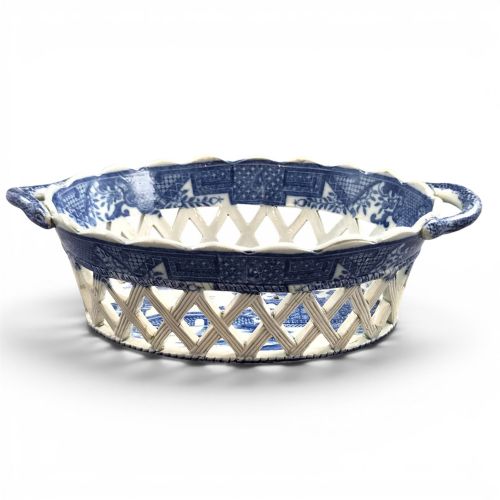
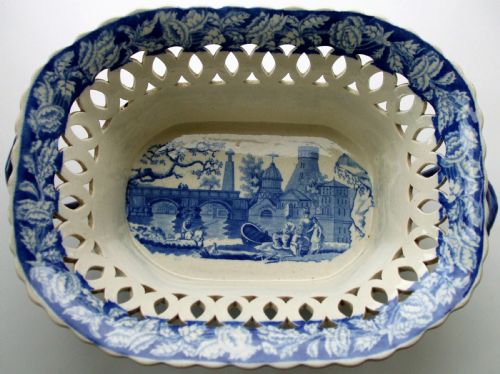
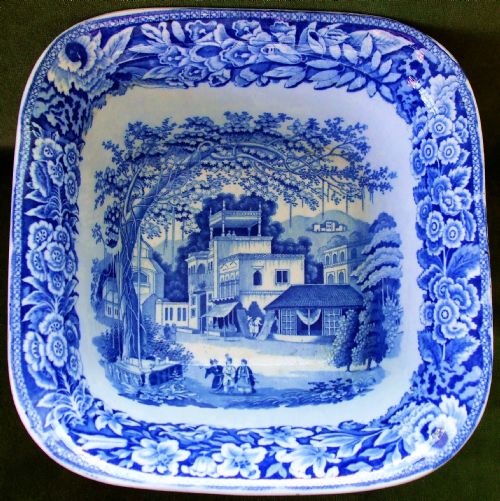
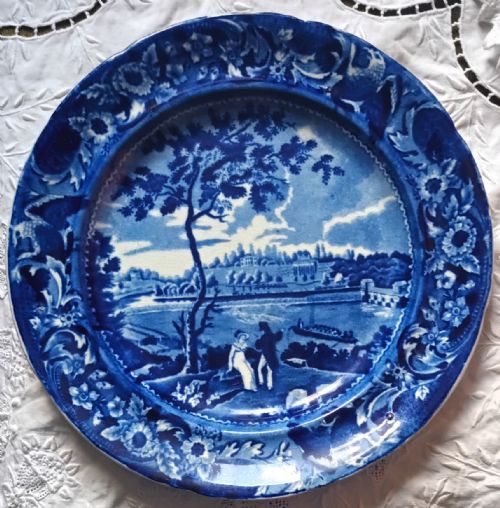
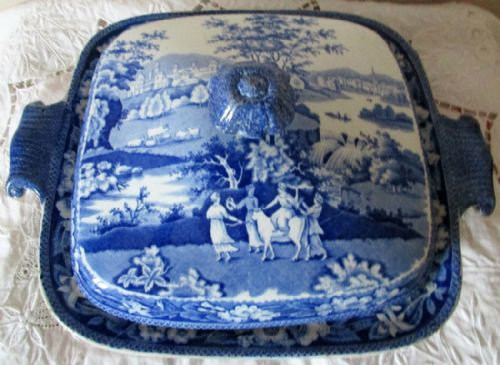
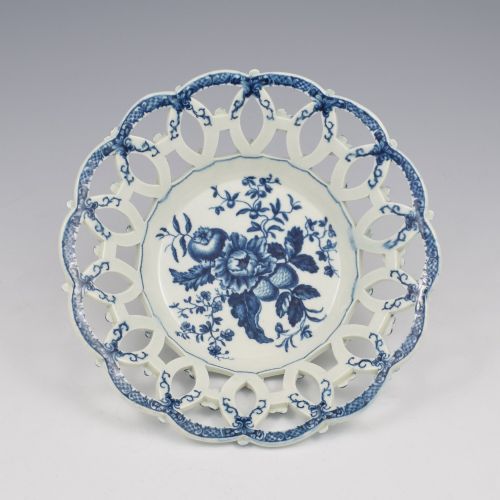
When you search for antique blue printed ceramic, you encounter domestic tableware and decorative vessels produced across British factories during the Georgian, Regency, and Victorian eras. The selection comprises plates, serving platters, tureens, chestnut baskets, bowls, jugs, and mugs decorated with cobalt pigment under a clear glaze.
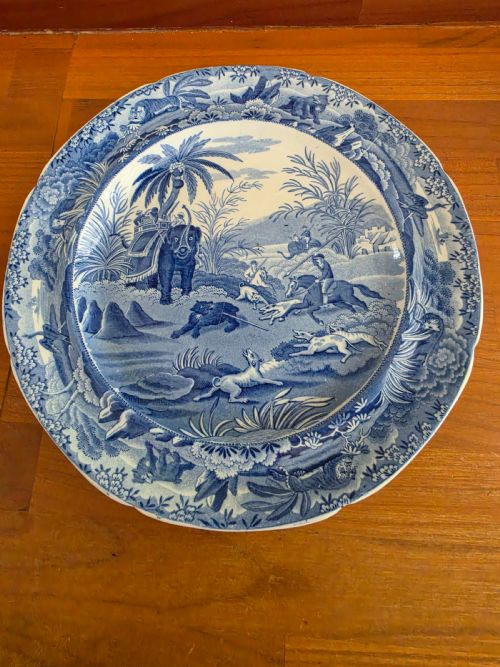
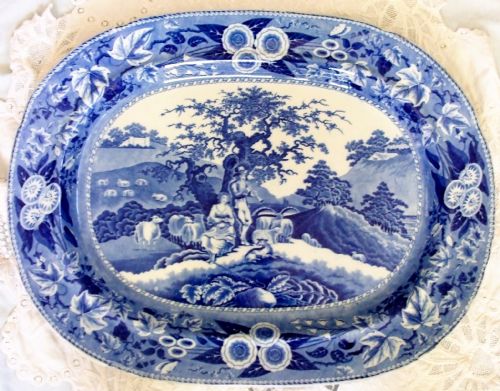
Most examples originate from nineteenth-century Staffordshire potteries, featuring pictorial scenes ranging from British landscapes and classical ruins to historical buildings and Chinoiserie motifs. Forms vary from everyday meat plates and large serving platters to specialised items like footbaths, custard sets, and soup ladles.
How they were made
Potters utilised earthenware, pearlware, and soft-paste or hard-paste porcelain as bodies, applying copper plate transfer printing to transfer intricate cobalt pigment designs onto the ceramic surface before glazing and firing. Cobalt glaze pools subtly in recessed areas, giving the blue imagery depth against the white ground.
Makers such as Spode, Mintons, Caughley, and Worcester shaped these pieces on the wheel or pressed them into moulds, creating reticulated baskets, handled mugs, and heavy platters designed to withstand daily use.
Listings feature earthenware, pearlware, and porcelain bodies decorated in cobalt glaze from the eighteenth and nineteenth centuries.
What varies in quality
Quality rests upon the clarity of the transfer print, the richness of the cobalt pigment, and the crispness of the moulded body details. Superior pieces display sharp outlines without blurred edges or smudged pigment, along with evenly applied glaze across complex forms like reticulated baskets and lidded tureens.
The sophistication of the pattern and the reputation of the pottery influence the standing of a piece within the field. Well-executed pictorial scenes and named views by known makers demonstrate a higher level of artistic achievement than generic decorative patterns.
Spode·J. & R. Clews·J. & R. Riley·Stubbs·Mintons·Copeland·Caughley·Heathcote·Copeland and Garrett·Don Pottery·Thomas Lakin
The Antique Blue Printed Ceramic Glossary
- Pearlware
- A refined earthenware body developed in the late eighteenth century featuring a faint bluish glaze that pooled in crevices, designed to emulate the whiteness of Chinese porcelain.
- Transfer printing
- A decoration technique where an engraved copper plate applied ink onto tissue paper, which was then pressed onto the ceramic biscuit before firing.
- Reticulated
- Pierced or openwork decoration formed in clay before firing, frequently seen on chestnut baskets and fruit dishes.
- Biscuit
- Fired unglazed ceramic pottery that awaits the application of glaze and subsequent firing.
- Chinoiserie
- European artistic style reflecting Chinese motifs, landscapes, and figures, commonly adapted in blue and white transfer printing.
Antique Blue Printed Ceramic: Frequently Asked Questions
What is blue printed ceramic?
Blue printed ceramic refers to pottery and porcelain decorated with cobalt blue designs transferred from engraved copper plates. This technique allowed factories to produce intricate pictorial scenes efficiently.
Items range from everyday tableware like meat plates and jugs to decorative chestnut baskets and tureens made during the eighteenth and nineteenth centuries.
How do I date these pieces?
Dating relies on ceramic bodies, glaze characteristics, backstamps, and stylistic evidence from the Georgian, Regency, and Victorian periods. Pearlware bodies and specific Chinoiserie patterns often point to earlier production.
Makers' marks and registered design numbers found underneath provide precise markers for pieces manufactured after the introduction of official registration systems.
How were these items used?
These ceramics served functional roles in dining and household service across British homes. Platters, tureens, and soup ladles managed large feasts, while footbaths and jugs fulfilled washing and water-carrying duties.
Smaller vessels like custard sets, tea bowls, and pickle dishes catered to specific courses during formal tea and dinner services.
How do I clean antique ceramics?
Cleaning requires gentle hand washing in warm water using mild soap, avoiding harsh scrubbing tools or abrasive cleaners that might damage the historical glaze. Soft cloths protect delicate rims and handles during the process.
Soaking should be avoided, particularly on pieces with old repairs, crazing, or exposed earthenware bodies where moisture might penetrate the ceramic.