
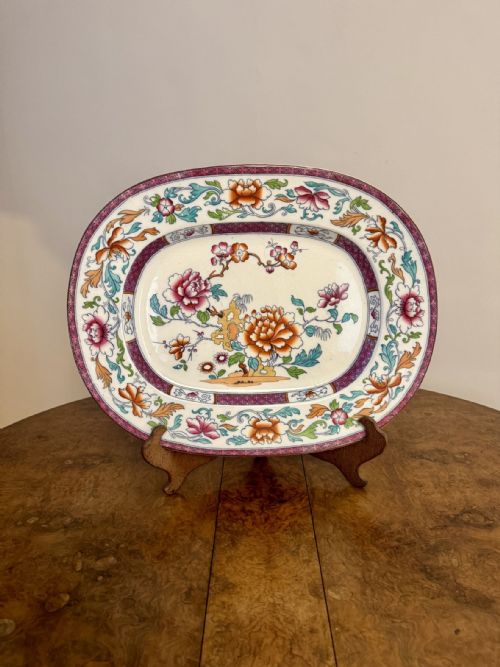


Large Ceramic Turkey Platter
A large ceramic turkey platter brings scale and history to the table, and these heavy Victorian earthenware and ironstone pieces deliver substantial presence.
Large Ceramic Turkey Platter
When searching for a large ceramic turkey platter, buyers look at substantial nineteenth century serving vessels designed to hold entire birds and heavy joints of meat at the Victorian dining table. The pieces found here span the Victorian era, the eighteen eighties, eighteen nineties, eighteen fifties, and earlier nineteenth century periods.
Most examples appearing on this page take the form of heavy platters and serving dishes, often featuring deep wells and draining systems to catch juices during carving. Common stylistic expressions include blue and white transfer printing, Victorian Chinoiserie, Georgian influences, and Italianate landscapes.
Makers represented in the current selection include Copeland and Garrett, Minton, and Mason's Ironstone, alongside unmarked earthenware and ironstone pieces. Buyers encounter various forms, from standard serving platters to specialised well and tree platters and matching drainers.
Materials and production methods
Potters constructed these heavy serving dishes using durable earthenware and dense ironstone, materials chosen to withstand the weight of large joints and frequent thermal shock. Glazes provided a smooth, non-porous surface suitable for food service.
Decoration relied heavily on cobalt pigment applied through transfer printing to create intricate blue and white patterns such as Chinese Garden scenes and cathedral motifs. Certain plates received additional hand-finishing in enamel and details in gold leaf.
Listings feature earthenware, ironstone, lead glaze, and cobalt pigment across nineteenth century Victorian, Regency, and Georgian styles.
Assessing quality in antique platters
Quality in these large platters rests on the crispness of the transfer print and the complexity of the design, such as elaborate landscapes or heraldic crests. The presence of specialised functional elements like well and tree channels or accompanying drainer inserts elevates a piece.
The weight, density, and brightness of the ironstone or earthenware body also indicate standard, as do well-preserved lead glazes without excessive crazing. Maker marks from established factories like Minton or Mason's denote skilled manufacture.
Copeland and Garrett·Minton·Mason's Ironstone
The Large Ceramic Turkey Platter Glossary
- Ironstone
- A heavy, durable type of earthenware patented in the nineteenth century to imitate Chinese porcelain. It resists chipping and staining much better than standard pottery.
- Transfer printing
- A mechanical decoration technique where an engraved copper plate transfers a design onto tissue paper, which is then pressed onto the ceramic body. This allowed for intricate blue and white scenes to be produced consistently.
- Well and tree
- A drainage system incorporated into the face of a meat platter featuring channels and a central well. It directs meat juices away from the carving area during service.
- Drainer
- A separate ceramic insert pierced with holes that sits inside the platter beneath the meat. It lifts the joint above accumulated juices.
- Cobalt pigment
- A deep blue metallic oxide used under the glaze to decorate ceramics. It withstands high kiln temperatures without fading or running.
Large Ceramic Turkey Platter: Frequently Asked Questions
How were these platters used?
Victorian households used these heavy dishes to serve large joints of meat, game, and poultry at the dining table. The substantial size accommodated family feasts and formal dinners.
Many featured integrated wells and drainer inserts to collect carving juices and keep roasted meat elevated.
Can I use an antique platter for food?
These nineteenth century earthenware and ironstone dishes remain suitable for serving food at the table. Their durable glazed surfaces resist everyday culinary use.
Hand washing is essential to protect the historic glaze and any delicate enamel or gold leaf details from modern detergents.
How do I date an ironstone platter?
Dating relies on maker marks stamped or printed on the underside, alongside stylistic clues like transfer print motifs and registry diamonds. Nineteenth century pieces often show characteristic weight and staining patterns.
Reference books help match specific factory ciphers and pattern names to exact decades within the Victorian period.
What is the difference between earthenware and ironstone?
Earthenware is a porous, traditional pottery body fired at lower temperatures, requiring a complete glaze to hold liquids. Ironstone is a heavily vitrified, dense refinement patented to be much tougher.
Ironstone platters feel notably heavier and resist heavy daily use much better than standard earthenware.