

Victorian Sporting Artwork
Victorian sporting artwork captures horses, hounds and field pursuits through oils, watercolours and lithographs.
Victorian Sporting Artwork
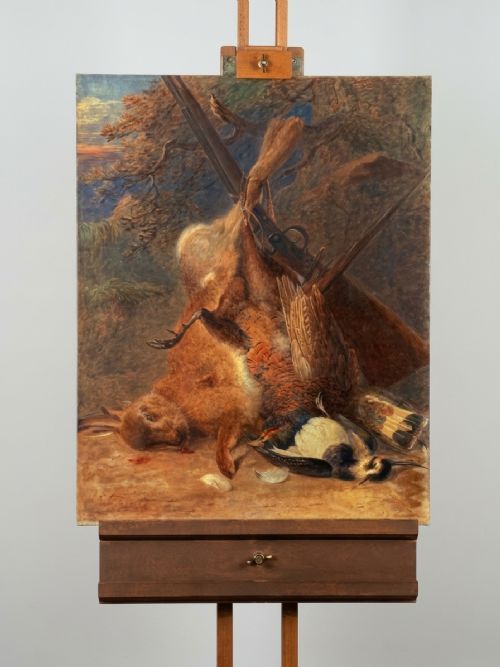
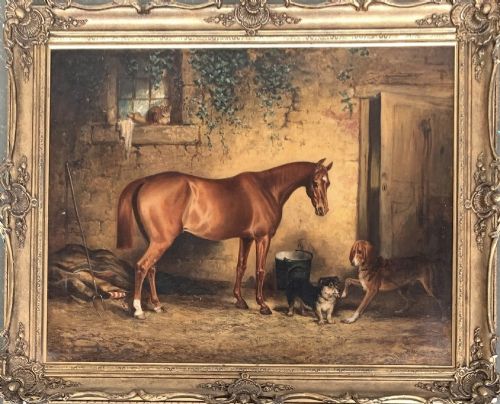
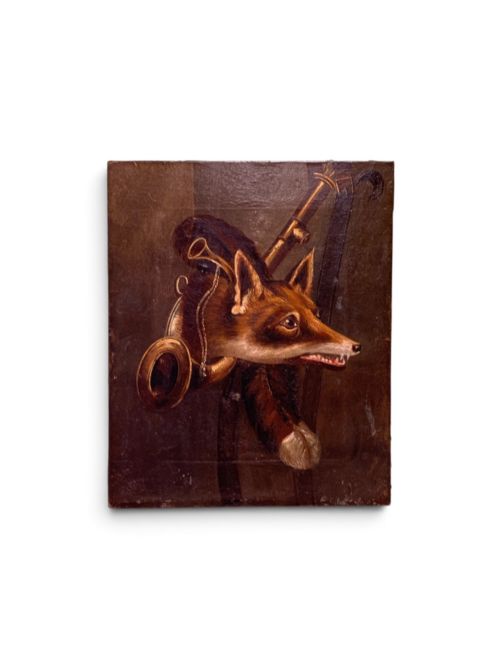
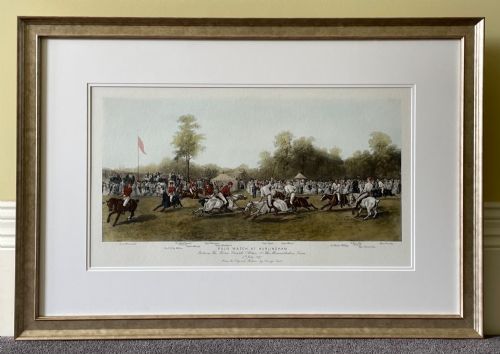
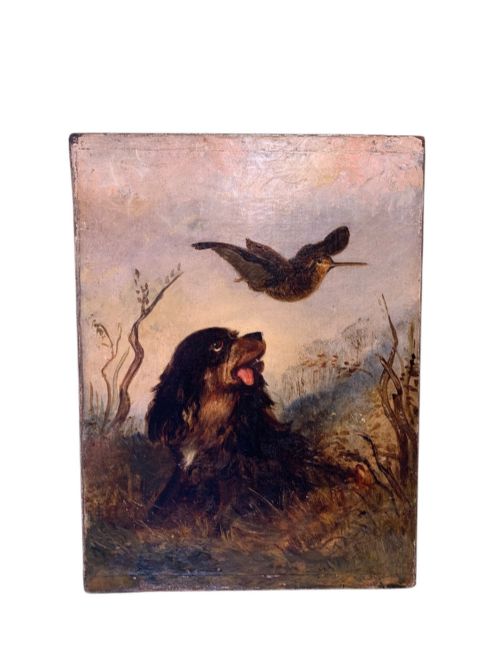
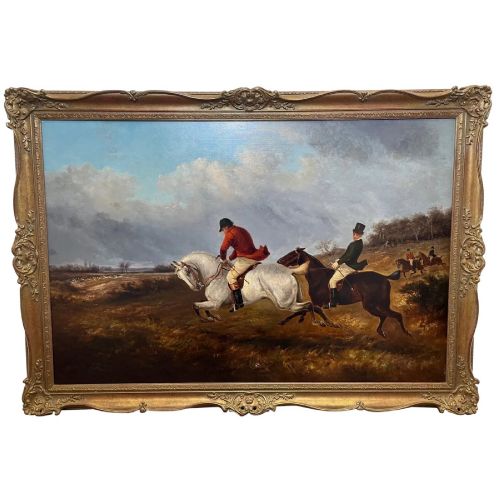
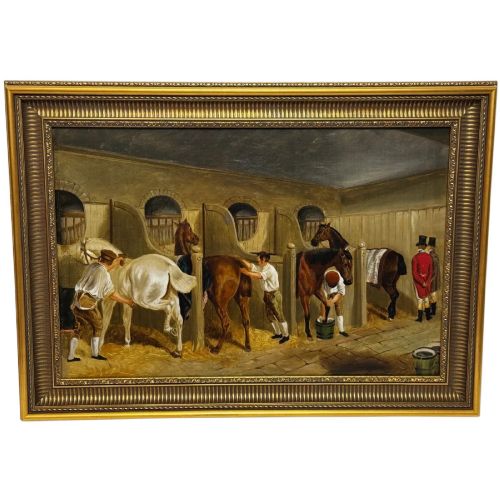
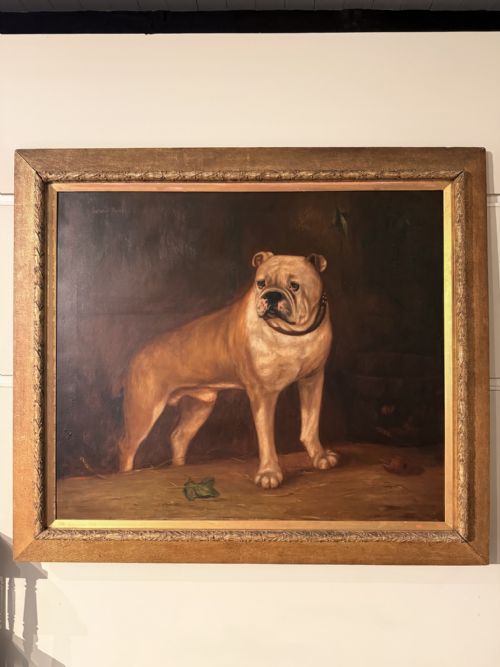
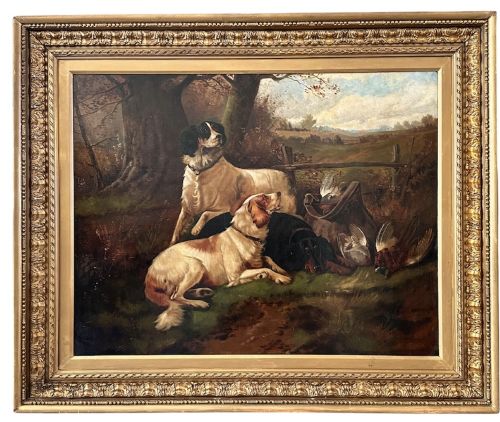
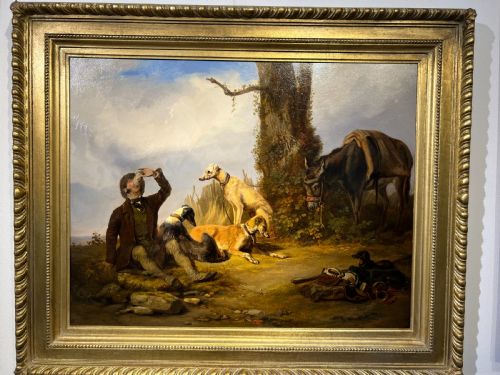
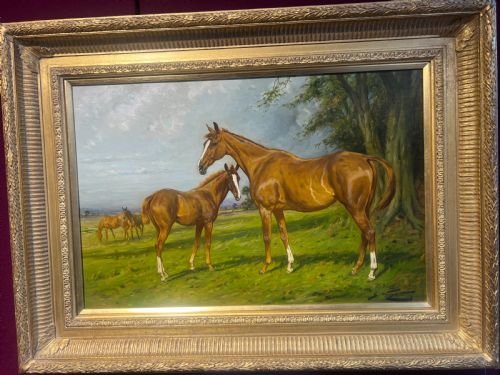
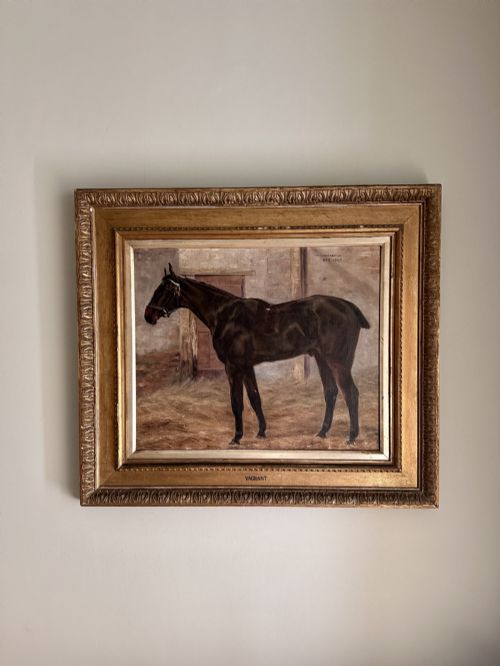
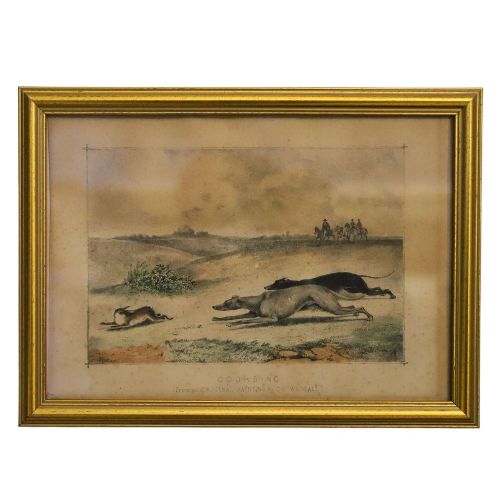
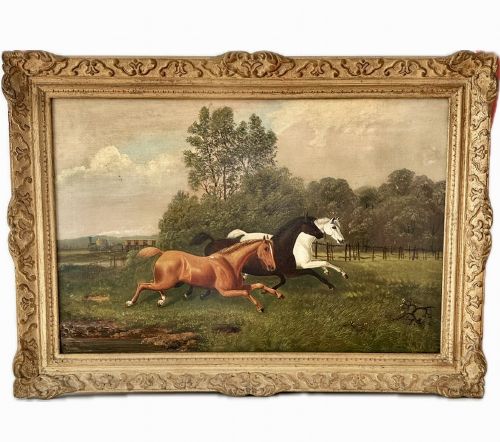
Victorian sporting artwork encompasses oil paintings, watercolours, lithographs and framed engravings depicting equestrian scenes, hunting dogs, game and racehorses. These works reflect the country pursuits and animal portraiture popular during the nineteenth century.
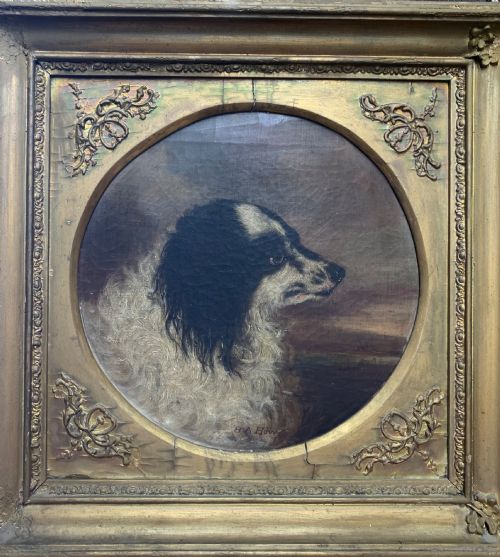
The pieces on this page appear primarily as oil paintings on canvas and wood, alongside works on paper and framed prints. Subjects range from individual portraits of prize hunters and spaniels to dynamic depictions of hunts, polo matches and racing pigeons.
Originating largely from the nineteenth and early twentieth centuries, these items capture detailed studies of animals in landscapes. Painters and printmakers of the period recorded the anatomy of horses and hounds with notable precision.
Materials and technique
Artists worked primarily with oil paint on canvas or wood panels, building rich textures and deep tones for animal coats and dusky landscapes. Watercolours and bodycolour on paper offered greater delicacy for detailed studies of hares, game and dogs.
Printmakers utilised lithography and engraving techniques to reproduce popular compositions for wider distribution. Framed pieces frequently retain period elements such as gold leaf and gilt wood frames that complement the artwork.
Subject matter spans hunting dogs, racehorses, game birds and rural landscapes.
Distinctions in quality
Quality rests upon the artist's command of animal anatomy, movement and expression, separating masterly portrayals from formulaic studio work. The handling of light across a horse's flank or a dog's coat distinguishes finer canvases.
Condition and originality dictate value among these pieces, particularly the preservation of the original paint surface or print impression. Period framing in gilt wood also contributes to the integrity of the surviving object.
Henry Barraud·Thomas Smythe·John Sargent Noble·Sir Edwin Henry Landseer·George Wright·Fred Fitzpatrick·C. H. Weigall·Edward Priestley·J. C. Dollman·C R Breytle·John Frederick Herring Snr·John Emms·John Ferneley Senior·Benjamin Blake·John Arthur Lomax·Arthur Wardle·Albert Clark·Basil Nightingale·William Barraud·George Armfield·George E Sharpe·Alken·Colin Graeme Roe·Valentine Thomas Garland·John Trivett Nettleship
The Victorian Sporting Artwork Glossary
- Lithography
- A planographic printing method using a stone or metal plate to produce multiple impressions on paper. This technique allowed Victorian publishers to circulate sporting prints widely.
- Bodycolour
- An opaque water-based medium, also known as gouache, mixed with white pigment. Artists utilised it to create solid highlights and dense colour areas in works on paper.
- Gilt wood
- Wood carved and coated with a thin layer of gold leaf or metallic gilt paint. It frames many nineteenth-century paintings.
- Equine
- Pertaining to horses. This term describes portraits and scenes featuring horses as the primary subject.
- Canvas
- A heavy woven fabric stretched across a wooden frame to serve as a support for oil paintings. It remains the most common ground for nineteenth-century sporting canvases.
Victorian Sporting Artwork: Frequently Asked Questions
What subjects appear most frequently?
Paintings and prints focus heavily on horses, hunting dogs, game birds and racing scenes. Portraits of individual prized animals dominate alongside wider landscape pursuits.
Artists recorded these subjects to celebrate rural traditions, equestrian achievements and prized livestock during the nineteenth century.
How do I identify the period?
Dating relies upon costume details, artist signatures, framing styles and canvas stamps. Nineteenth-century works often carry inscriptions or exhibition provenance on the reverse.
Subject matter and print techniques also point to specific decades, particularly the late Victorian enthusiasm for sporting prints and illustrated annuals.
Were these pieces meant for display?
Original oil paintings and framed watercolours hung primarily in country houses, libraries and estate drawing rooms. They reflected the personal interests and sporting triumphs of the owners.
Engravings and lithographs offered a more accessible way for households to display popular sporting compositions.
How should I care for an oil painting?
Keep canvases away from direct sunlight and dramatic shifts in temperature or humidity. Avoid using water or chemical cleaners on the painted surface.
Dust the canvas gently with a soft, dry brush and consult a professional restorer if the varnish yellows or cracks.