


Antique Angling Art
These antique angling art pieces capture the quiet focus of riverbanks and the thrill of a catch, bringing heritage sport directly into your study or sitting room.
Antique Angling Art
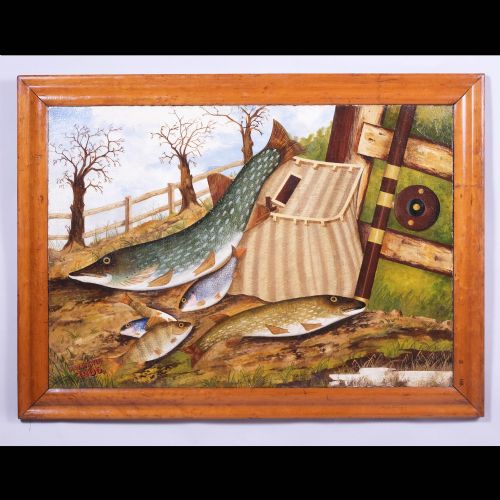
When you search for antique angling art, you encounter a specialised selection of paintings, watercolours, and prints dedicated to the pursuit of fish. These works record moments by the water, featuring river landscapes, serene watercourses, and triumphant catches.
The pieces on this page span from the late eighteenth century through the Edwardian era and into the mid-twentieth century. You are most likely to meet framed oil paintings on canvas and paper prints depicting northern pike, salmon, and trout.
Makers and artists range from named painters working in traditional sporting styles to anonymous hands recording quiet rural scenes. Styles shift from the detailed realism of the Victorian period to later twentieth-century interpretations of British sporting art.
How they were made
Artists captured these aquatic subjects using oil paint on canvas or board, watercolour on paper, and ink or crayon techniques. Many of the works retain their original wood and gilt framing, which preserves the paper or canvas from environmental damage.
Printmakers utilised engraving and early photographic reproduction methods to distribute works by sporting artists to a wider audience. The quality of the paper and the durability of the oil pigment ensure these scenes survive in clear detail.
What varies in quality
Quality in these works rests upon the artist's ability to render the anatomy of the fish and the natural movement of water with precision. Superior pieces demonstrate a careful handling of light upon the river surface and accurate depiction of tackle and surroundings.
The condition of the medium also dictates value, with unfaded watercolours and stable oil canvases sitting at the upper end. Original framing that complements the period of the artwork adds further integrity to the piece.
WILLEM E.ROELOFS jr.·Snaffles·W.E.Barrington-Browne·James Russell
The Antique Angling Art Glossary
- Sporting art
- Artwork that depicts field sports, including fishing, shooting, and hunting, often created for enthusiasts of the pastime. These pieces document the equipment, environments, and quarry associated with rural traditions.
- Canvas
- A heavy woven fabric stretched across a wooden frame to serve as a sturdy surface for oil painting. It provides the texture and durability necessary for historical artworks.
- Watercolour
- A painting method in which pigment is suspended in a water-soluble binder on paper. This technique creates transparent washes of colour ideal for capturing atmospheric river scenes.
- Gilt
- A thin layer of gold leaf or gold paint applied to wood or metal surfaces. It frequently appears on the decorative mouldings of historical frames.
- Etching
- A printmaking process where acid cuts into unprotected parts of a metal plate to hold ink. This method produces fine, precise lines suited for detailed illustrative prints.
Antique Angling Art: Frequently Asked Questions
What subjects appear in antique angling art?
These works primarily depict freshwater fish such as pike, salmon, and trout caught during river expeditions. Artists also portray the surrounding landscapes, wooded riverbanks, and fishermen engaged in the sport.
Scenes range from quiet moments of observation by the water to dramatic depictions of fish breaking the surface during a catch.
How do I care for antique watercolours and oil paintings?
Keep works on paper and canvas away from direct sunlight to prevent the fading of watercolours and the yellowing of old varnishes. Maintaining a stable indoor temperature protects the paper fibres and wooden stretchers from warping.
Ensure framing is secure and seal the reverse of canvas paintings to keep out dust and atmospheric moisture over time.
How can I tell the Victorian pieces apart from later works?
Victorian paintings often focus heavily on the dramatic realism of the fish specimen, sometimes recording the weight and location of the catch. They utilise detailed brushwork to capture the scales and wet surface of the fish.
Later Edwardian and twentieth-century pieces frequently adopt looser brushstrokes, placing greater emphasis on the atmospheric mood of the riverbank than strict zoological accuracy.
Where should I hang angling art in my home?
These pieces suit studies, libraries, and traditional living spaces where rural and sporting themes create a calm atmosphere. Pair them with natural wood furnishings and neutral walls to let the river tones stand out.
Avoid placing them in humid areas like kitchens or bathrooms, as moisture damages paper watercolours and canvas supports.