





Oil Painting of Fish
When you want an oil painting of fish, you are looking at centuries of canvas capturing marine life, anglers, and coastal trade.
Oil Painting of Fish
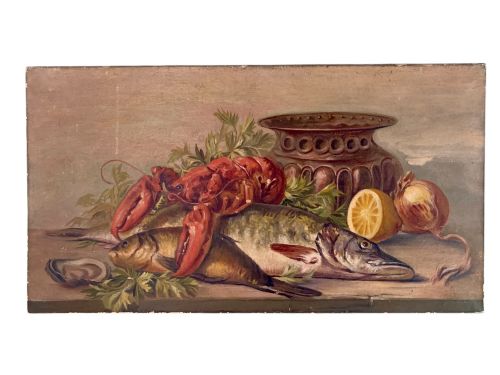
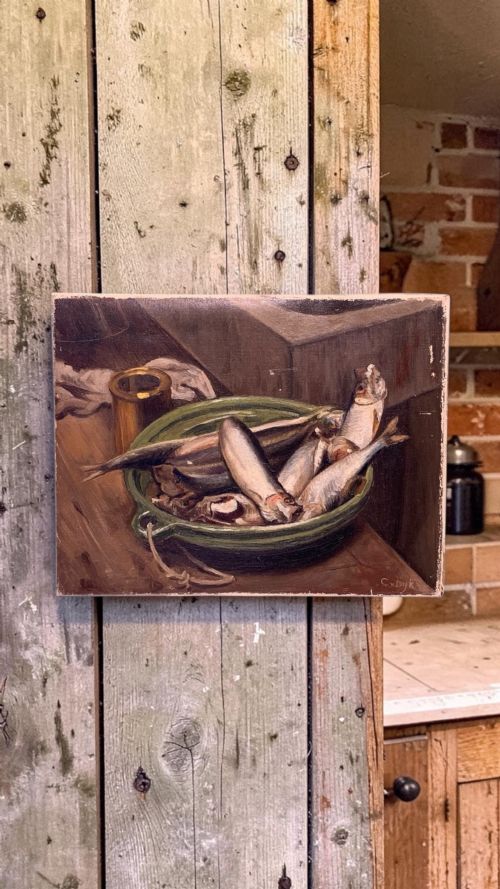
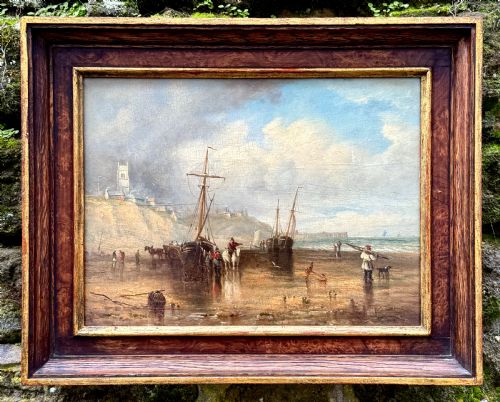
An oil painting of fish brings coastal commerce, still life compositions, and riverbank angling directly onto the wall. The selections span quiet nineteenth-century river scenes to mid-century French still lifes featuring lobsters and daily catches.
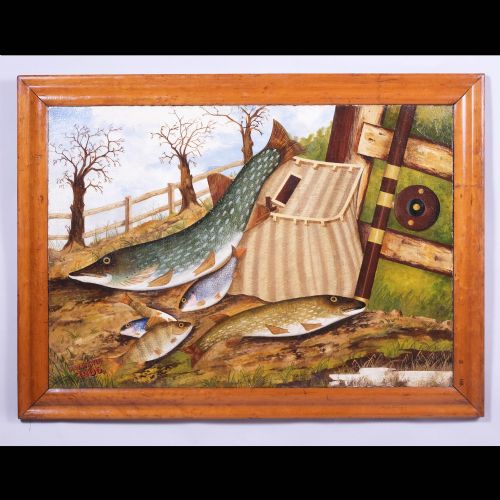
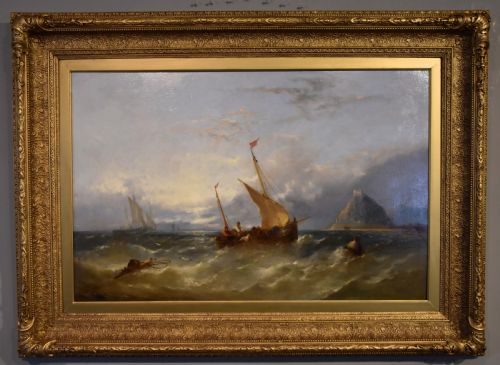
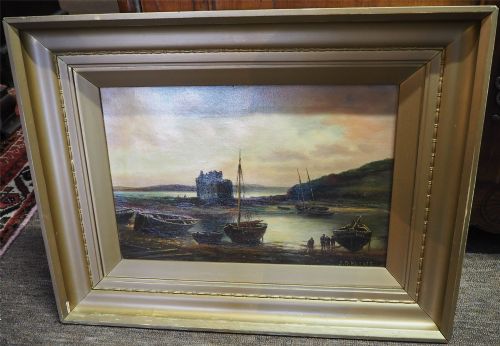
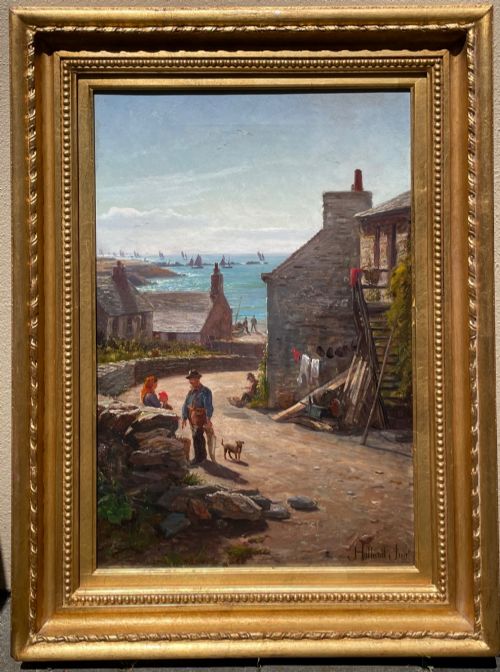
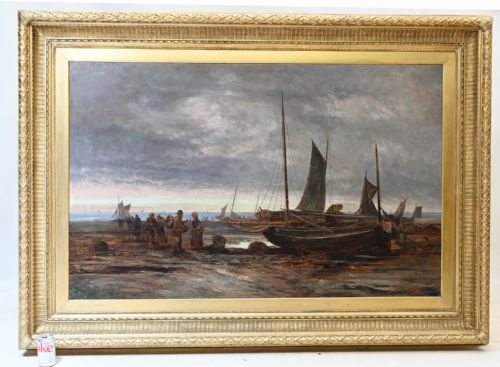
Victorian examples frequently present detailed studies of pike and trout alongside harbour scenes with fishing boats. French and British schools dominate the works, offering coastal views and intimate still life arrangements.
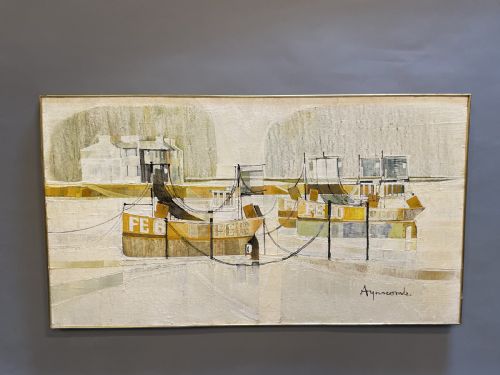
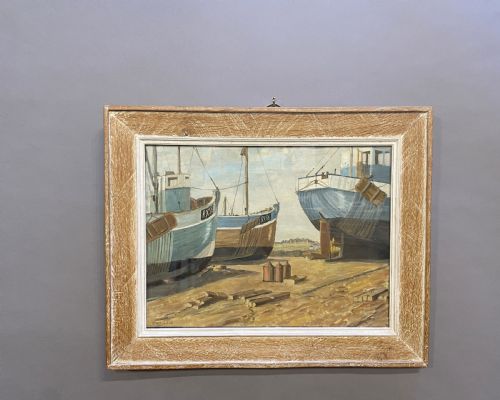
The subjects range from solitary monks admiring their catch to bustling ports with trawlers returning to harbour. Canvas, wood panels, and card support these diverse marine and freshwater compositions.
How They Were Made
Artists painted primarily with oil on stretched canvas, though prepared wood panels and heavy card appear frequently. Giltwood frames, often richly moulded, enclose the works and reflect nineteenth-century framing traditions.
Brushwork varies from tight academic realism in still lifes to loose impressionistic strokes in coastal and harbour scenes. Pigments were applied in layers to capture the iridescent scales of fish and the shifting light on water.
Listings feature canvases and wood panels from the nineteenth and twentieth centuries, encompassing British, French, and Dutch schools.
What Varies in Quality
Quality depends upon the artist's ability to render light, movement, and anatomy convincingly, whether depicting a freshly caught trout or a crowded fishing port. Superior works show confident handling of pigment, particularly in rendering the wet surfaces of fish or turbulent sea spray.
The harmony and preservation of the original frame contribute significantly to the overall standing of a piece. Finer examples retain their original surface texture and uncompromised canvas integrity.
Kenneth Cozens·George Graham·Thomas Creswick·William Henry Williamson·Florence Adelina Hess·John Holland·Edward Matthew Elliott·Charles Napier Hemy·Gyrth Russell·Sir David Murray·Gustave De Bréanski·Pieter Cornelis Dommersen·James Kyd·Owen Bowen·George SHAW·T.S. Wallis·George Gregory·George Morland·Frank Hyde·John Bell·George Henry Knight·Sam Bough·William Anslow Thornley·E K Redmore·William Broome
The Oil Painting of Fish Glossary
- Canvas
- Woven fabric, typically linen or cotton, stretched tightly across a wooden frame to serve as a painting surface. It provides a flexible and durable ground for oil pigments.
- Giltwood
- Wood carved and coated with a thin layer of gold leaf or gold paint. This finish was standard for framing significant nineteenth-century paintings.
- Still life
- A painting featuring inanimate subject matter, such as fish, lobsters, or household objects. These compositions focus on texture, light, and arrangement.
- Seascape
- A work depicting the sea, coastal views, or marine vessels. These paintings often incorporate fishing boats and harbours.
- Panel
- A flat piece of wood used as a rigid support for oil painting instead of canvas. Mahogany and other dense woods offer a stable surface for detailed brushwork.
Oil Painting of Fish: Frequently Asked Questions
What subjects appear in these paintings?
The works depict freshwater fish, saltwater catches, still life arrangements with lobsters, and scenes of fishermen at work. Coastal harbours and riverbanks provide the setting for many maritime compositions.
Angling scenes and daily catches form a significant portion of the available subjects, reflecting a long artistic interest in river life and maritime trade.
How do I date an oil painting?
Dating relies on stylistic markers, artist signatures, framing techniques, and the type of canvas or panel used. Victorian and Edwardian works often feature specific clothing, vessel types, and framing styles.
Purchasing records and exhibition labels attached to the reverse can also provide precise chronological anchors for individual pieces.
Where should I hang these works?
These paintings suit dining rooms, studies, or hallways, particularly where traditional wooden furniture or maritime decor is present. Natural light enhances the varied textures of oil paint on canvas.
Keeping works away from direct sunlight and excessive humidity preserves the integrity of both the canvas and the giltwood frame.
What is the difference between marine and still life paintings?
Marine paintings focus on ships, coastal views, harbours, and the open sea, often capturing vessels in motion. Still life works concentrate on arranged objects, such as fish and kettles, viewed at close range.
Both genres utilise oil paint, but marine art emphasises atmosphere and weather while still life highlights form, texture, and light.