
Victorian Specimen Drawers
Victorian specimen drawers are purposeful storage pieces built to hold natural history collections, which bring rich timber grain and precise compartment work into a room.
Victorian Specimen Drawers
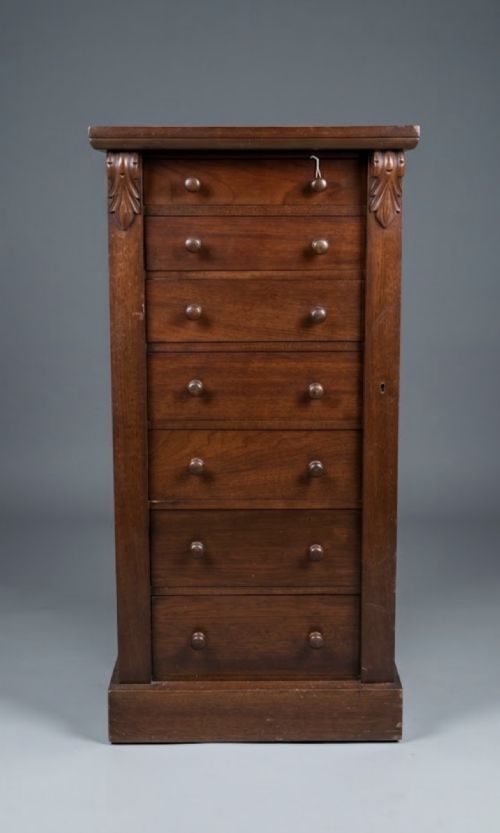
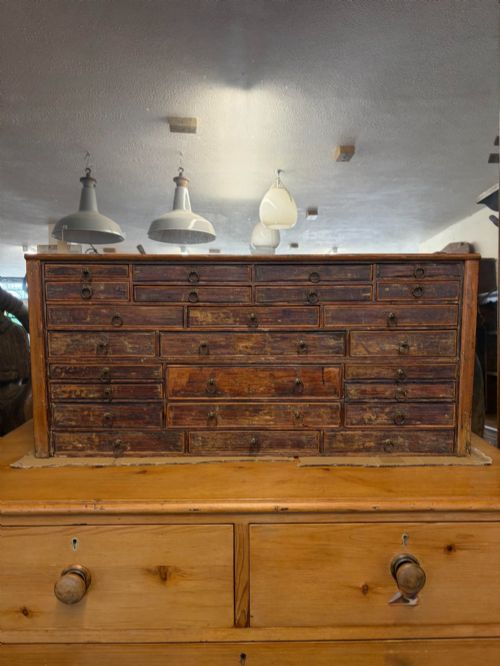
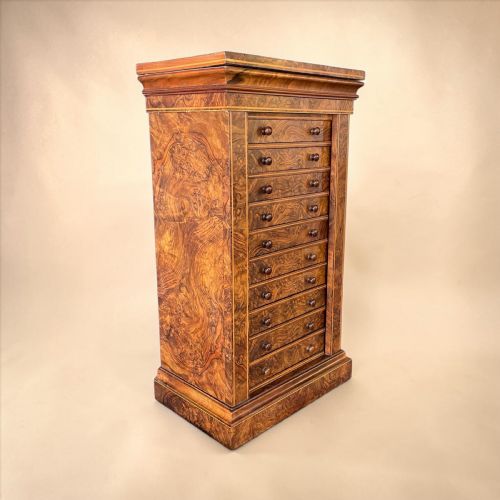
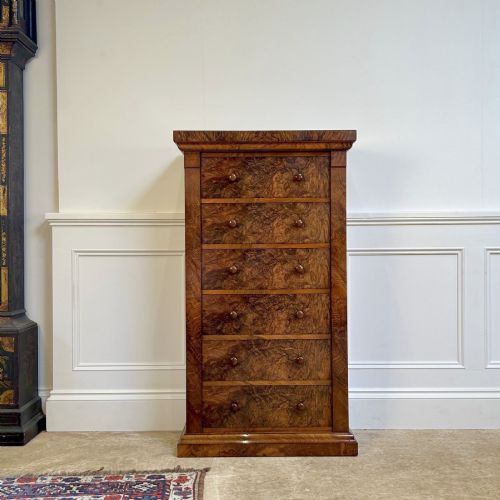
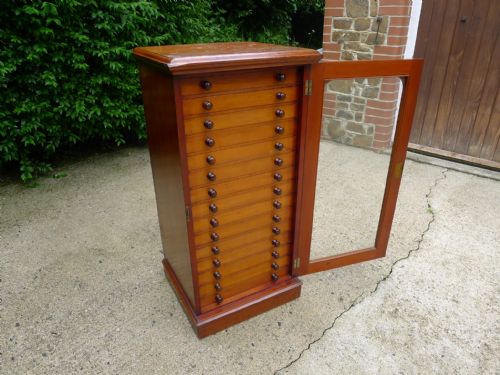
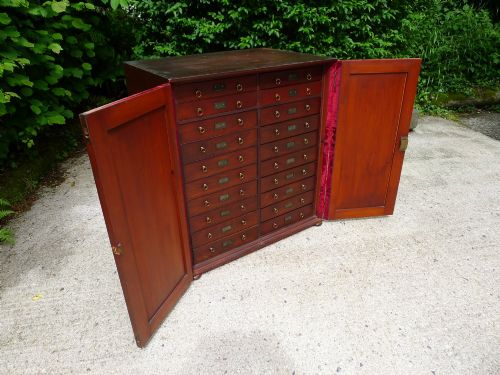
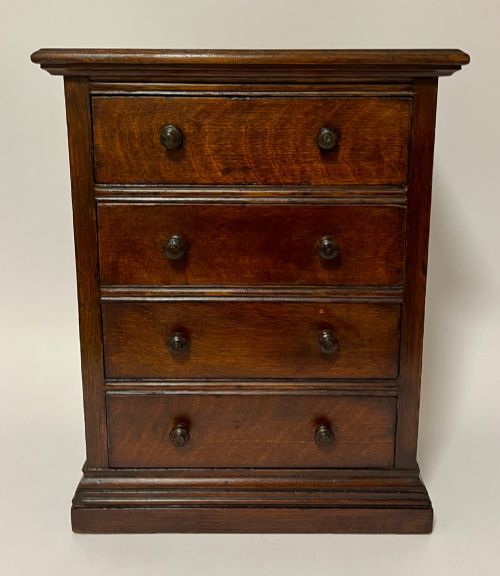
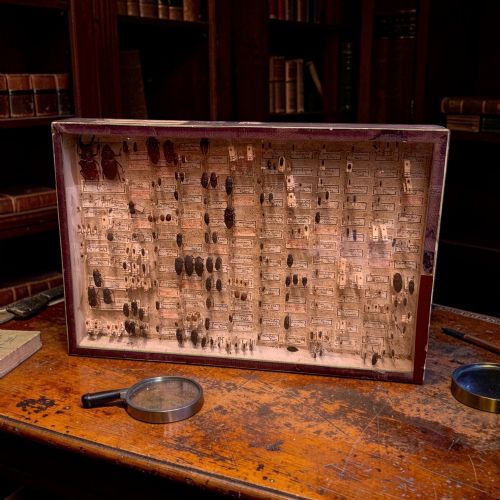
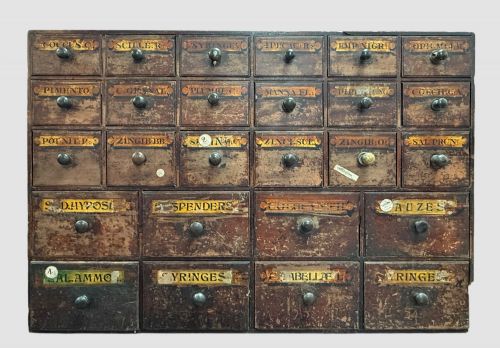
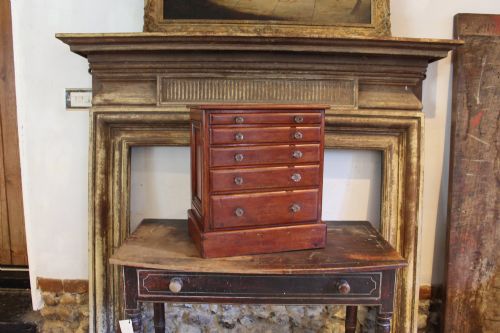
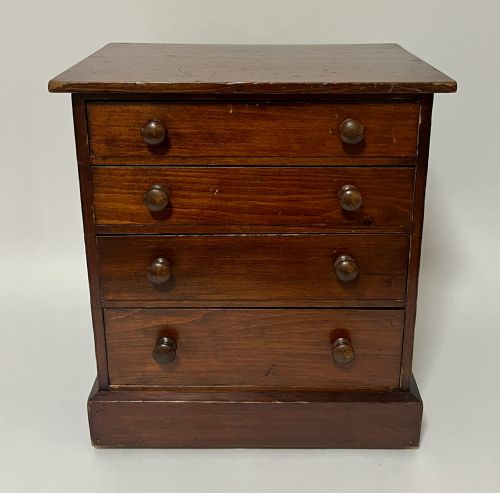
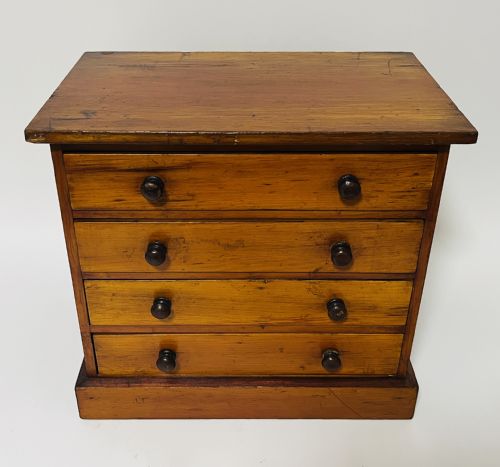
When you search for victorian specimen drawers, you encounter compact tabletop chests, tall Wellington chests, and multi-drawer banks designed for organising natural history specimens, microscope slides, and small objects. The version most commonly met on this page is the multi-drawer walnut or mahogany cabinet dating from the nineteenth century, often arranged with numerous shallow tiers.
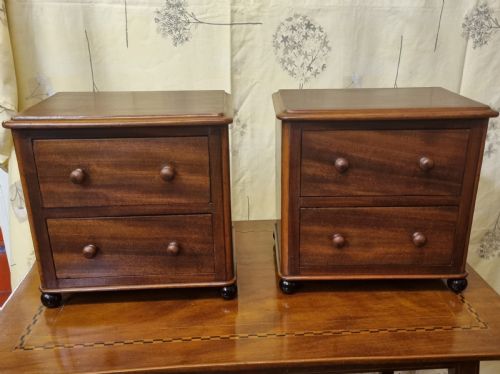
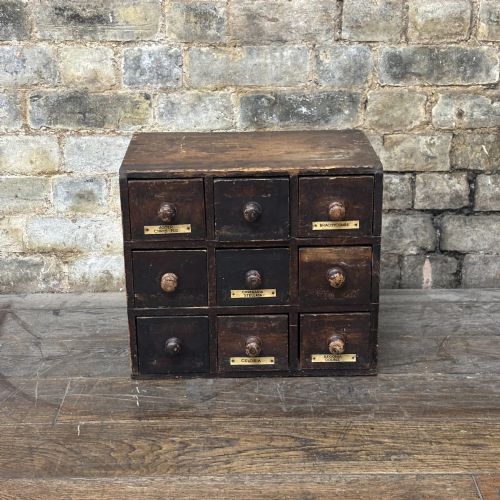
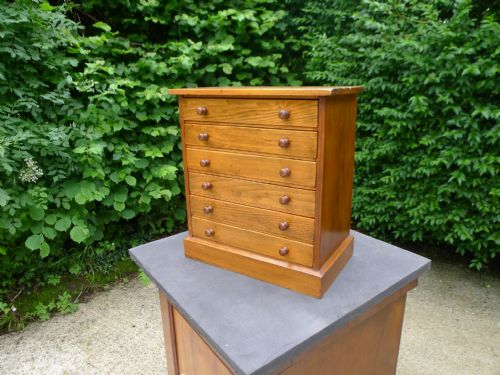
Makers constructed these pieces as functional repositories for entomology, botany, and apothecary use, relying on dense hardwoods to protect delicate contents. Forms range from miniature apprentice chests and pairs of table top pieces to large banks of drawers originating from specialist furnishers and chemists.
The materials reflect a period of meticulous organisation, utilising native and imported timbers combined with brass handles and glass panels. These cabinets serve as tangible records of nineteenth-century collecting habits, offering disciplined storage tailored to tiny objects.
How they were made
Cabinet makers relied on dense hardwoods such as mahogany, walnut, and burr walnut, alongside secondary softwoods like pine, deal, and oak for internal framing. Timber selection prioritized stability to ensure shallow drawers slid smoothly within their carcasses without binding during seasonal humidity changes.
Construction techniques involved tight dovetail joints on the drawer corners and sturdy panel work designed to withstand frequent handling. Brass pulls, turned wooden knobs, and occasional locking mechanisms completed the build, securing specialised collections against dust and light.
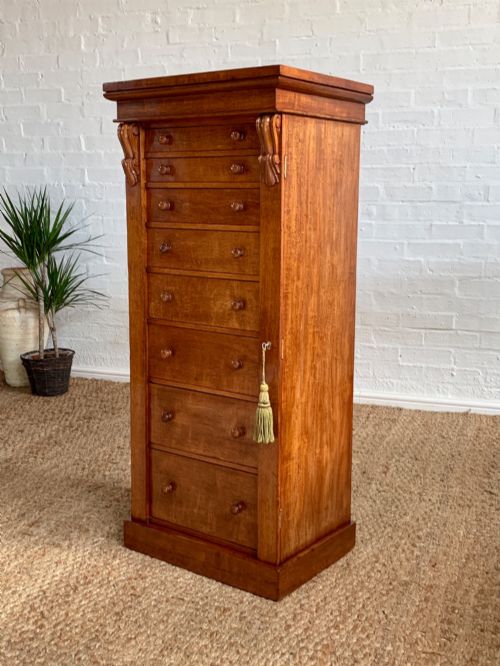
Cabinet forms on this page include Wellington chests, chemist banks, microscope slide repositories, and miniature apprentice pieces.
What varies in quality
The distinction between standard utility storage and the finest examples lies in the choice of timber veneer and the precision of the internal drawer fit. Cabinets featuring figured mahogany, burr walnut, or satin birch demonstrate superior cabinetmaking ambition compared to plain stained pine or deal.
Hardware integrity and original joinery significantly elevate a piece, particularly when locking stiles, original turned knobs, and maker signatures remain intact. The complexity of the internal arrangement, such as micro-compartments for slides or insects, separates ordinary chests from high-grade scientific furnishings.
Luxmore's of Ilfracombe·Gillows·Watkins and Doncaster·D Napier and Sons
The Victorian Specimen Drawers Glossary
- Wellington chest
- A tall, narrow chest of drawers secured by a hinged locking side stile that fastens over the drawer edges. This form originated in the nineteenth century and is frequently encountered in mahogany or walnut.
- Deal
- A term used in historical British cabinetmaking for softwood timber, typically pine or fir. It appears frequently in the internal carcases and backing boards of nineteenth-century storage pieces.
- Apprentice piece
- A miniature furniture item created by a trainee craftsman to demonstrate mastery of joinery techniques. These small chests replicate the proportions and details of full-size furniture.
- Standish
- A term associated with specialised multi-drawer cabinets designed for desk accessories or organised collections. They represent the more substantial end of tabletop storage.
Victorian Specimen Drawers: Frequently Asked Questions
What were specimen drawers used for?
These cabinets served laboratories, studies, and apothecaries for organising delicate items like insect collections, botanical samples, and microscope slides. Their shallow tiers kept small pieces separated, visible, and protected from dust.
Today, collectors repurpose them to store jewellery, small keepsakes, or art supplies while bringing period character into modern interiors.
How do I date a cabinet?
Dating relies on timber choices, construction methods, and handling hardware like turned wooden knobs or brass pulls. Nineteenth-century pieces typically feature hand-cut dovetails and dense hardwoods such as mahogany or walnut.
Examining secondary woods inside the drawers helps confirm the era, as pine and deal backing boards shift in grain density across the decades.
Are these pieces suitable for everyday use?
Their sturdy hardwood construction and smooth-sliding drawers make them exceptionally practical for organising modern desktop items or collections. The shallow drawer depths naturally prevent clutter from accumulating inside.
Placing them away from direct heat sources ensures the timber remains stable and the original joints stay tight.
What is the difference between a cabinet and a chest?
Cabinets often include locking stiles, glass viewing panels, or specialised internal fittings tailored to scientific instruments and slides. Chests generally rely on standard stacked drawer configurations without specialised locking mechanisms.
Both forms share the characteristic multi-tier arrangement designed to maximise small-scale storage.