





Moulded Drawer Cabinet
A moulded drawer cabinet brings architectural relief and rich timber grain to an interior, offering practical storage through structured drawer fronts.
Moulded Drawer Cabinet
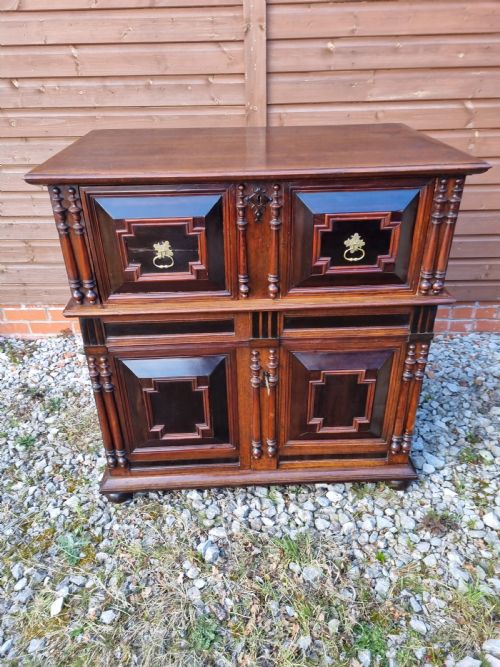
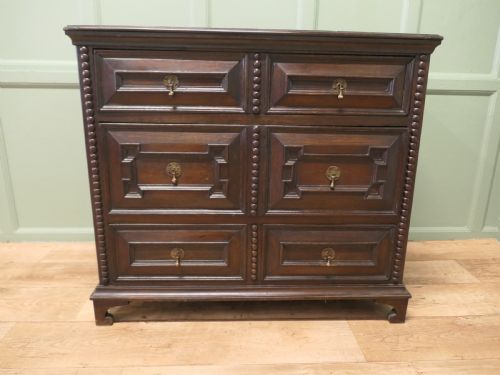
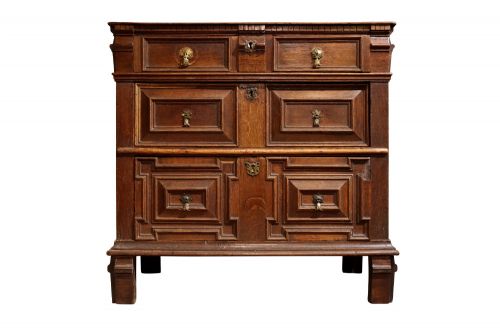
When searching for a moulded drawer cabinet, buyers encounter substantial case furniture featuring geometric or architectural drawer facings. The examples span the seventeenth century through to the twentieth century, taking forms such as chests of drawers, commodes, collectors chests, and cabinets on stands.
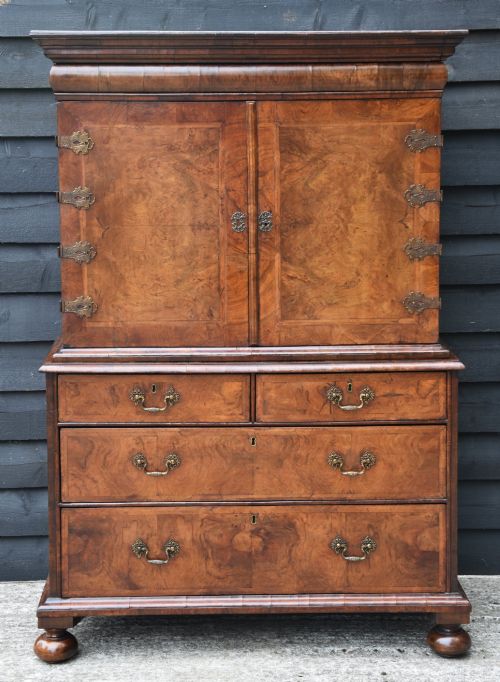
The seventeenth-century pieces rely heavily on oak with geometric moulded fronts, whilst later eighteenth and nineteenth-century examples introduce walnut, French commode forms with marble tops, and satin birch. Regional and revival styles including Jacobean, William and Mary, and Louis Philippe appear across the selection.
Buyers are most likely to meet oak and walnut carcases where the drawer fronts define the aesthetic through raised panels, applied mouldings, and cross-banding. These items function as focal storage pieces in traditional and eclectic interiors alike.
What varies in quality
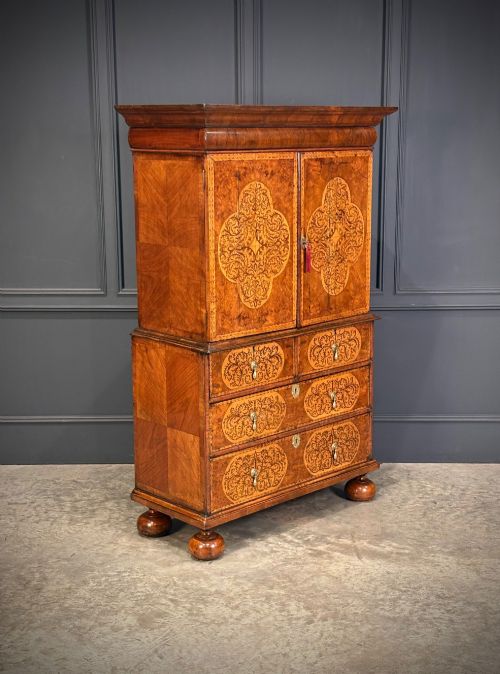
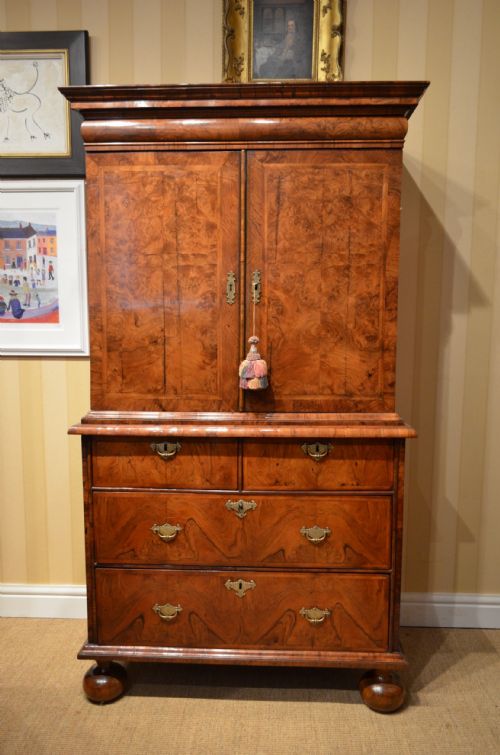
The distinction between tiers of quality rests in the crispness of the applied mouldings and the selection of timber veneers. Finely figured burr walnut and carefully matched fruitwood inlay demonstrate a higher degree of artisan skill than plain or replacement secondary timbers.
Structural integrity and the retention of original brass hardware, such as drop handles and escutcheons, elevate a piece. The precision of the drawer construction and the harmony between the carcase and the decorative mouldings dictate the standing of each cabinet.
Moulded Drawer Cabinet Retail Price Guide 2026
Typical asking prices for moulded drawer cabinet among the pieces listed under this phrase on Sellingantiques today, from the lower quarter to the upper quarter. They describe what is for sale here now, not the wider market.
Materials across the selection range from solid oak and walnut to satin birch, fruitwood inlay, brass, and grey marble tops.
The Moulded Drawer Cabinet Glossary
- Moulded front
- A drawer face or cabinet door decorated with shaped or projecting strips of timber that create geometric relief patterns. This technique adds depth and shadow to the facade.
- Commode
- A low French chest of drawers or cabinet, frequently fitted with a marble top. These pieces often exhibit graceful proportions and veneered surfaces.
- Collector's chest
- A specialised cabinet designed with multiple shallow drawers intended for storing specimens or small valuables. They frequently combine contrasting timbers such as walnut and satin birch.
- Cabinet on chest
- A tall storage form consisting of an upper cabinet section resting upon a lower chest or stand. This tiered construction maximises storage whilst maintaining a commanding architectural presence.
- Cross-banding
- A decorative border technique where thin strips of veneer are laid so that the grain runs perpendicular to the main panel. It frames the drawer fronts of finer walnut and oak pieces.
Moulded Drawer Cabinet: Frequently Asked Questions
How do I date an oak moulded drawer cabinet?
Dating relies on examining the construction methods of the carcase, the profile of the mouldings, and the timber species used. Seventeenth-century examples typically feature hand-riven oak with pegged mortise and tenon joints.
Later revival pieces from the nineteenth or twentieth century often display machine-sawn timber and standardised fixings that reveal their true period of manufacture.
Where should I place a cabinet with a marble top?
Pieces featuring grey marble tops, such as French commodes, suit principal reception rooms or bedrooms where the stone surface can be appreciated. The cool marble provides a durable top surface for displaying decorative objects.
Ensure the cabinet rests on a level floor to distribute the considerable combined weight of the timber carcase and the stone slab evenly.
Are these cabinets suitable for everyday use?
Solid construction in oak and walnut makes these historical pieces robust enough for contemporary domestic storage. The drawers provide deep and functional space for clothing, linens, or general household items.
Routine maintenance involves minimal waxing to preserve the timber finish and protecting the surfaces from excessive moisture and direct heat.
What distinguishes Jacobean style from later periods?
Jacobean furniture is characterised by heavy oak construction, stark rectilinear forms, and complex geometric raised mouldings on drawer fronts. It reflects the austere yet detailed aesthetic of the seventeenth century.
In contrast, later revivals and Georgian pieces incorporate softer walnut veneers, curved commode profiles, and refined brass hardware rather than heavy timber projection.