

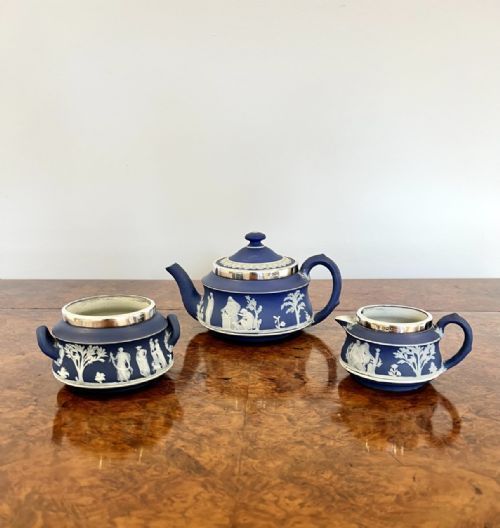


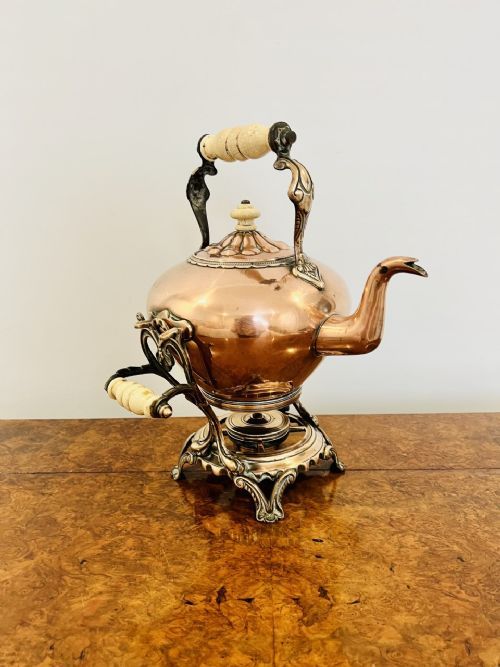


Victorian Silver Teapot
These nineteenth-century vessels bring heft and ornamentation to the table, delivered in sterling silver or silver plate for daily pouring.
Victorian silver teapot forms
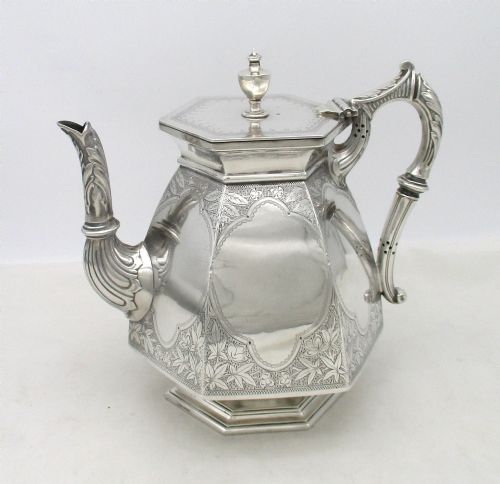
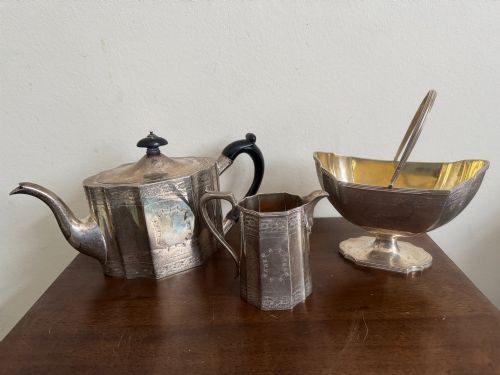
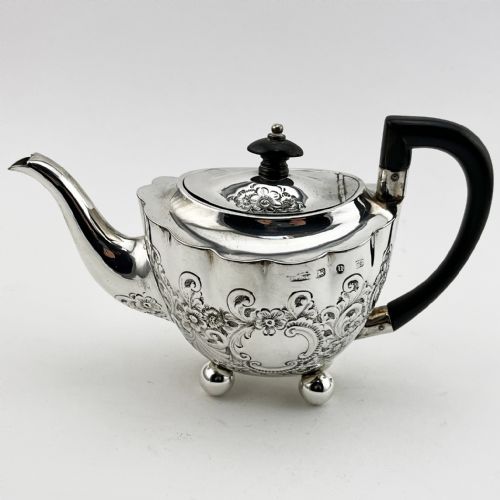
A victorian silver teapot offers a glimpse into nineteenth-century hospitality, arriving either as a standalone vessel or as part of a larger tea service. The selection spans from standard family sizes down to smaller bachelor teapots intended for single households.
Makers drew on diverse aesthetic currents during the period, resulting in pieces shaped by Victorian neoclassical revivalism, Louis XV rococo influences, and Aesthetic Movement ideals. Scottish provincial outputs from Glasgow and Edinburgh appear alongside London assay office pieces.
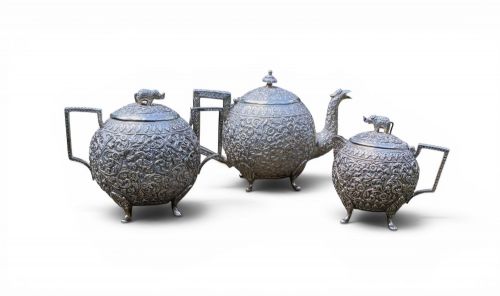
The typology includes specialised forms such as miniature teapots, inscribed presentation pieces, and Indianesque designs featuring zodiac motifs or engraved panels. Associated items like teapot stands and coasters occasionally accompany the main vessels.
Distinctions in craftsmanship
The division between standard production and top-tier pieces rests upon the crispness of chased ornamentation and the weight of the metal. Workshops known for high output invested deeper labour into sculptural handles, articulated spouts, and substantial gauge silver.
Makers with documented workshop identities, such as the Barnard firm, Robert Garrard II, or Holland & Slater, maintain distinct benchmarks in structural balance and decorative depth. Pieces bearing full assay marks with clear date letters provide stronger historical continuity.
Retail Price Guide 2026
Typical UK retail prices for victorian silver teapot, calculated from the Sellingantiques database of over a million retail prices indexed since 2003. This retail price guide relies exclusively on Sellingantiques data; no external sources or auction records are used, so the figures do not describe the wider market.
Some teapots carry the motto 'Garde La Foy', ensuring your morning brew comes with a strict instruction to keep the faith.
E & J Barnard·Robert Garrard II·Holland & Slater·John & George Angell·Elkington & Co·Thomas Bradbury·Atkin Brothers
The Victorian Silver Teapot Glossary
- Bachelor teapot
- A compact teapot produced in a reduced scale, originally designed for single occupants or small apartments. These pieces retain all functional elements of their larger counterparts.
- Sterling silver
- An alloy consisting of pure silver and other metals, traditionally copper, standardised to a specific fineness for durability. Most British pieces carry hallmark stamps verifying this composition.
- Electroplated nickel silver
- A base metal alloy coated with a layer of pure silver through an electrical process. This technique offered an accessible alternative to solid silver during the nineteenth century.
- Assay mark
- An official stamp applied by an assay office to certify the purity of precious metals. These marks typically include symbols for the maker, town, and year of testing.
- Repousse
- A metalworking technique where the artisan hammers the design from the reverse side to create raised relief on the surface. It defines the more ornate Victorian presentation vessels.
Frequently Asked Questions
How do I date a Victorian silver teapot?
Dating relies primarily on the stamped hallmarks found on the body or base of the vessel, which include specific letters corresponding to the assay year.
Stylistic shifts also provide guidance, as early examples often favour rococo revival curves while later decades lean towards Aesthetic Movement restraint.
What is a bachelor teapot?
A bachelor teapot is a smaller version of the standard family pot, manufactured for individual use during the nineteenth century.
Despite the reduced capacity, they maintain the same decorative styles and metal standards as their larger counterparts.
Are silver plated teapots authentic Victorian?
Silver plated teapots from this era are entirely authentic to the period, utilising electroplating methods developed and refined during the nineteenth century.
Maker marks on the base often distinguish plated wares from solid sterling silver pieces.
How were wooden parts used on teapots?
Wood components like ebony and ebonised wood were fitted to handle mounts to prevent heat transfer from the boiling water inside.
These materials were turned and shaped to match the curved lines of the silver bodies.