
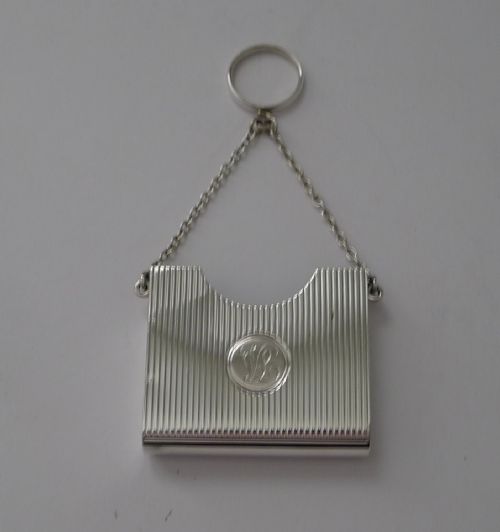
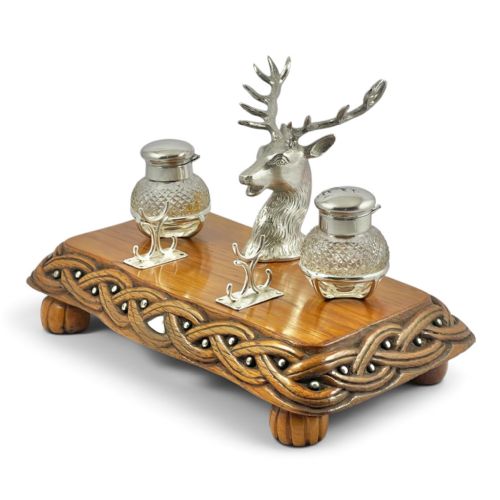
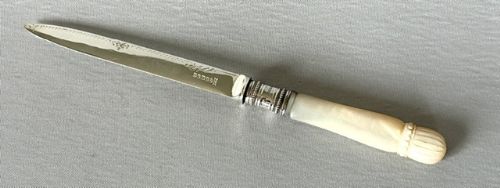

Victorian Silver Desk Accessory
When you handle a Victorian silver desk accessory, you touch the inkwells, lighters and letter openers that kept nineteenth-century writing desks running.
Victorian Silver Desk Accessory
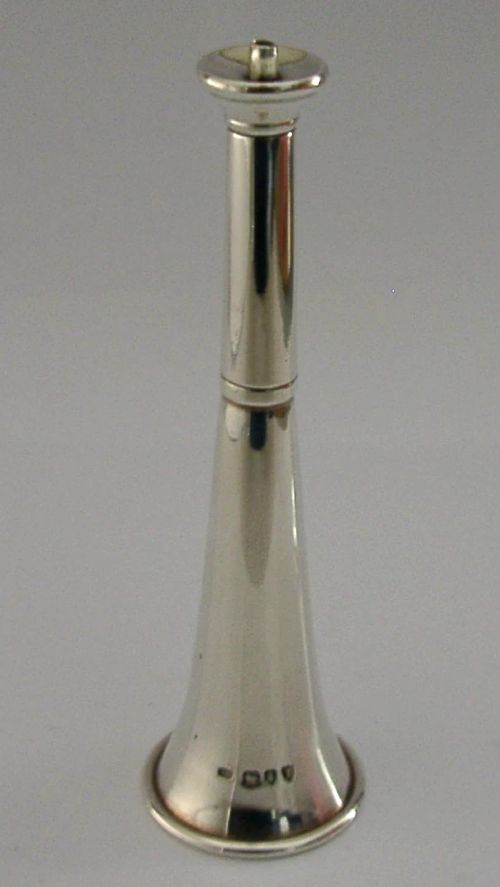
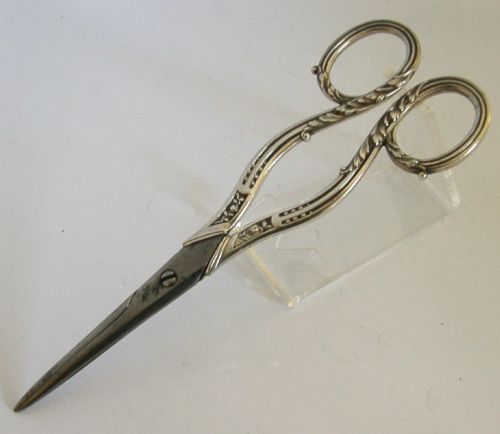
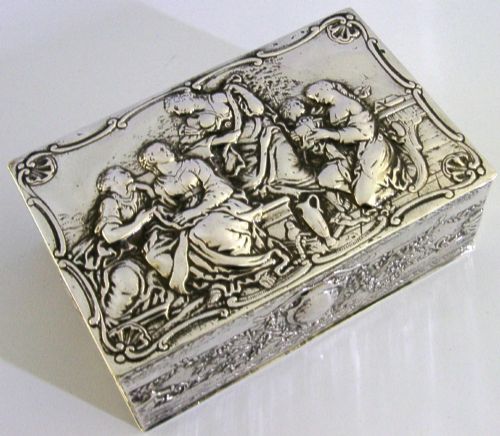
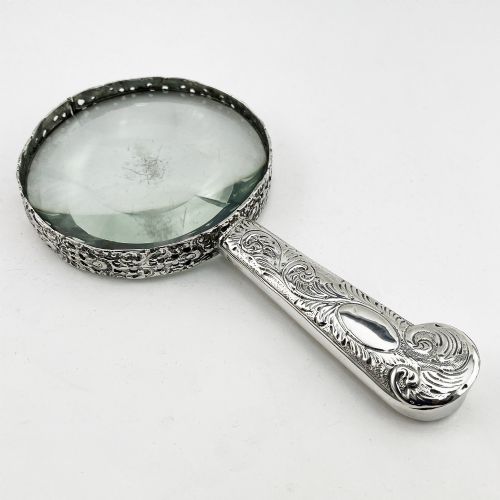
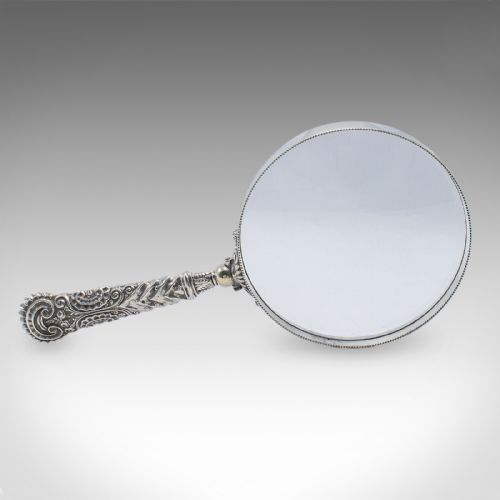
A Victorian silver desk accessory encompasses the functional items that populated the nineteenth-century writing desk, study, and library. These objects range from practical inkstands and letter openers to novelty vesta cases and magnifying glasses.
The pieces seen here belong primarily to the Victorian and Edwardian periods, stretching from the mid-nineteenth century into the early twentieth century. Sterling silver, silver plate, glass, and leather dominate the material record.
Inkwells and letter openers appear frequently alongside more specialised items such as page turners, table lighters, and snuff boxes. Makers incorporated diverse styles, including Neo-Rococo, Egyptian Revival, and Victorian Celtic Revival, into everyday desk equipment.
Materials and methods
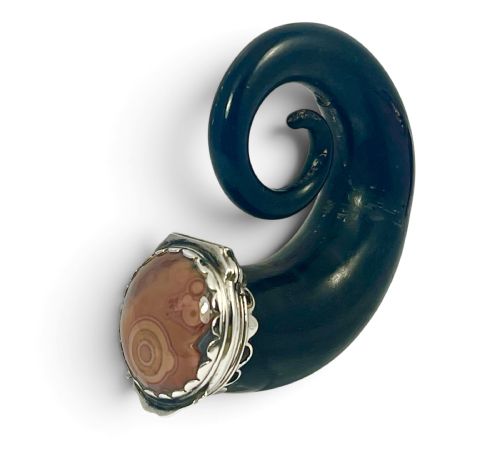
Silversmiths utilised solid sterling silver and durable silver plate over base metals, shaping them through casting, hammering, and detailed engraving. Mounts were frequently combined with organic materials such as tortoiseshell, horn, mother-of-pearl, and oak to provide textural contrast.
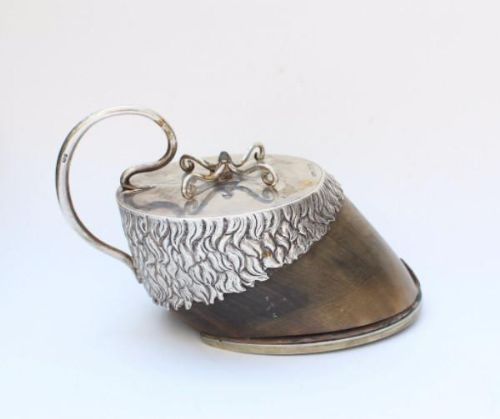
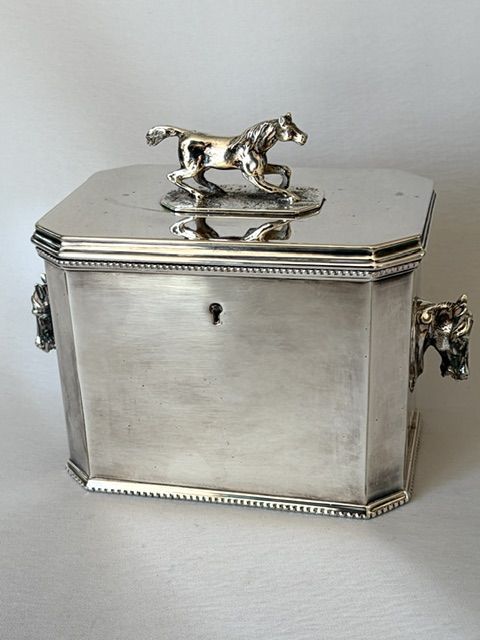
Cut glass and crystal formed the reservoirs for inkwells and glue pots, secured with hinged silver collars and lids. Taxidermy elements, notably horse hooves fitted with silver mounts, also appear among the more unusual desk tidies of the era.
Listings combine solid sterling silver and silver plate with organic elements like tortoiseshell, horn, and mother-of-pearl across Victorian and Edwardian periods.
Judging the work
Quality rests in the crispness of the chasing and the weight of the metal. Heavier gauge silver and well-defined cast motifs, such as animal figures or botanical scrollwork, distinguish superior items from lighter, mass-produced counterparts.
The integrity of the construction matters greatly, particularly in items with moving parts like hinged lids on inkstands, combination vesta cases, and mechanical pencils. Original glass inserts in inkwells and secure mountings on organic materials retain the integrity of the piece.
Sampson Mordan·A & J Zimmerman Ltd·Wilkinson & Co·Elkington·Walker And Hall·Braham
The Victorian Silver Desk Accessory Glossary
- Sterling silver
- An alloy containing 92.5 percent silver by mass, standard for quality British tableware and desk wares. It carries hallmark stamps denoting the assay office and year of production.
- Silver plate
- A layer of silver fused or electroplated onto a base metal such as copper or Britannia metal. This technique offered a more affordable alternative to solid silver.
- Page turner
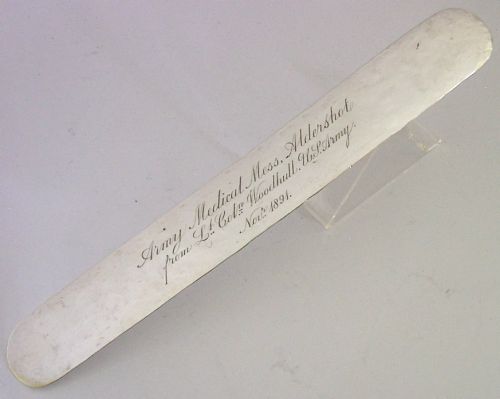
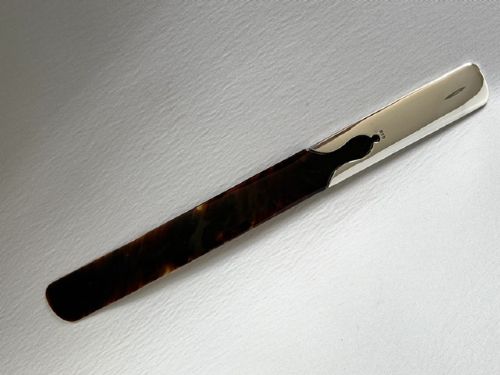
- A long, flat implement made of ivory, tortoiseshell, or mother-of-pearl with a silver handle, used for separating uncut pages in books. They double as letter openers on the desk.
- Inkstand
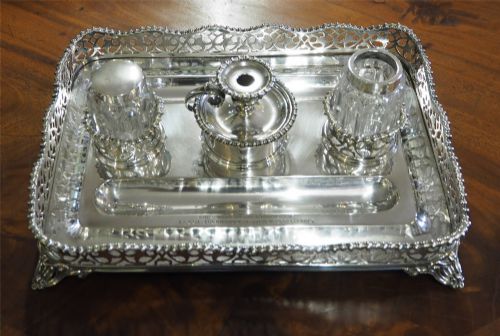
- A fitted tray holding one or more inkwells, pen rests, and sometimes a sander or bell. They anchor the desktop arrangement.
- Vesta case
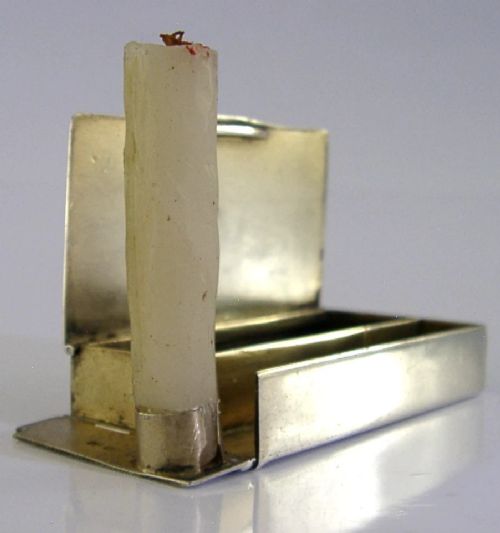
- A small pocket or desk box designed to hold wax matches, often fitted with a striking surface on the base. Many examples from this era incorporate novelty forms like boots or animals.
Victorian Silver Desk Accessory: Frequently Asked Questions
How were inkstands used?
An inkstand held the necessary tools for writing with a dip pen, keeping inkwells, sanders, and pen rests together on the desktop. The central tray protected the writing surface from ink spills.
Wealthy households kept elaborate stands in libraries and studies, while simpler versions served for everyday correspondence.
How do I date a silver desk piece?
British silver pieces carry hallmarks stamped directly into the metal, indicating the assay office, standard, and date letter corresponding to the year of manufacture. Stylistic cues like Egyptian Revival motifs or aesthetic movement engraving also point to specific decades.
Maker's marks help narrow down the exact workshop responsible for the piece.
How do I clean antique silver?
Antique silver benefits from gentle cleaning with a specialised microfibre cloth and mild silver polish only when tarnish obscures the detail. Avoid aggressive rubbing on engraved lines or plated surfaces.
Natural tarnish often highlights the depth of the chasing and maker's marks, so heavy cleaning is rarely necessary.
Can I use antique inkwells today?
Many glass and silver inkwells remain fully functional for modern fountain pen use, provided the glass liner is intact and free of cracks. Fitted collars should be checked for secure seals.
They serve as practical desktop containers or decorative accents even if unused for writing.