




Victorian Silver Barware
Victorian silver barware brings together decanters, flasks, and labels crafted to serve spirits with weight and ceremony.
Victorian Silver Barware
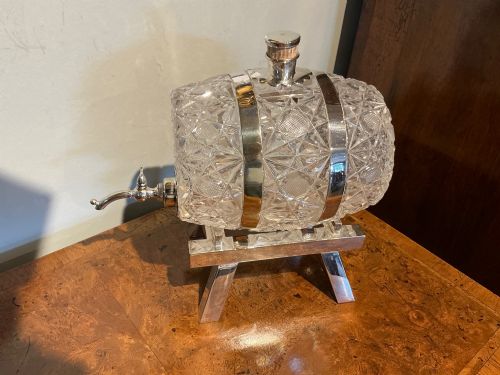
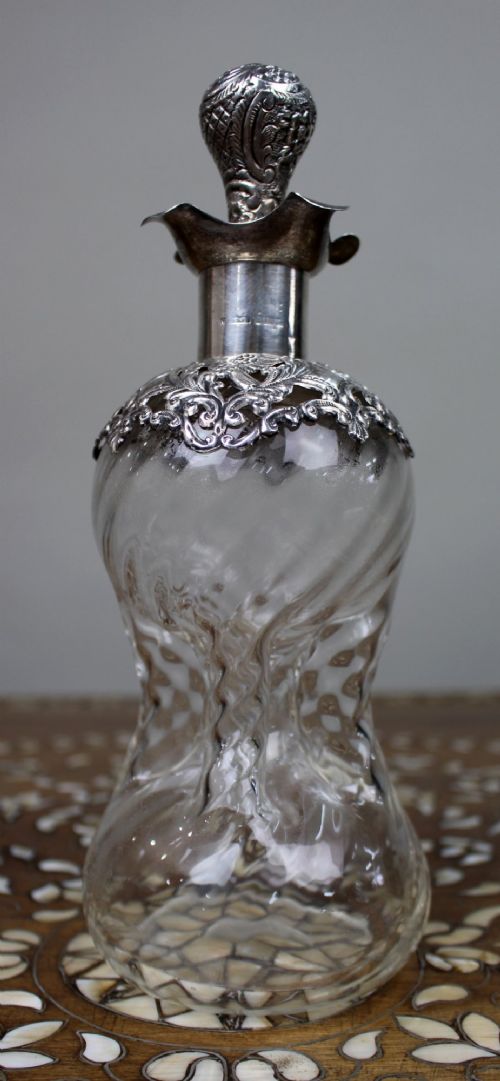
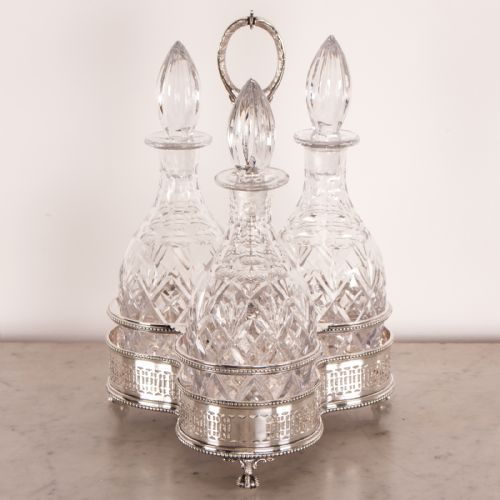
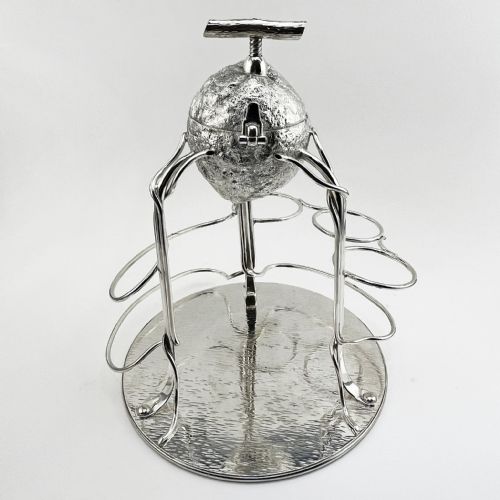
Victorian silver barware comprises items designed for the decanting, serving, and consumption of wine and spirits during the nineteenth century. These objects range from heavy cut glass decanters fitted with sterling silver mounts to pocket hip flasks and elaborate locking tantalus frames.
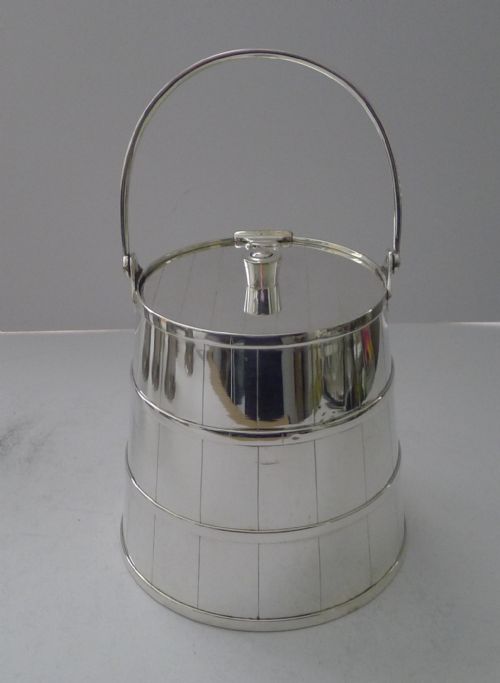
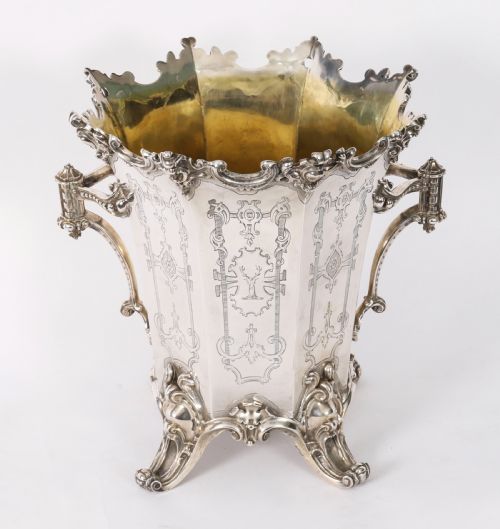
The pieces encountered most frequently on this page date from the Victorian and Edwardian periods, utilising silver plate or sterling silver alongside glass and crystal. Makers produced everything from small bottle tags to large champagne ice buckets and wine coolers for formal dining rooms.
Materials and construction
Silversmiths combined sterling silver and silver plate with cut glass, crystal, and occasionally materials such as crocodile leather. Metal components involved casting, hammering, and engraving, whilst glass bodies were often moulded, cut, or frosted to catch the light.
Mounts were secured to glass decanters and flagons using cork or collars, and locking mechanisms on tantalus frames required precision engineering to secure the bottles safely within their wooden and metal housings.
Form categories include decanter labels, hip flasks, wine coolers, and locking tantalus sets.
Distinctions in quality
Quality rests in the crispness of the chasing on silver mounts, the depth of cut glass facets, and the reputation of the maker or silversmith firm. Pieces retaining original stoppers, matching labels, or complete field campaign sets command greater interest.
Substantial gauge silver, well-balanced proportions, and functional locking mechanisms with original keys separate ordinary utilitarian items from superior examples produced by notable workshops.
James Dixon & Sons·Walker & Hall·Elkington, Mason & Co·Hukin & Heath·Asprey London
The Victorian Silver Barware Glossary
- Tantalus
- A locked wooden frame holding decanters with the stoppers trapped in place, preventing the servants or guests from accessing the spirits without a key.
- Decanter label
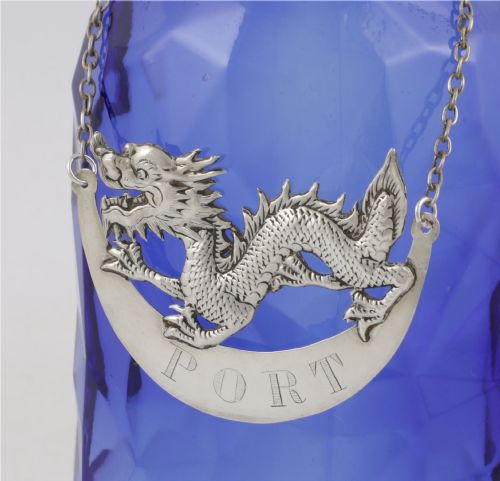
- A small metal tag hung by a chain around the neck of a bottle to identify the contents, such as sherry or port.
- Claret jug
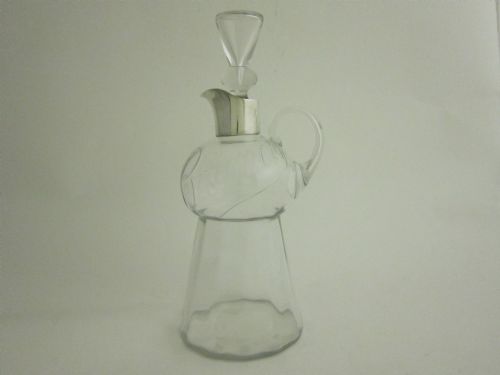
- A large vessel designed for serving red wine, typically combining a cut glass or crystal body with a silver-plated or sterling silver handle, spout, and hinged lid.
- Wine cooler
- A large vessel intended to hold ice and water for chilling wine bottles at the dining table, often fashioned in silver plate with twin handles.
Victorian Silver Barware: Frequently Asked Questions
What is a tantalus?
A tantalus is a locking drink cabinet that holds decanters securely behind a metal bar so the contents cannot be poured without a key.
Victorian households utilised these on sideboards to restrict access to spirits by staff or guests while displaying the cut glass bottles openly.
How do I identify decanter labels?
Decanter labels are small silver tags stamped or engraved with the name of a spirit like sherry, port, or madeira.
They hang from bottle necks by fine chains and often carry hallmarks indicating the English assay office and year of production.
Were hip flasks used everyday?
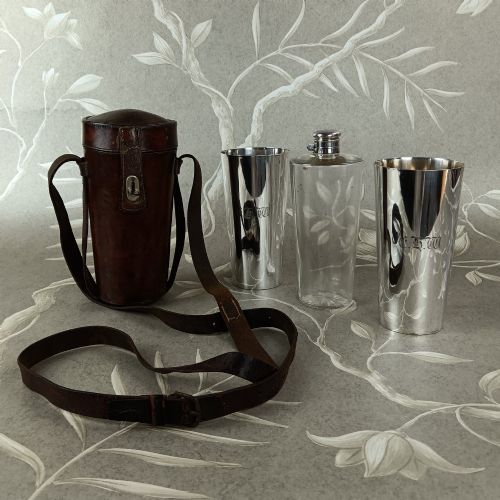
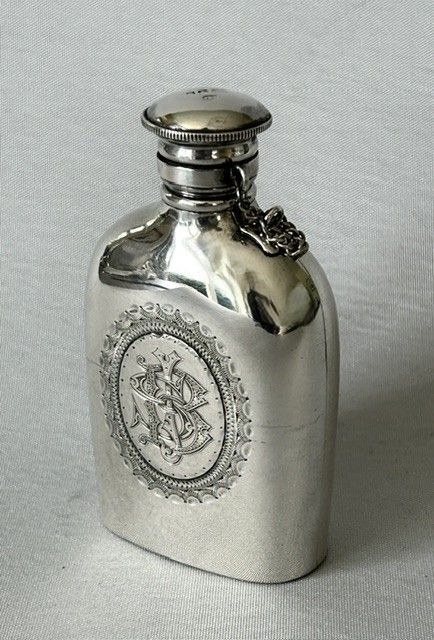
Hip flasks were carried in pockets during travel, field sports, and campaign use to provide personal access to spirits.
Many examples feature captive caps, removable cups at the base, and hammered silver finishes designed to withstand regular handling.
How should I clean silver barware?
Silver barware requires gentle cleaning with a soft cloth and appropriate silver polish to preserve the original hallmarks and engraved details.
Care must be taken around glass bodies and leather attachments to avoid moisture damage during maintenance.