




Curved Silver Hip Flask
A curved silver hip flask slips easily into a pocket, offering a solid tactile weight and practical portability that collectors still prize.
What a curved silver hip flask is
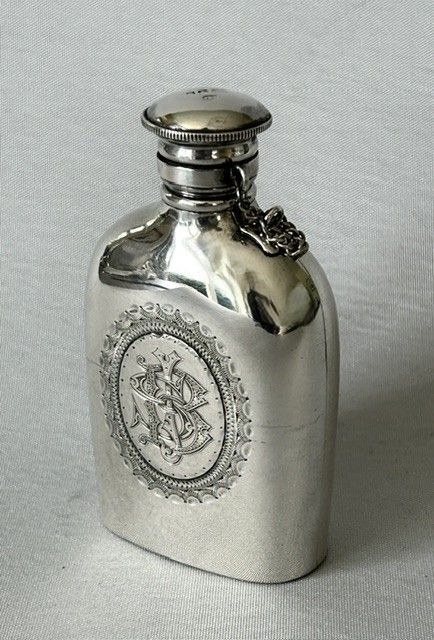
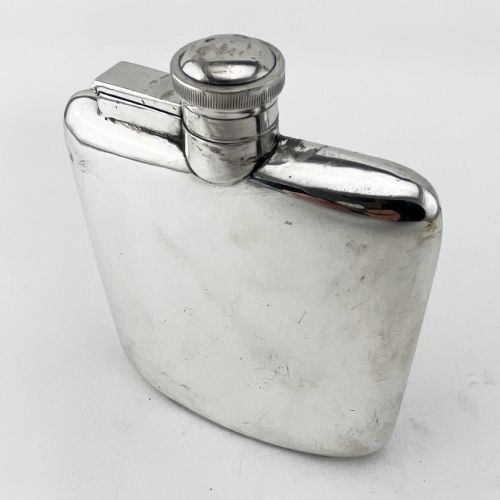
A curved silver hip flask is a portable container designed for carrying spirits, shaped to follow the contour of a pocket or body. The pieces available span the Victorian, Edwardian, George V, and Art Deco periods, capturing distinct design shifts from ornate nineteenth-century work to streamlined twentieth-century forms.
The dominant material across these examples is sterling silver, often hallmarked with assay office marks and dates that pin down their origins. Makers such as William Neale and Daniel & Arter appear in the records, marking quality output from Birmingham and other major silversmithing centres.
Forms range from straightforward spirit containers to unusual pocket variants. Buyers encounter both plain polished surfaces and pieces carrying historical dates spanning from the mid-nineteenth century through to the nineteen-forties.
How they were made
Silversmiths formed these vessels from sterling silver, hammering and pressing the metal sheets into the characteristic curved profile required for comfortable pocket wear. Soldering secured the necks, hinges, and screw caps, creating watertight seals essential for containing spirits.
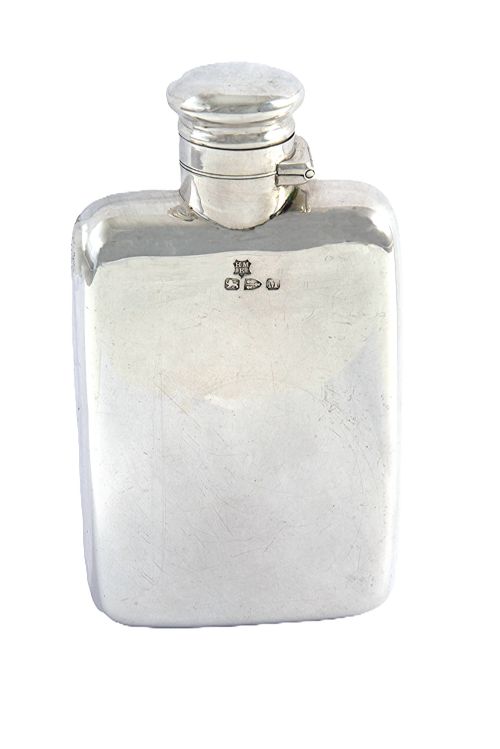
Surface finishing involved polishing the sterling silver to a bright sheen, sometimes leaving the metal plain to highlight the clean lines of the curve. Hallmarks were stamped directly into the silver, recording the assay office, standard, and date of manufacture.
Retail Price Guide 2026
Typical UK retail prices for curved silver hip flask, calculated from the Sellingantiques database of over a million retail prices indexed since 2003. This retail price guide relies exclusively on Sellingantiques data; no external sources or auction records are used, so the figures do not describe the wider market.
Listings feature sterling silver pieces spanning the Victorian period through to the nineteen-forties, including work by William Neale and Daniel & Arter.
What varies in quality
Quality in a curved silver hip flask rests on the crispness of the hallmarks, the integrity of the hinge mechanism, and the thickness of the sterling silver gauge used in its construction. Heavier metal resists dents better over time, preserving the intended silhouette of the curve.
The distinction between standard production and finer work lies in the precision of the cap fitting and the smoothness of the contour. Pieces bearing named silversmith marks or clear regional assay details command greater attention from those studying period barware.
William Neale·Daniel and Arter
The Curved Silver Hip Flask Glossary
- Sterling silver
- A silver alloy containing 92.5 percent pure silver and 7.5 percent other metals, usually copper, ensuring durability for functional items like flasks.
- Hallmark
- A series of official marks stamped on precious metals, showing the maker, purity standard, assay office, and year of testing.
- Assay office
- An official body that tested and marked the purity of precious metals, with towns like Birmingham and London operating notable offices.
- Art Deco
- A design style popular in the 1920s and 1930s characterised by sleek geometric lines and streamlined forms.
- Barware
- Utensils and vessels used for preparing and serving alcoholic drinks, encompassing items designed for personal and social use.
Frequently Asked Questions
How do I date a silver flask?
Dating relies on reading the stamped hallmarks found on the body or the collar of the flask. These symbols correspond to specific assay office date letters and reigning monarchs.
Comparing the style against known periods such as the Victorian era or the Art Deco nineteen-twenties provides further confirmation of age.
Are these flasks made of solid silver?
The pieces recorded utilise sterling silver throughout their construction rather than silver plating. This solid metal composition gives them a distinct weight in the hand.
Assay marks confirm this standard of purity across both listed and archived items.
Did Victorians use curved flasks?
Victorian examples were specifically shaped to fit comfortably into a pocket against the body. Silversmiths during this era produced solid silver pieces with ergonomic profiles.
These nineteenth-century items laid the groundwork for the Edwardian and George V designs that followed.
Who made these silver flasks?
Production was handled by various silversmithing firms and workshops operating in British manufacturing centres. Makers stamped their initials or full names into the metal alongside the hallmarks.
Recorded makers include established names like William Neale and Daniel & Arter.