
Victorian Side Armchairs
These Victorian side armchairs combine nineteenth-century timber frames with period upholstery, offering compact seating options for drawing rooms and bedrooms.
Victorian Side Armchairs
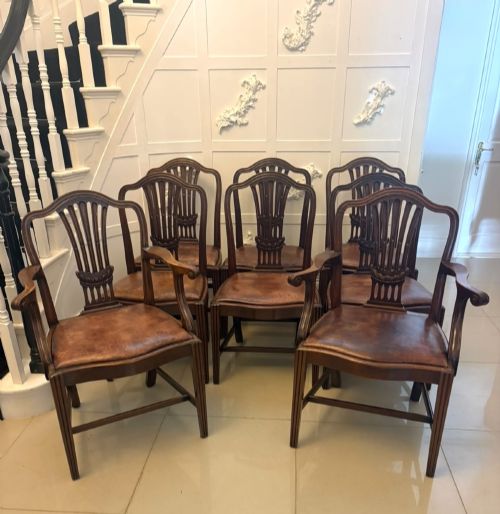
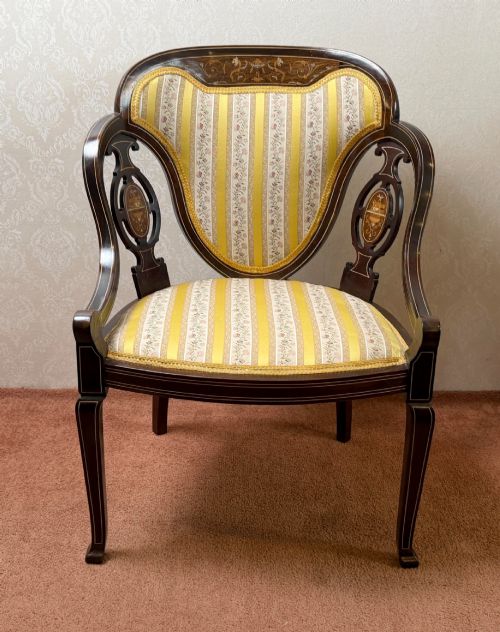
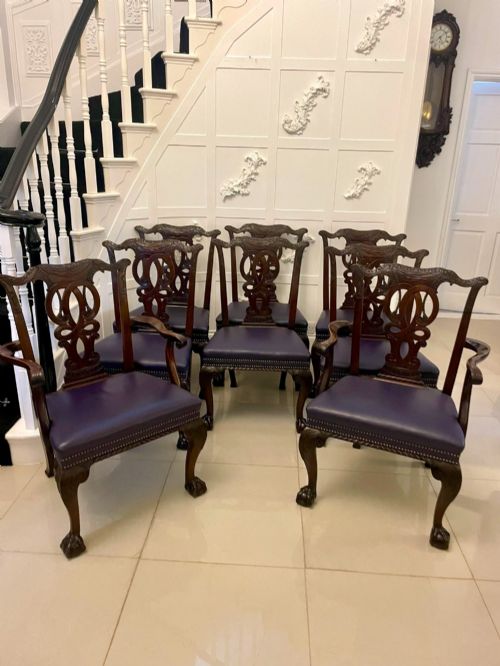
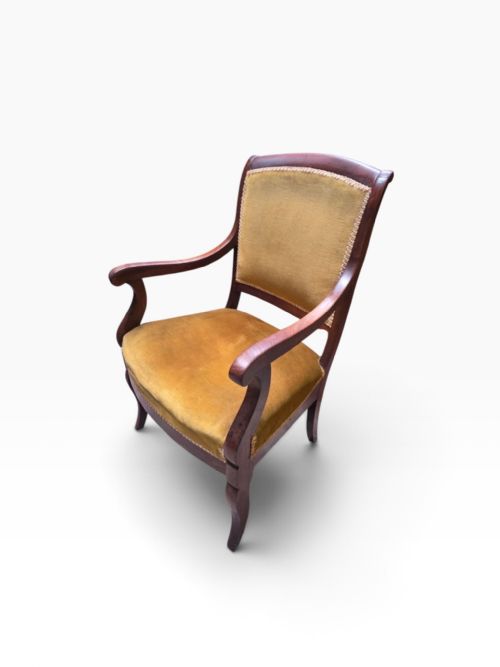
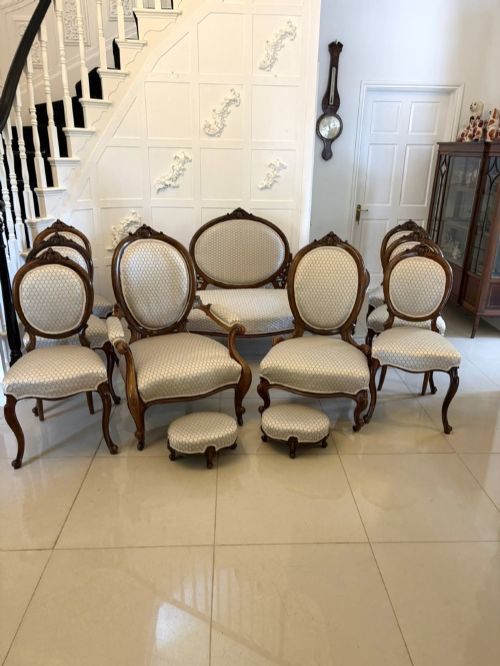
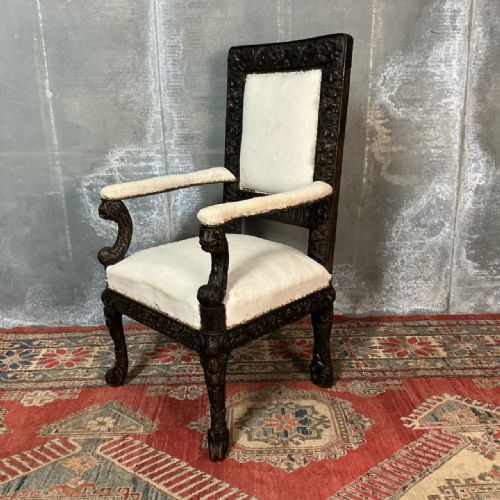
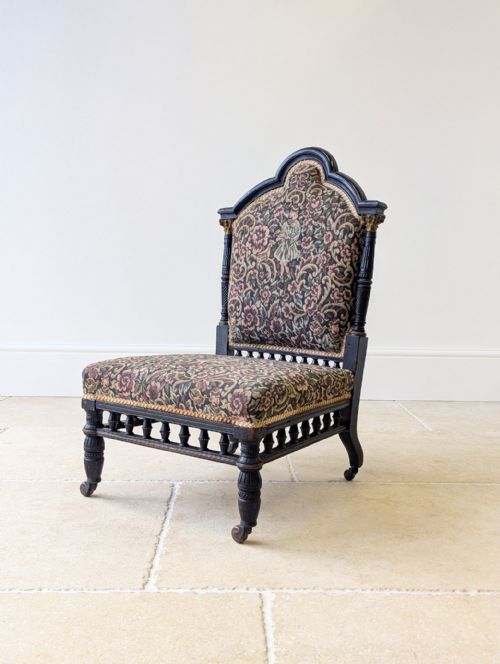
Victorian side armchairs encompass a wide variety of nineteenth-century seating forms, ranging from low salon chairs and nursing chairs to bedroom chairs and occasional seats. These pieces emerge from a period spanning the mid-nineteenth century through to nineteen hundred, reflecting shifting domestic fashions across sitting rooms and parlours.
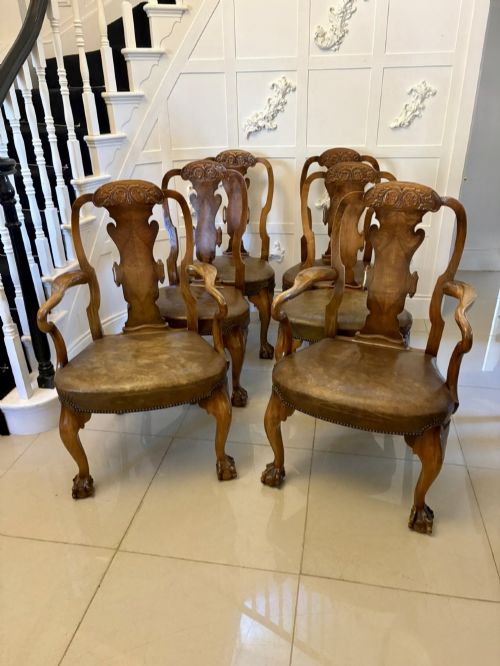
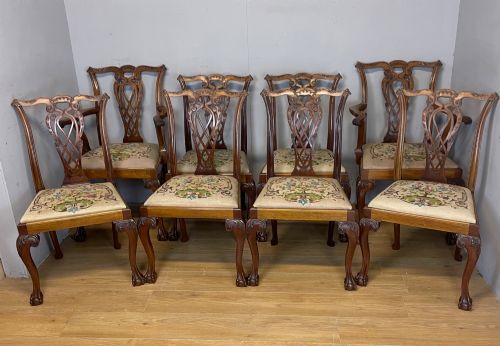
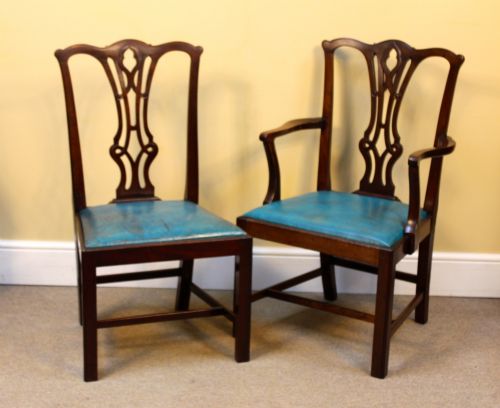
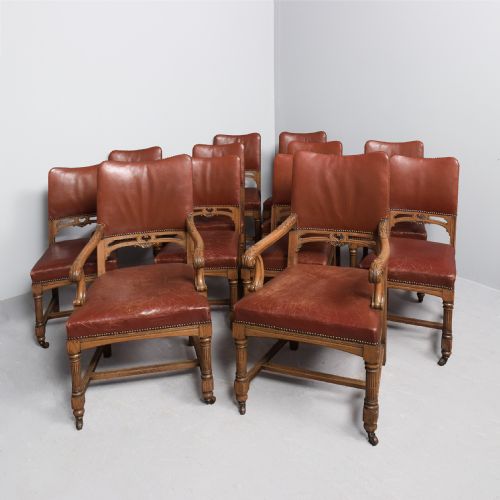
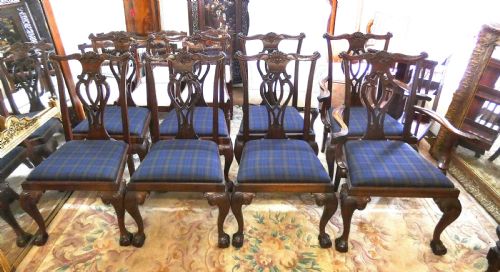
The selection here frequently presents dining chairs with carvers alongside specialised low chairs, library chairs, and upholstered fireside models. While many examples stand independently, others survive as part of larger dining sets or matching drawing-room suites.
Buyers encountering this phrase commonly find mahogany, walnut, and oak frameworks paired with various textile coverings, spanning plain timber backs to elaborately carved walnut and ebonised frames.
How they were made
Cabinetmakers and joiners of the period relied on solid hardwoods such as mahogany, walnut, and oak to construct durable chair frames, often utilising turned, carved, or ebonised details to achieve specific revival and aesthetic styles.
Upholstered components relied on traditional stuffing materials, frequently paired with surface textiles like leather, velvet, cane, or rush inserts fixed directly into the wooden framework with brass tacks or webbing.
Design influences span the Aesthetic Movement, Gothic Revival, Chippendale style, Art Nouveau, and Regency periods.
What varies in quality
The distinction between standard commercial seating and exceptional cabinetwork rests upon the depth of the carving, the selection of figured timber veneers such as burr walnut, and the structural integrity of the joinery.
Refined examples demonstrate meticulous attention to turning, balanced proportions, and original timber patination, whereas lesser versions rely on simpler turnings and plain secondary woods.
Warings·Howard and Sons
The Victorian Side Armchairs Glossary
- Bergère
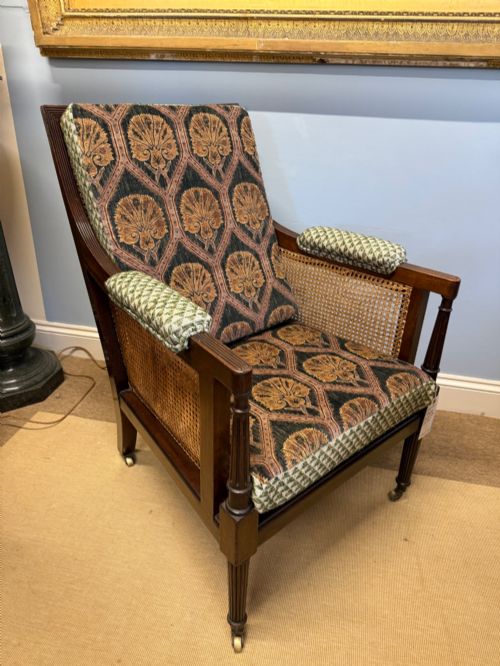
- An enclosed upholstered armchair with cane or upholstered sides panels. This French-inspired form gained popularity in English libraries and drawing rooms during the nineteenth century.
- Carver
- An armchair designed to match a set of single dining chairs, traditionally positioned at the head of a dining table. These pieces often incorporate open arms attached to the main uprights.
- Ebonised
- Wood treated with a dark finish to imitate expensive ebony. This technique frequently appears on nineteenth-century aesthetic movement furniture.
- Nursing chair
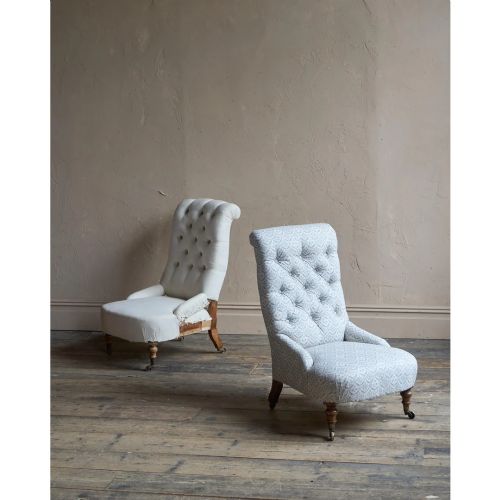
- A low-seated upholstered chair designed for comfort near a nursery hearth. The shorter stature allowed mothers to tend to infants with ease.
- Salon chair
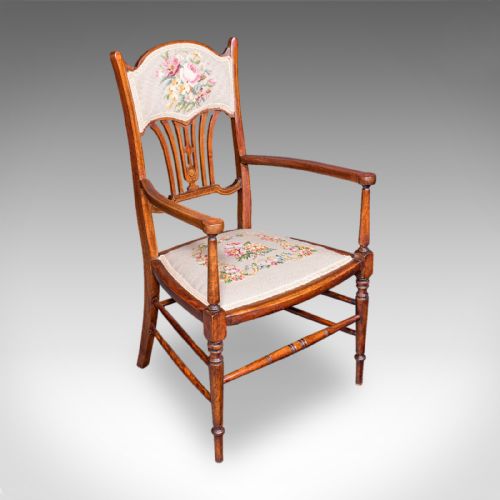
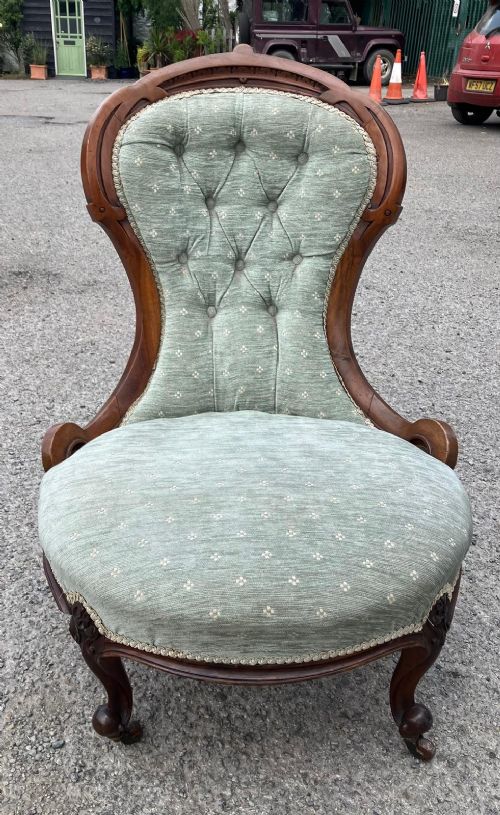
- A light, decorative chair intended for formal reception rooms. These pieces often feature carved walnut or mahogany frames and elaborate upholstery.
Victorian Side Armchairs: Frequently Asked Questions
What is a side armchair?
A side armchair is a smaller upholstered or timber seat intended for occasional use in bedrooms, drawing rooms, or around a dining table. These forms provide supportive armrests without the heavy proportions of a standard fireside chair.
Such pieces date predominantly from the nineteenth century and reflect the diverse revival styles favoured by Victorian cabinetmakers.
How do I identify a Victorian chair?
Victorian chairs exhibit specific timber choices such as mahogany, walnut, and oak, alongside stylistic influences ranging from Gothic Revival to the Aesthetic Movement. Examining the joinery and turning styles helps determine the exact period.
Makers of this era employed dense hardwoods and distinct upholstery techniques that separate nineteenth-century work from later reproductions.
Where should I place a salon chair?
Salon chairs suit bedrooms, hallways, and drawing rooms where space is limited and decorative impact matters. Their compact dimensions allow them to fit into corners or act as dressing table seats.
These pieces add historical character to modern interiors when paired with complementary occasional tables.
Are these chairs comfortable for daily use?
Many Victorian side armchairs feature sprung or stuffed seats designed for comfortable drawing-room use. Low-slung nursing chairs and library bergères offer relaxed seating positions.
Upholstery support depends on the condition of the internal webbing and padding, which varies across individual antique pieces.