




Victorian Seascape Artwork
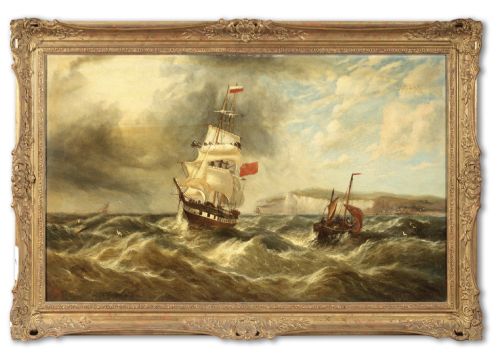
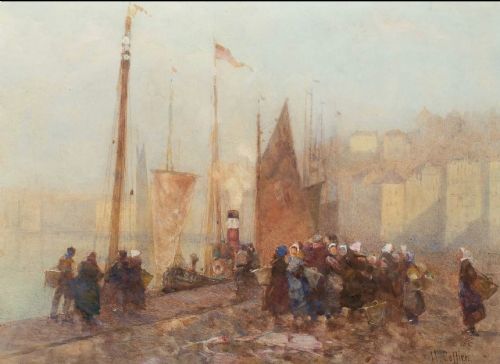
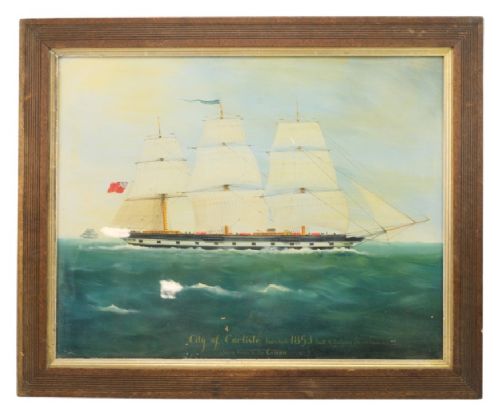
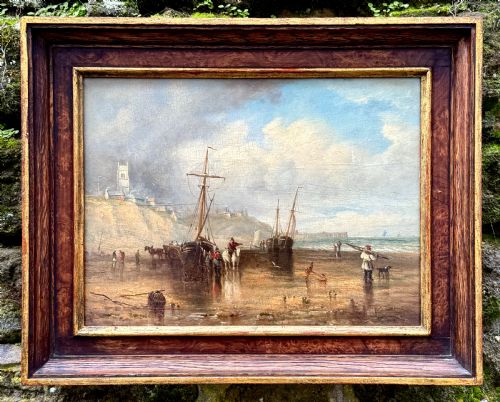
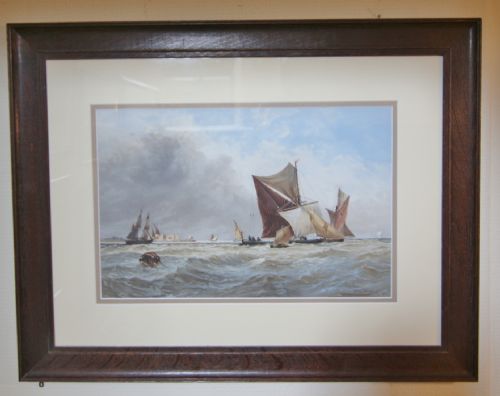
These nineteenth-century depictions capture coastal life, merchant shipping and heavy seas with remarkable painterly precision.
Victorian Seascape Artwork
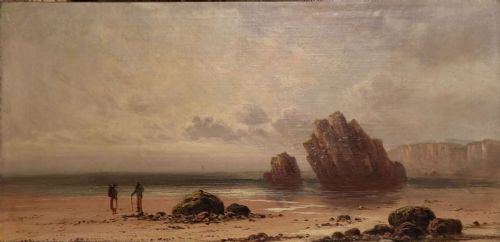
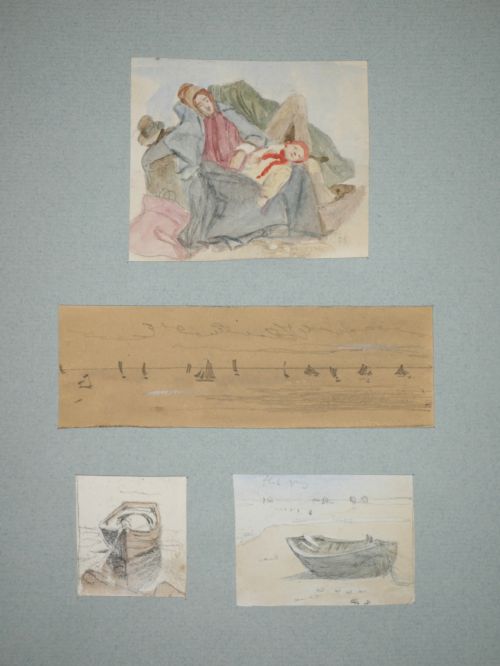
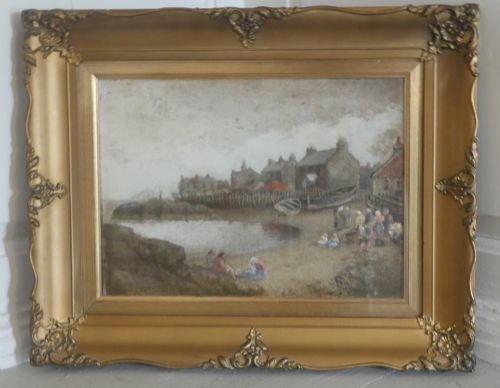
Victorian seascape artwork spans oils and watercolours depicting coastal scenes, harbour views, and vessels on the open water. Buyers examine watercolours on paper and oil paintings on canvas, frequently housed in gilt wood frames.
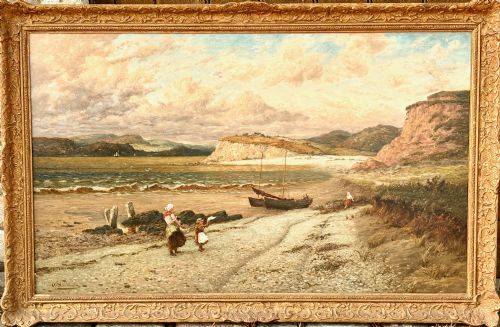
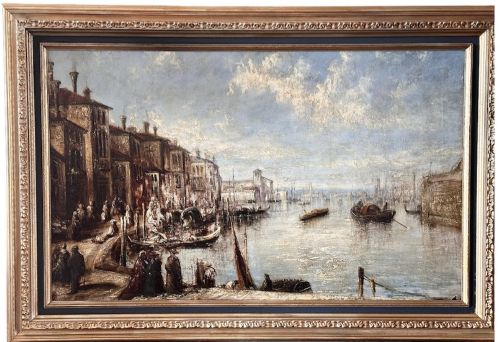
The material on this page leans heavily toward nineteenth-century production, running from mid-century works through to the turn of the twentieth century. These pieces record specific locations such as Brighton beach, St Ives, the River Thames, and foreign harbours.
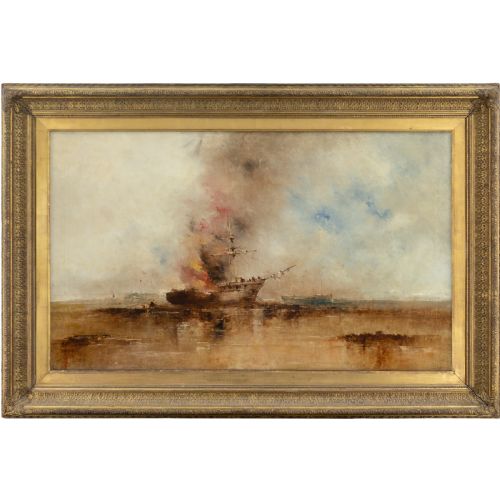
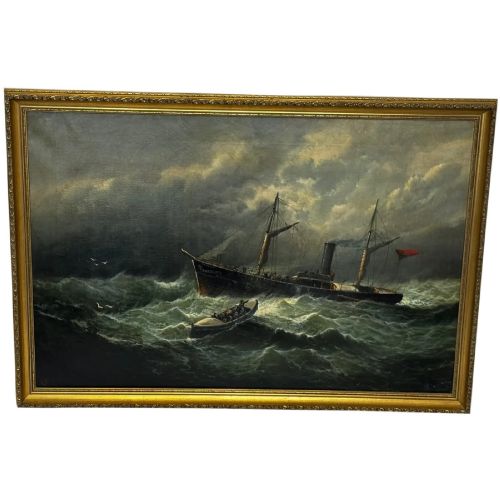
Subjects range from fishing boats and rescue vessels to grand three-masted schooners and naval ships navigating rough seas. Many examples carry signatures or attributions to recognised maritime artists of the period.
Materials and technique
Painters utilised oil paint on canvas or board, alongside watercolours applied to paper, capturing the translucent qualities of water and the heavy atmospheres of coastal weather. These pigments were worked with brushes to describe the motion of waves, the rigging of ships, and the play of light on harbour walls.
Finished works were set into timber supports and frequently framed in gilt wood, providing both protection and a formal presentation standard for domestic display. The combination of durable canvas or paper with sturdy wooden frames ensured many of these works survived across generations.
Victorian Seascape Artwork Retail Price Guide 2026
Typical asking prices for victorian seascape artwork among the pieces listed under this phrase on Sellingantiques today, from the lower quarter to the upper quarter. They describe what is for sale here now, not the wider market.
Several artists captured the specific hazards of local waters, painting rescue vessels launching directly into rough grey surf.
Distinctions in execution
Quality rests upon the artist's command of maritime movement, atmospheric light, and correct nautical detail in the rigging and hull structures of vessels. Stronger works demonstrate a confident handling of water and sky rather than stiff or formulaic reproduction.
The depth of provenance, legible signatures, and framing materials also separate standard decorative pieces from accomplished fine art examples. Condition of the underlying canvas or paper and the preservation of the original gilt frame further influence the standing of each piece.
James Orrock·James Smetham·William McAlpine·Edward Mills·William Banks Fortescue·John Rose Miles·William Broome·Francis Moltino·Hector Caffieri·Bernard Benedict Hemy·Thomas Creswick·TB Hardy·John Wilson Carmichael·Lai Fong·John Moore of Ipswich·Nicholas Condy·William Henry Williamson·John Holland·George Stanfield Walters·Abraham Hulk I·Henry Barlow Carter·John Moxon·William Frederick Settle·Charles William Wyllie·Charles William Adderton
The Victorian Seascape Artwork Glossary
- Watercolour
- A painting method where fine pigments are suspended in a water-based solution and applied to paper. This medium allows for luminous washes representing sea and sky.
- Oil on Canvas
- Pigments bound in drying oil applied to a stretched woven fabric support. This technique provides rich colour depth and durability.
- Gilt Wood
- Timber carved and coated with a thin layer of gold leaf or metallic gilt finish. These frames surround and protect the painted surface.
- Maritime Art
- Depictions of the sea, ships, beaches, and harbours. This category forms the core subject matter of the works gathered here.
Victorian Seascape Artwork: Frequently Asked Questions
What subjects do these maritime paintings show?
These works depict coastal villages, bustling harbours, and ships navigating coastal waters or open seas. Common scenes include fishing boats landing their catch, merchant barques, and dramatic rescue operations.
Many pieces record specific British and international locations, ranging from the River Thames and Isle of Man to Venetian canals and foreign ports.
Are these works painted on canvas or paper?
The listings include both oil paintings executed on canvas or board and watercolours created on paper supports. Oils typically offer heavier texture and deeper colour saturation.
Watercolours provide lighter, more transparent effects, particularly suited for capturing coastal mists and open skies.
How should I display a nineteenth-century painting?
These pieces require placement away from direct sunlight and damp conditions to protect the paper, canvas, and gilt wooden frames. Maintaining stable indoor temperatures prevents warping of the wooden supports and cracking of the paint layer.
Most works arrive framed in gilt wood, ready for hanging on domestic walls.
How can I tell different periods apart?
Dating relies on artist lifespan dates, stylistic shifts between mid-century realism and later impressionist touches, and occasional written dates in signatures or titles. Mid-century works often focus on narrative maritime events, while later Victorian pieces lean toward atmospheric coastal studies.
Framing styles and materials can also offer clues to the decade of production.