



Victorian Samovar Urn
These Victorian samovar urn vessels bring warmth and formal service to a room, spanning copper, brass, and silver plate.
Victorian Samovar Urn
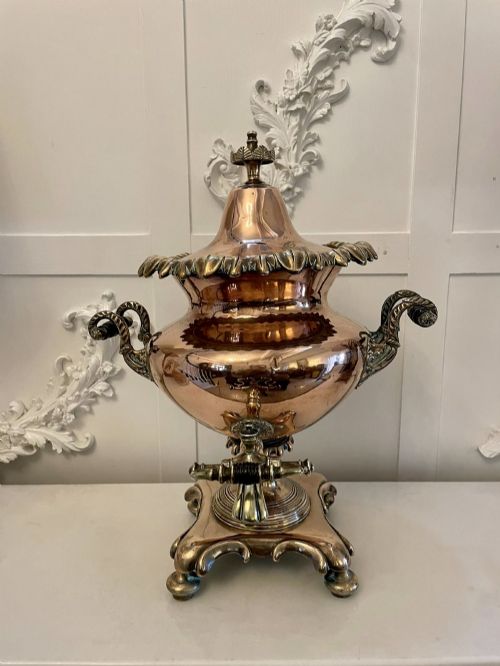
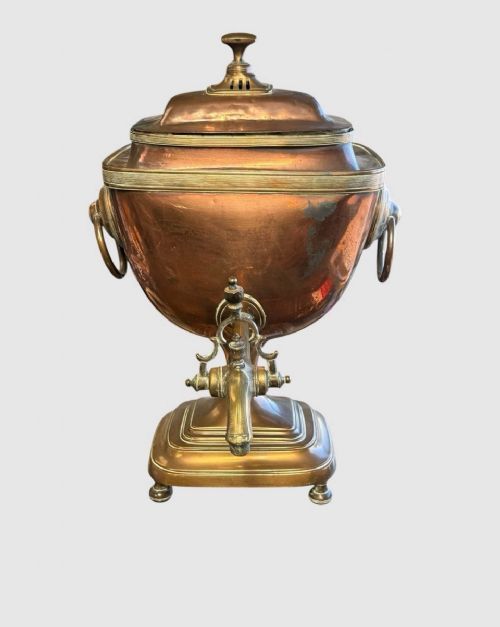
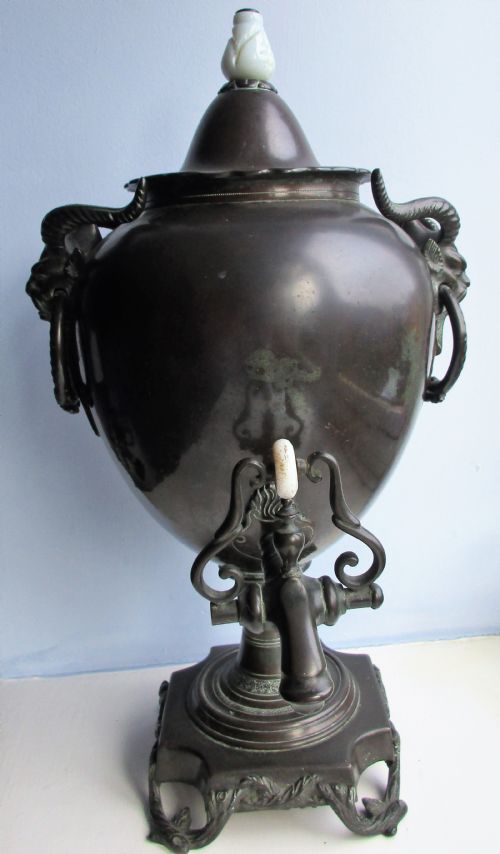
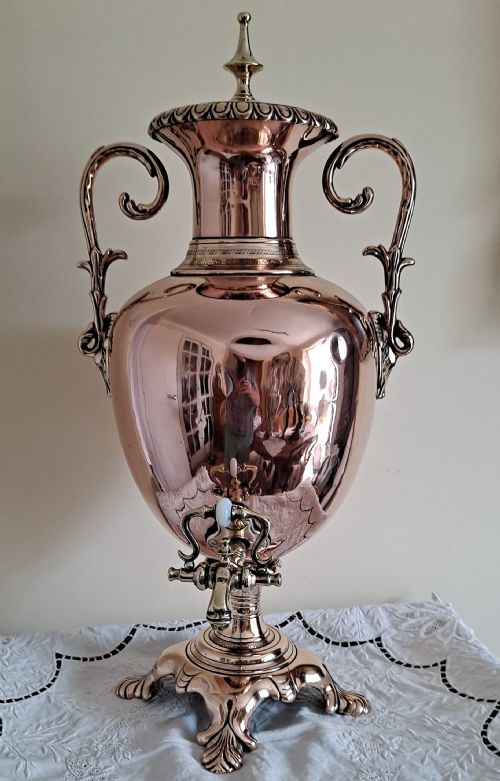
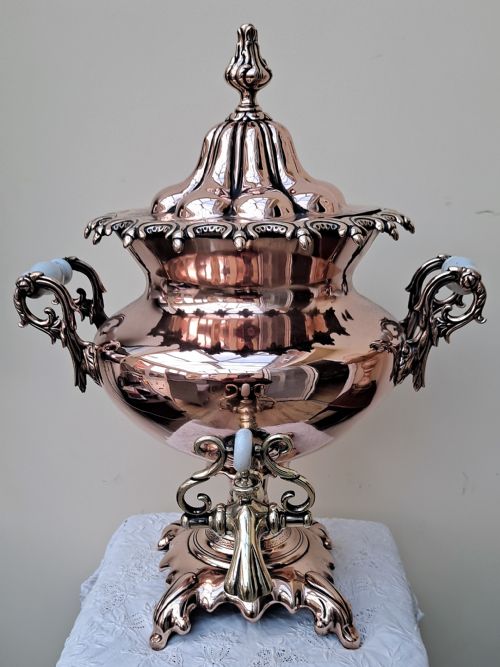
A Victorian samovar urn is a vessel designed for heating and dispensing hot water, frequently taking the form of a tea urn, tea kettle, or spirit kettle. These pieces emerge predominantly from the nineteenth century, with Victorian examples appearing alongside Georgian, Regency, and Edwardian interpretations.
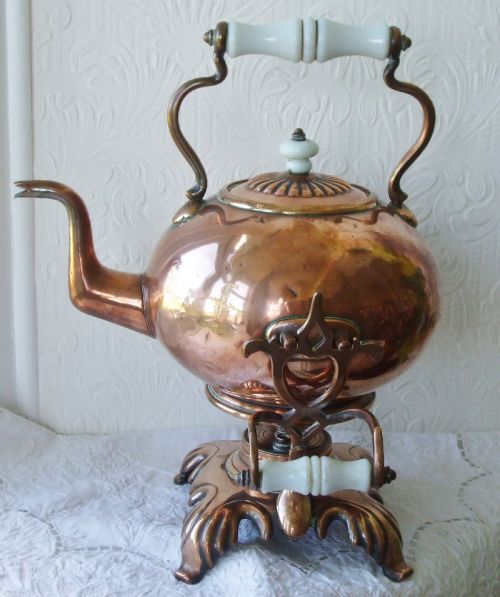
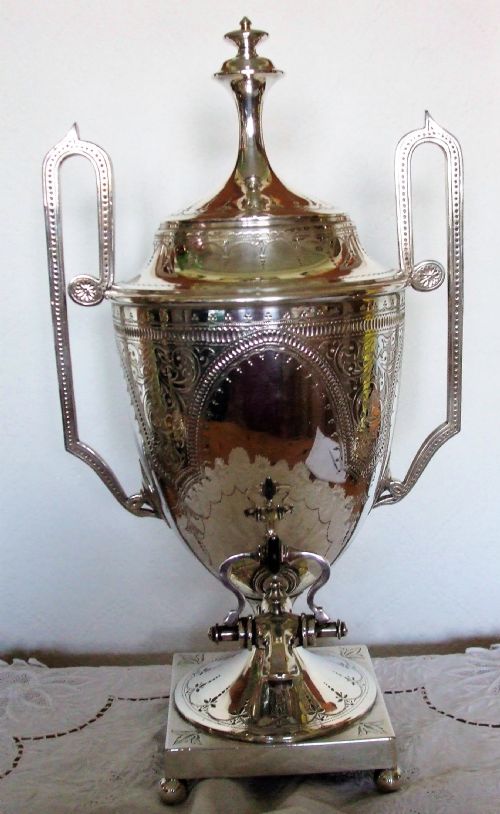
The forms range from traditional tea urns and samovars to dresser style brass spirit kettles and tea kettles on stands complete with spirit burners. Copper and brass versions sit beside silver plated examples, demonstrating the variety utilised for beverage service in domestic interiors of the period.
The selection on this page centres heavily on Victorian copper samovars and silver plated tea urns by makers such as Walker & Hall and Benetfink & Co. Buyers also encounter japanned Pontypool Ware and pieces reflecting French nineteenth century influence alongside standard English forms.
Materials and construction
Metals form the core of these pieces, with heavy gauge copper and brass dominating alongside silver plate on copper or other base metals. Ebonised wood, bone, and ceramic elements frequently appear as insulating mounts on handles and spouts to protect the user's hand.
Constructors employed skilled metalworking techniques, hammering and joining sheets of copper and brass to form body vessels, often pairing them with cast spigots and taps. Silver plated items from firms like Walker & Hall utilise Sheffield plating methods, whilst Japanned items incorporate specialised lacquer techniques associated with Pontypool Ware.
Victorian Samovar Urn Retail Price Guide 2026
Typical asking prices for victorian samovar urn among the pieces listed under this phrase on Sellingantiques today, from the lower quarter to the upper quarter. They describe what is for sale here now, not the wider market.
Materials in this category span copper, brass, silver plate, ceramic, bone, and ebonised wood across the nineteenth and early twentieth centuries.
Indicators of quality
Subtleties of gauge thickness and metal purity separate standard utility vessels from pieces marked as high quality. Heavier gauge copper and substantial brass mountings indicate superior construction that retained heat more effectively during service.
The refinement of the casting on taps, handles, and feet dictates the aesthetic standing of an urn. Crisp detailing on French silver plated examples or well executed japanning on Pontypool Ware shows the hand of superior makers.
Walker & Hall·Benetfink & Co·Risler and Carré Paris
The Victorian Samovar Urn Glossary
- Samovar
- A heated metal container traditionally used to boil and heat water in Russia and throughout European formal dining. These vessels typically feature an internal central tube for solid fuel or incorporate a spirit burner beneath.
- Spigot
- A tap or spout fitted near the base of the urn to control the flow of hot water into a teapot or cup. They are frequently cast in brass and incorporate turned wooden or bone handles.
- Japanning
- A type of European finish that emulates Japanese lacquer work, achieved through the application of heat dried varnishes. This technique is notably seen on Pontypool Ware tea urns.
- Spirit Burner
- A small lamp containing alcohol or methylated spirits placed beneath a kettle or urn to maintain water temperature. These burners sit within metal stands designed specifically for the vessel.
- Pontypool Ware
- Tinned sheet iron or metalware finished with distinctive japanned varnishes, produced in South Wales. These pieces often bear maker details or retailer stamps from London.
Victorian Samovar Urn: Frequently Asked Questions
What is a Victorian samovar urn?
A Victorian samovar urn is a metal vessel created to heat and dispense water for tea service during the nineteenth century. These items were centrepieces for domestic hospitality.
They combine utilitarian function with decorative metalwork, utilising materials such as copper, brass, and silver plate.
How do you use a spirit kettle?
A spirit kettle sits upon a metal stand above a small burner filled with alcohol or methylated spirits. Lighting the burner keeps the water inside the kettle hot during tea service.
The design allows the kettle to be tilted on its stand or removed for pouring.
What is Pontypool Ware?
Pontypool Ware refers to metal items finished with specialised japanned lacquers originating from the Welsh town of Pontypool. These pieces display dark, glossy surfaces often accented with gilt decoration.
Retailers in London frequently sold these decorated urns alongside standard copper and brass goods.
How do I care for copper urns?
Copper urns require gentle cleaning with appropriate metal polishes to maintain their finish without removing the underlying material. Many owners prefer to let a natural patina develop over time.
Avoid abrasive cleaners that can damage decorative engraving or wear through silver plating.