
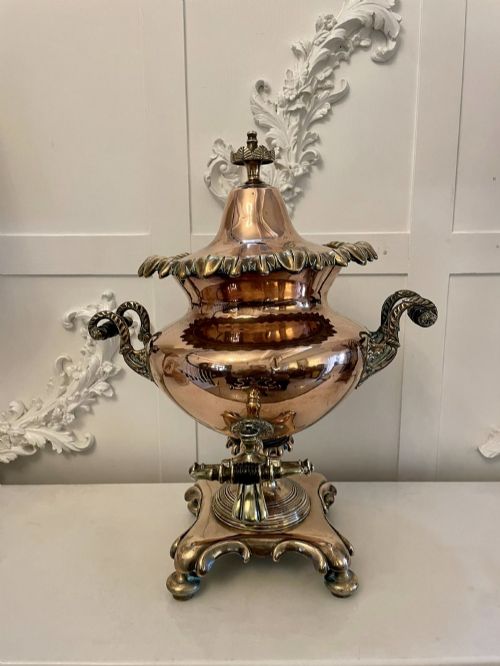
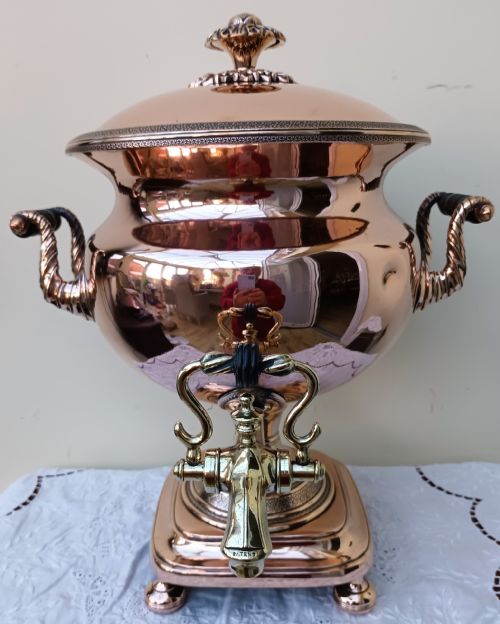
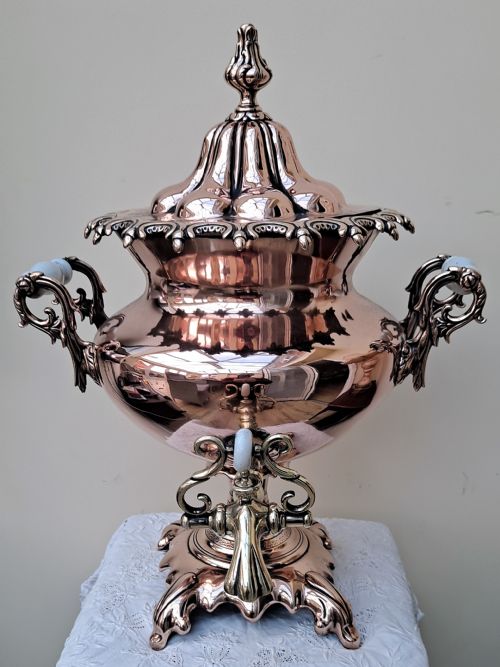
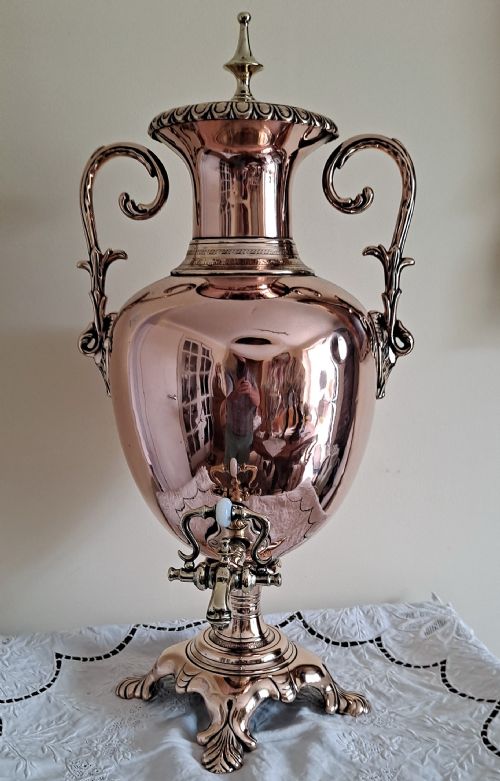


Copper Water Samovar
These copper water samovar pieces are commanding vessels built for service, bringing warmth and presence to any historic interior.
Copper Water Samovar
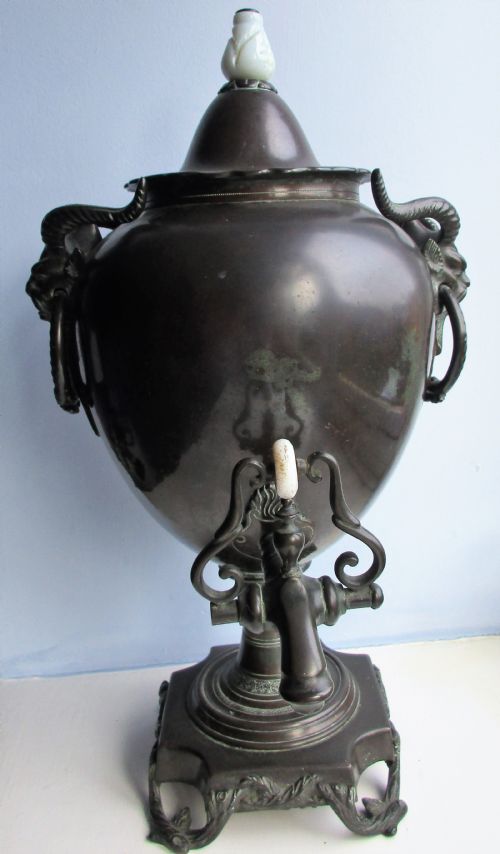
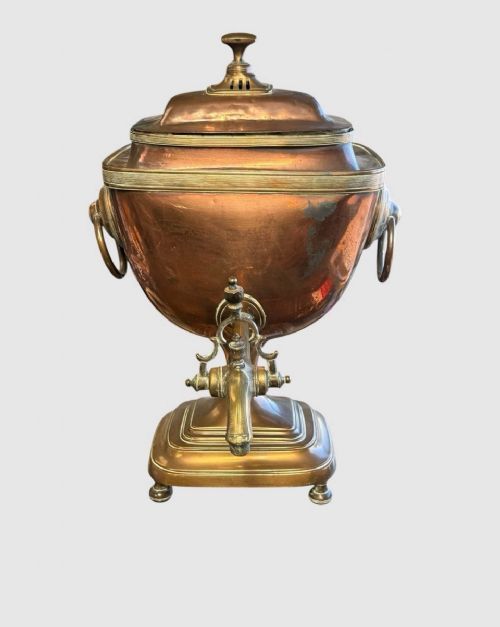
A copper water samovar is a substantial vessel designed for heating and dispensing water, appearing primarily in Georgian, Regency, and Victorian forms. These pieces function as tea urns and decorative vessels, combining utility with formal display.
Materials and construction methods
Makers formed these bodies from hammered or sheet copper, joining seams securely and pairing the metal with contrasting brass taps, handles, and feet. Bell metal, bronze, and ebonised wood appear alongside ceramic components to insulate or decorate the handles and spouts.
Surface treatments vary from polished finishes to patinated metal and japanned Pontypool ware, sometimes incorporating cloisonne enamel as seen in Japanese export items. Internal elements often include original fittings designed to hold heated metal cylinders or coals.
Listings feature pieces spanning the Georgian, Regency, and Victorian eras, alongside Japanese export work from the Meiji period.
Markers of fine execution
Quality rests in the weight of the metal and the crispness of the casting on the brass spouts, handles, and finials. Superior examples retain their original fittings and internal heating components rather than replacement parts.
Refinement shows in the hand-beaten contours of the copper body and the integration of decorative elements such as bone or ebonised wood accents. Pontypool japanning and intricate surface decoration separate standard utility items from display pieces.
Benetfink And Co London
The Copper Water Samovar Glossary
- Samovar
- A heated metal vessel traditionally used to boil water for tea. These containers generally feature an internal vertical tube for heating elements.
- Pontypool Ware
- British japanned metalware produced in Wales, known for its smooth, dark lacquered finish. This technique creates a hard, glossy surface on iron or copper bases.
- Bell Metal
- An alloy of copper and tin used for cast components. This material produces durable spouts and mounts with a resonant quality.
- Japanned
- A European imitation of East Asian lacquerwork applied to metal objects. The process involves multiple layers of varnish baked to a hard finish.
Copper Water Samovar: Frequently Asked Questions
What is a copper water samovar used for?
These vessels were designed to heat water and keep it hot for tea service during large gatherings and formal meals.
Today, they serve primarily as decorative statement pieces in traditional dining rooms and kitchens.
How do I clean a copper samovar?
Dust gently with a soft cloth and avoid harsh chemical abrasives that strip the historic surface.
Allow the metal to retain its natural patina rather than polishing it to a bright shine.
Are the internal fittings usually intact?
Many examples retain their original taps, handles, and internal heating tubes, though some function purely as decorative vessels now.
Check individual listings for details regarding the presence of original internal components.
How do I distinguish Georgian from Victorian pieces?
Georgian and Regency examples tend to display classical urn proportions with restrained neoclassical mountings.
Victorian pieces often introduce heavier ornamentation, varied japanned finishes, and diverse material combinations like ceramic and bone.