
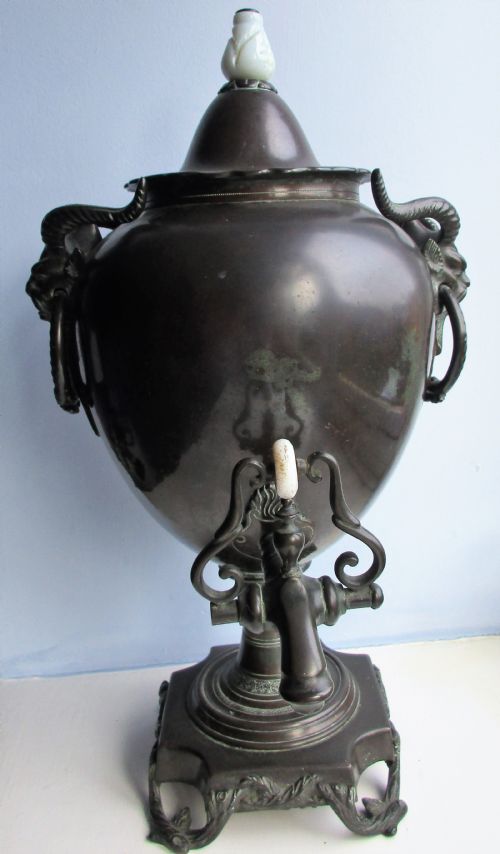


Copper Brass Tea Urn
A copper brass tea urn brings warmth and historic presence to a room, offering the classic vessel for hot water service.
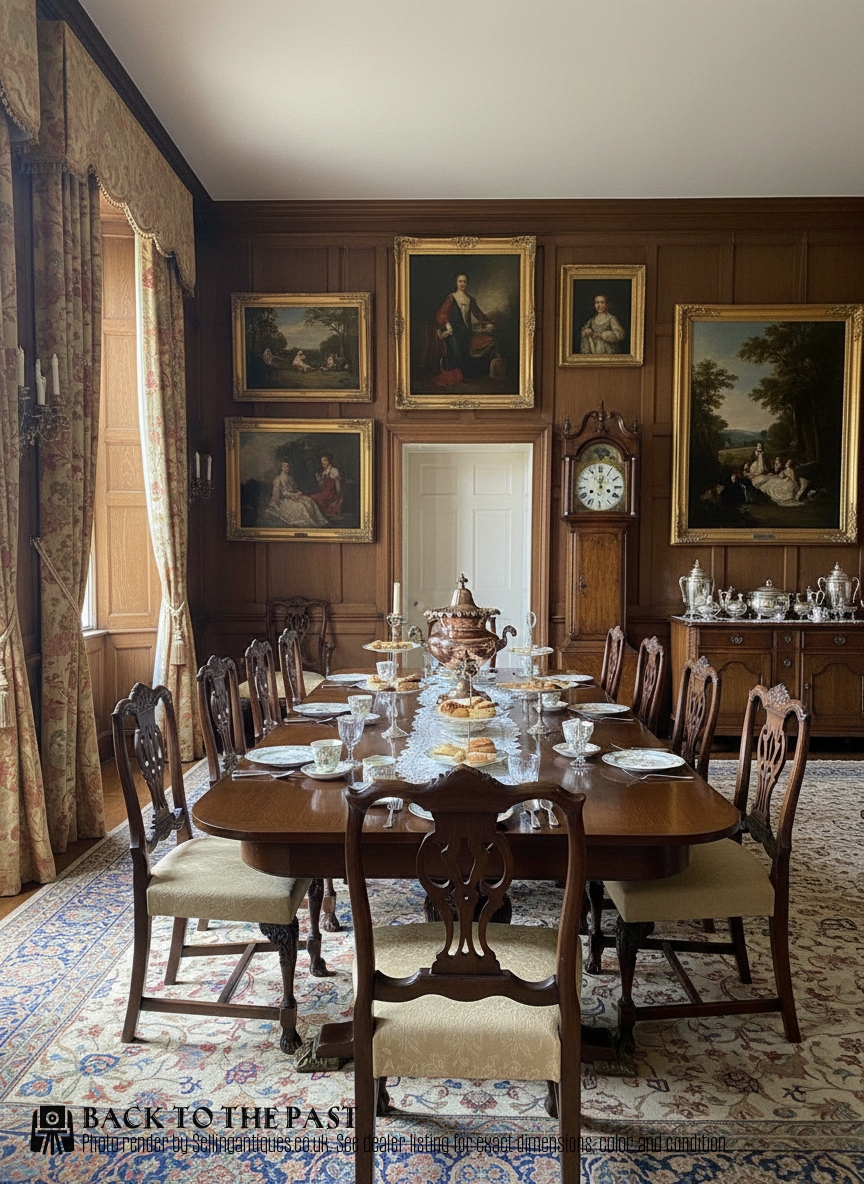
Copper Brass Tea Urn
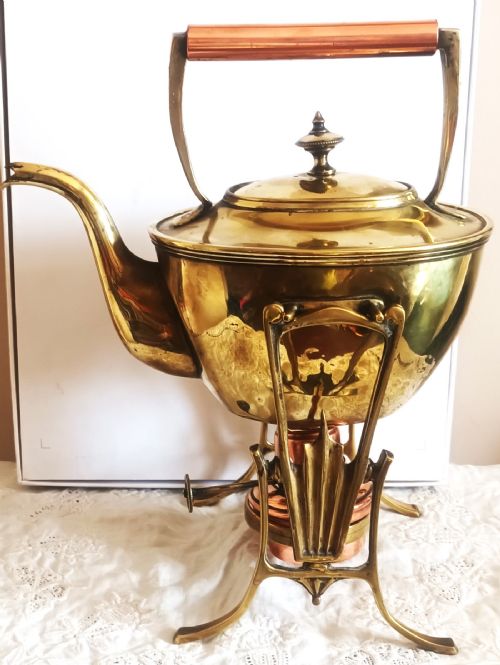
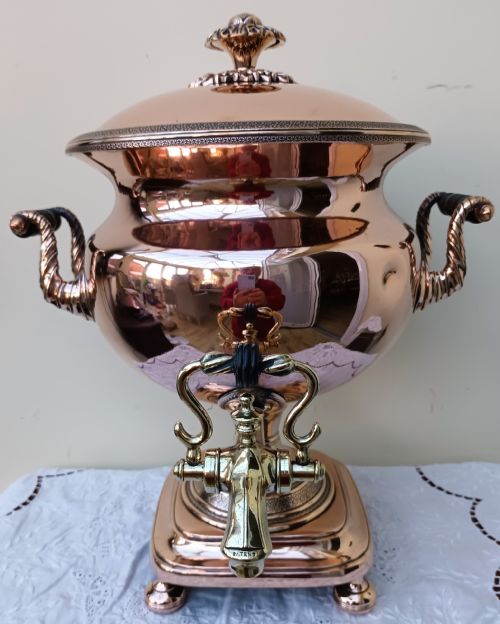
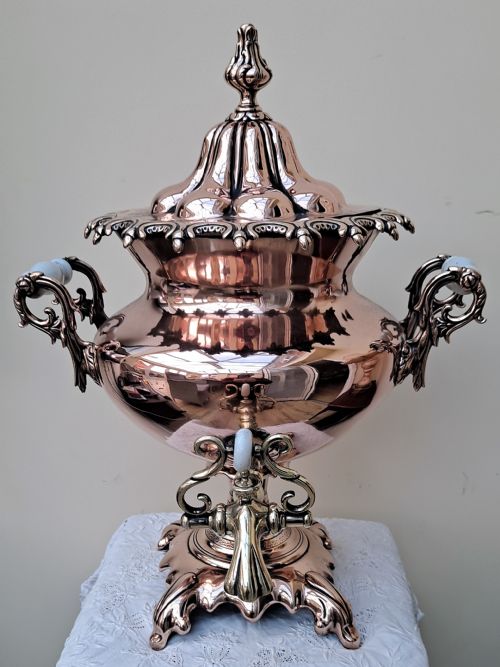
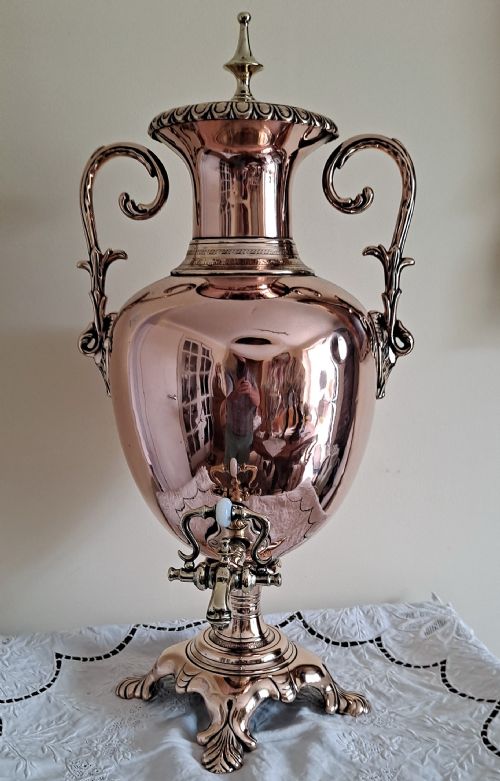
A copper brass tea urn is a substantial vessel designed for heating and dispensing water, frequently encountered in samovar and spirit kettle forms. The pieces available here span Georgian, Regency, and Victorian periods, showcasing how domestic tea service evolved across the nineteenth century.
Most examples combine warm copper bodies with contrasting brass taps, handles, and mounts. You will frequently find these objects categorized alongside kettles and water urns, reflecting their shared heritage in period hospitality.
Distinguishing quality levels
Quality rests in the crispness of brass castings, the weight of the copper body, and the integrity of original fittings. Pieces designated with George III or Regency origins often display more refined proportions and ornate detailing.
Makers such as William Soutter & Sons and Benetfink & Co of London represent the higher echelon of production. Superior examples maintain their structural balance and feature harmonious combinations of brass, bone, or ebonised wood.
Listings incorporate items featuring copper, brass, bone, wood, ceramic, ebonised wood, patinated metal, and iron.
William Soutter & Sons·Benetfink & Co
The Copper Brass Tea Urn Glossary
- Samovar
- A heated metal container traditionally used to boil and heat water in Russia and throughout Europe. Many English versions adopt this classical form for formal tea service.
- Spirit kettle
- A portable water vessel mounted on a stand above a small alcohol burner. These pieces allow water to remain hot at the tea table.
- Bell metal
- An alloy of copper and tin traditionally used for bells and superior metalwork fittings. It provides durability and a distinct golden tone to urn components.
- Pontypool ware
- Japanned metalware originating from Pontypool in Wales. Items bearing this attribution display specialised lacquering techniques on metal surfaces.
Copper Brass Tea Urn: Frequently Asked Questions
How do I date a copper tea urn?
Dating relies on stylistic clues, manufacturing techniques, and material combinations spanning the Georgian, Regency, and Victorian eras.
Earlier pieces from the Georgian and Regency periods often show distinct neoclassical proportions, whereas Victorian examples tend toward heavier ornamentation and diverse maker marks.
Were these urns used for actual tea?
These vessels were primarily designed to heat and dispense hot water rather than brew tea directly inside the main chamber.
A smaller teapot containing strong tea leaves would sit nearby, allowing guests to dilute the brew with hot water drawn straight from the urn's brass tap.
How do I clean a copper and brass urn?
Maintenance requires gentle dusting and occasional cleaning with appropriate non-abrasive metal cleaners formulated for copper and brass.
Preserving the natural patina is generally preferred by collectors over achieving a mirror-bright polish, as it retains the historic character of the piece.
What is the difference between an urn and a spirit kettle?
An urn is typically a large, stationary vessel fixed to a base with a spigot near the base for drawing water.
A spirit kettle is usually smaller and suspended within a dedicated metal stand above an integral burner for table use.