




Victorian Salt Glazed Pitcher
A victorian salt glazed pitcher is a dense, salt-glazed stoneware vessel built for service and display, prized for its tactile orange-peel texture and crisp relief moulding.
Victorian Salt Glazed Pitcher
A victorian salt glazed pitcher spans sturdy utility jugs and ornamental exhibition pieces, featuring standard pouring vessels alongside puzzle jugs, ewers, and matching bowl sets. These pieces emerge primarily from the nineteenth century, including specific decades from eighteen-fifty to nineteen-hundred, carrying the heavy presence characteristic of the period.
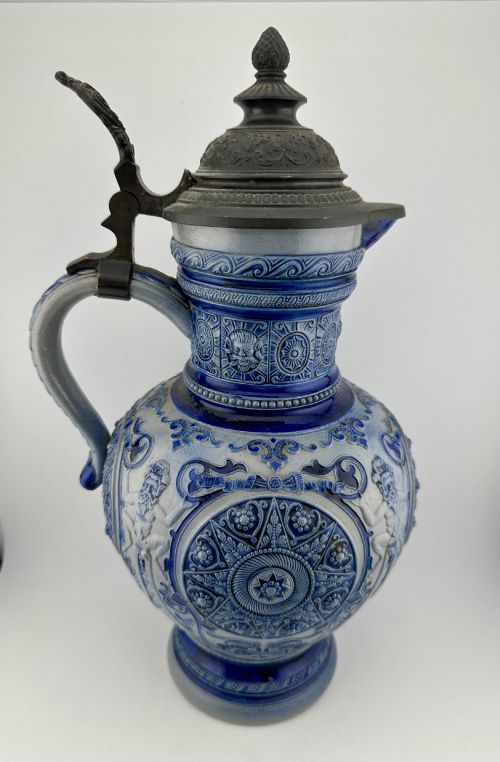
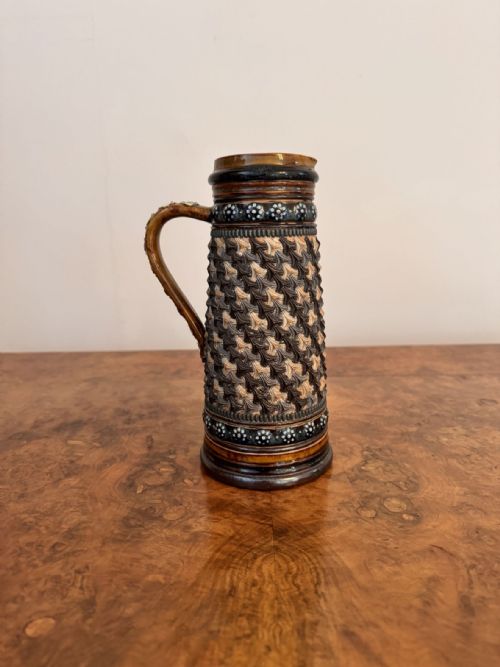
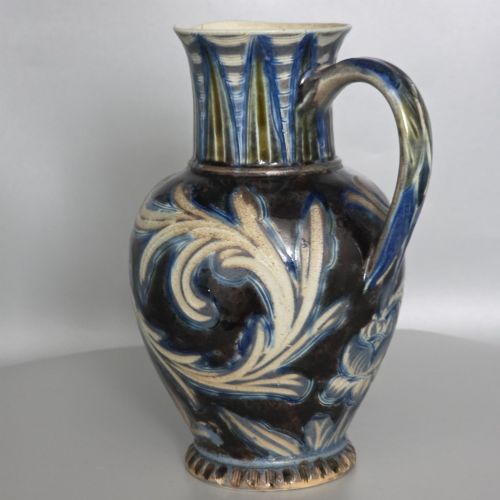
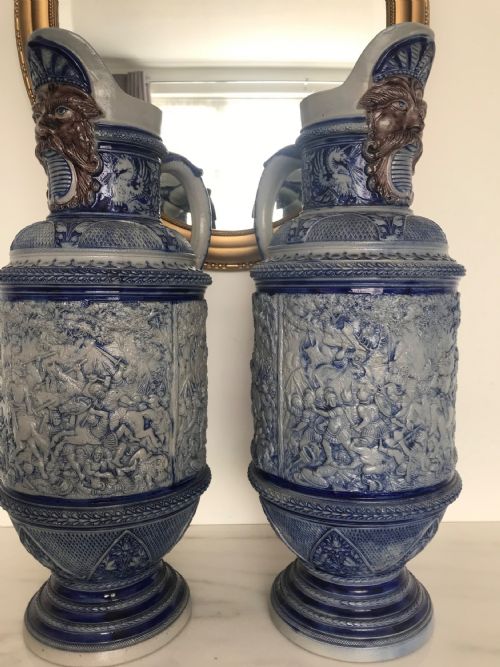
The dominant origin on this page is Doulton Lambeth, alongside German Westerwald imports that bring distinct cobalt blue decoration and historic battle scenes. Forms range from large harvest jugs with silver rims to commemorative jubilee pieces and elaborate art pottery creations.
Materials and methods
Potters built a victorian salt glazed pitcher using dense clay bodies, throwing the forms on a wheel before applying sprigged reliefs and incised patterns by hand. Common decorative techniques include cream sprigging against darker bodies and rich cobalt blue pigment applied under the glaze.
The characteristic surface texture comes from common salt thrown into the kiln at the peak temperature, which vaporises and reacts with the silica in the clay body to form a durable glassy coating.
Victorian Salt Glazed Pitcher Retail Price Guide 2026
Typical asking prices for victorian salt glazed pitcher among the pieces listed under this phrase on Sellingantiques today, from the lower quarter to the upper quarter. They describe what is for sale here now, not the wider market.
Puzzle jugs invite bemused guests to solve hidden tubular pathways just to take a sip of ale.
Assessing quality and execution
Quality rests in the crispness of the modelled reliefs, the depth of the salt glaze texture, and the precision of hand-incised ornamentation. Pieces bearing the marks of accomplished artists or notable potteries display superior balance and more intricate surface detail.
Additional refinements such as hallmarked silver rims, specialised forms like puzzle jugs, or matching basin sets elevate an object above standard utilitarian production.
Doulton Lambeth·Simon Peter Gerz·Emma Shute·Royal Doulton
The Victorian Salt Glazed Pitcher Glossary
- Salt glaze
- A vitreous coating formed by throwing salt into the kiln during firing, producing a pitted texture resembling orange peel. This chemical reaction creates a hard, impermeable finish integral to nineteenth-century stoneware.
- Sprigging
- The technique of applying moulded clay reliefs to the unfired body of a vessel using slip as an adhesive. These raised motifs often depict botanical themes, historical figures, or hunting scenes.
- Puzzle jug
- A specialised ceramic vessel featuring a hollow, perforated rim and multiple spouts that trick the user into spilling the contents unless they discover the correct drinking path. They demonstrate the playful skill of the potter.
- Ewer
- A large pitcher with a wide spout and elaborate handle, traditionally used for holding water rather than serving drink. These decorative forms often accompanied washing bowls in Victorian households.
- Stoneware
- A heavy, opaque ceramic fired at high temperatures until vitrified and non-porous. It resists acids and moisture, making it ideal for storage and daily service.
Victorian Salt Glazed Pitcher: Frequently Asked Questions
How do I spot a genuine piece?
Examine the surface for the characteristic orange-peel texture produced by salt glazing and look for maker stamps or incised artist initials near the base.
Heavier stonewares from this era often display crisp sprigged reliefs and natural clay variations consistent with nineteenth-century kiln technology.
Were these jugs used daily?
Many examples served practical household functions such as holding water, ale, or harvest cider, while others functioned purely as decorative art pottery.
Silver rims and commemorative themes indicate pieces intended for display or special civic occasions rather than rough kitchen utility.
What is a puzzle jug?
A puzzle jug is a drinking vessel featuring a hollow tubular rim with hidden holes that prevent normal pouring unless the drinker covers specific secondary orifices with their fingers.
Potters used these ingenious items in taverns and social gatherings to test the wits of guests.
How do English and German pieces differ?
English pieces on this page heavily feature Doulton Lambeth stonewares with incised art pottery designs, harvest motifs, and cream sprigging.
German Westerwald productions are readily distinguished by their vibrant cobalt blue coloration and moulded historical battle scenes.