




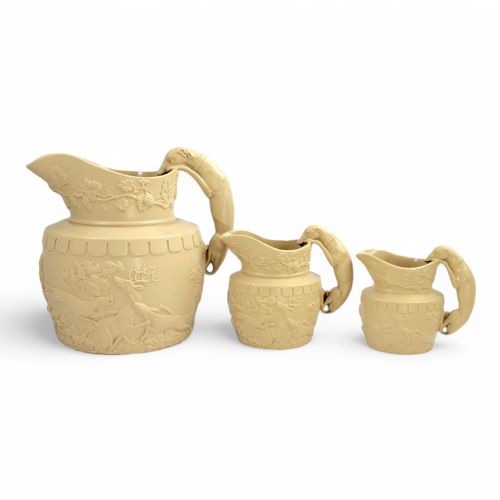

Decorative Stoneware Pitcher
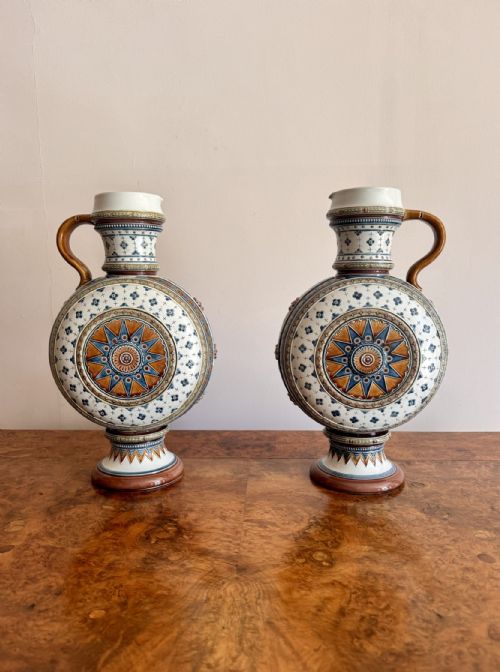
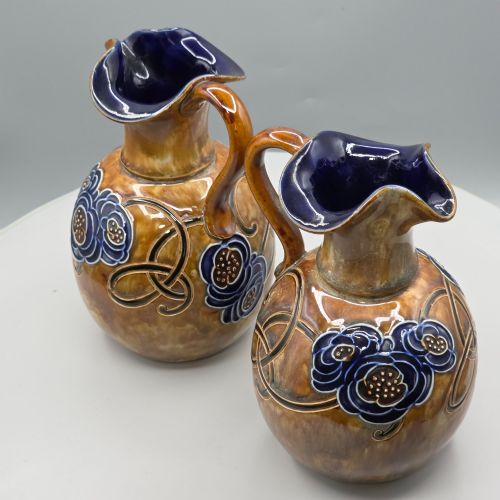
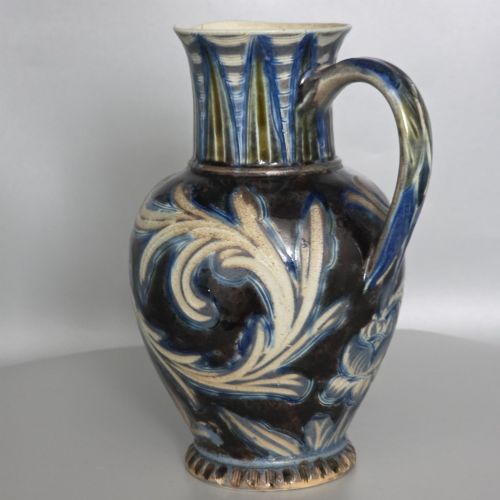
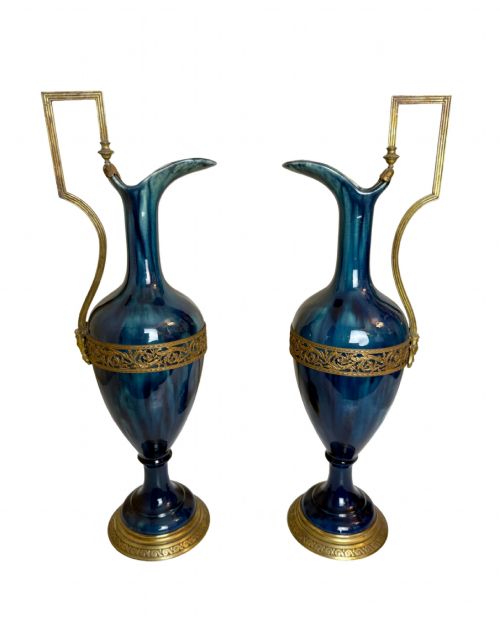
These decorative stoneware pitcher examples bring tactile heft and rich glaze work to a table, offering both utility and strong period character.
Decorative Stoneware Pitcher
A decorative stoneware pitcher sits firmly at the intersection of utility and display, functioning historically for water, wine or celebratory ale while carrying ornamental heft. When you explore a decorative stoneware pitcher today, you encounter robust vessels shaped across the nineteenth century and early twentieth century, spanning standard domestic jugs to elaborate art pottery.
The pieces represented here lean heavily into Victorian production, stretching from the Regency era through to Arts and Crafts workshops. Common forms include large ewers, graduated sets, and commemorative jubilee pieces, shaped by makers who elevated utilitarian clay into ornamental display objects.
Makers utilised dense, vitrified bodies that took glazes exceptionally well, resulting in surfaces that range from salt-glazed textures to rich coloured enamels. Whether meeting a pear-shaped continental carafe or a heavily incised Doulton Lambeth creation, the buyer finds substantial vessels built to command attention in a room.
Distinctions in craftsmanship and design
Quality rests in the crispness of the incising, the evenness of the glaze application, and the ambition of the form. A superior decorative stoneware pitcher displays sharp relief work and balanced proportions, whereas lesser examples show sluggish moulding and muddy surface colours.
Provenance and maker attribution elevate certain pieces significantly, transforming standard utilitarian ware into documented art pottery. The presence of clear stamps, crisply executed handles such as hound forms, and well-preserved gilt or enamel detailing marks the upper tier of surviving examples.
Decorative Stoneware Pitcher Retail Price Guide 2026
Typical asking prices for decorative stoneware pitcher among the pieces listed under this phrase on Sellingantiques today, from the lower quarter to the upper quarter. They describe what is for sale here now, not the wider market.
Several nineteenth-century pitchers feature enthusiastic hound handles, permanently poised mid-leap to assist with your morning table service.
Royal Doulton·Doulton Lambeth·Doulton Slater's·Mason's Ironstone·Minton·Phillips & Bagster
The Decorative Stoneware Pitcher Glossary
- Stoneware
- A robust, heavy ceramic fired at high temperatures until semi-vitrified. It remains completely impermeable to liquids even without a glaze.
- Salt Glaze
- A glossy, slightly pitted surface texture achieved by throwing common salt into the kiln during the peak of the firing process. This method creates an orange-peel skin unique to traditional stoneware.
- Ewer
- A large jug or pitcher characterised by a flared spout and a decorative handle, traditionally used for water at the dining table. Many Victorian examples functioned primarily as ornamental display pieces.
- Incised Pottery
- A decoration technique where patterns, lettering, or motifs are cut directly into the damp clay body before firing. This method allows for deep, tactile surface detailing.
- Majolica
- A type of earthenware coated with an opaque tin-lead glaze and painted with metallic oxide colours. It produces vibrant, glossy finishes popular during the Victorian period.
Decorative Stoneware Pitcher: Frequently Asked Questions
What is a decorative stoneware pitcher used for?
Historically, these vessels served practical roles at the dining table for holding water, ale, or wine during formal meals. Today, collectors utilise them as striking centrepieces, flower vases, or standalone decorative accents on mantelpieces and sideboards.
Their robust construction and artistic surface treatments mean they transition easily from functional items to sculptural display objects within a traditional or eclectic interior.
How do I care for antique stoneware?
Maintenance requires gentle hand washing in warm water using mild soap, avoiding harsh abrasbians or dishwashers that can damage historic glazes. Because stoneware is vitrified, it tolerates moisture well, but older handles and applied decorative elements demand careful handling during cleaning.
Display the pieces away from areas prone to heavy vibrations or accidental knocks, ensuring their stability on flat, secure surfaces.
How can I tell Doulton Lambeth pieces apart?
Doulton Lambeth pieces often feature distinctive incised patterning, pâte-sur-pâte decoration, and impressed factory stamps on the underside. They frequently incorporate salt glaze finishes or rich brown and blue colour palettes typical of late nineteenth-century art pottery.
Looking closely at the base markings and the sharpness of the hand-tooled decoration helps separate authentic Lambeth studio output from standard commercial wares.