




Doulton Lambeth Pottery Jug
These salt glaze and stoneware vessels bring genuine Victorian character to a room, offering tactile relief decoration and rich historical charm.
Doulton Lambeth Pottery Jug
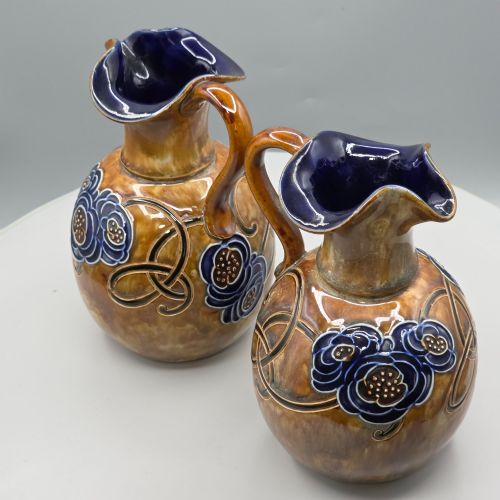
A doulton lambeth pottery jug is a functional or decorative ceramic vessel created during the nineteenth and early twentieth centuries by the renowned London works. These pieces range from substantial water pitchers and harvest jugs to delicate ewers and art pottery jugs.
Most examples encountered here date from the Victorian era, spanning the decades between eighteen seventy and nineteen ten. Makers utilised various historic and contemporary movements, incorporating styles such as Arts and Crafts, Art Nouveau, and the Aesthetic Movement into traditional ceramic forms.
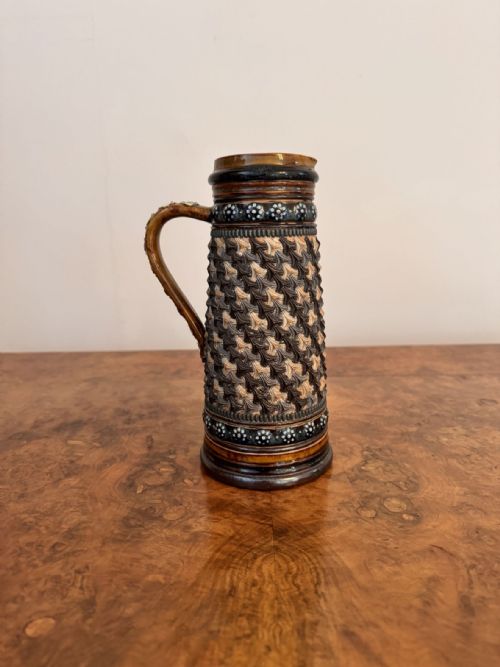
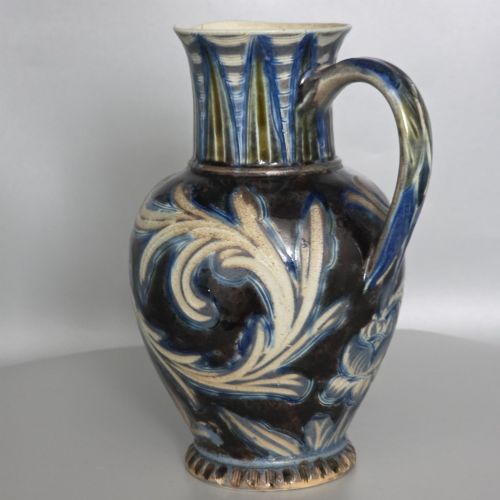
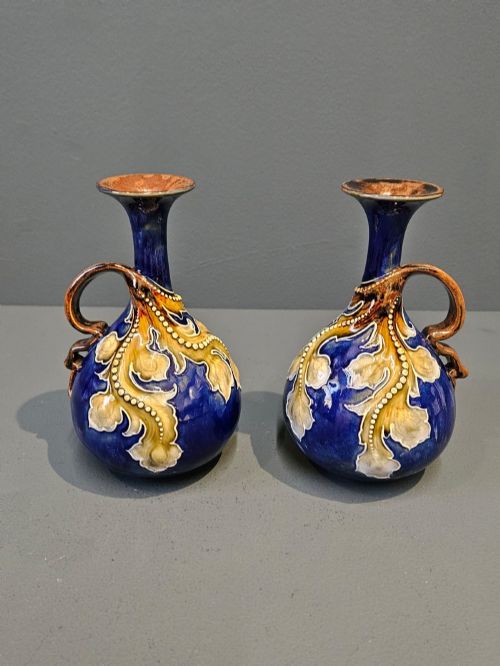
Forms vary from utilitarian salt glaze beer vessels with silver rims to elaborate art pottery pieces featuring incised foliage or sporting scenes. Buyers frequently find paired ewers, commemorative jubilee jugs, and complete tea sets alongside single decorative pitchers.
How they were made
Potters shaped durable stoneware and earthenware clay on the wheel, often applying salt glaze techniques to create distinctive textured surfaces during firing. The natural properties of the clay allowed artisans to execute deep incised patterns and apply moulded relief ornamentation directly to the body.
Workers decorated the vessels using coloured enamels and specialised glazes to highlight floral motifs, hunting scenes, and geometric patterns. Many pieces also incorporate specialised techniques such as Slater's patent lace texturing and metal mounts like silver rims.
Doulton Lambeth Pottery Jug Retail Price Guide 2026
Typical asking prices for doulton lambeth pottery jug among the pieces listed under this phrase on Sellingantiques today, from the lower quarter to the upper quarter. They describe what is for sale here now, not the wider market.
Listings feature stoneware, earthenware, and salt glaze ceramics decorated across Victorian, Arts and Crafts, and Art Nouveau styles.
What varies in quality
Quality rests primarily on the crispness of the incised or moulded decoration and the depth of the glaze finish. Pieces executed by named artists or featuring complex thematic scenes stand apart from standard production items through superior handling of line and colour.
The integration of secondary materials, such as hallmarked silver rims or fitted lids, influences the overall character and desirability of a piece. Well-preserved surfaces with vibrant enamel work and intact salt glaze textures represent the higher tier of surviving examples.
Emma Shute
The Doulton Lambeth Pottery Jug Glossary
- Stoneware
- A dense, hard ceramic fired at high temperatures until vitrified, making it impermeable to liquids without requiring interior glaze. This durable body forms the foundation of most nineteenth-century London art pottery.
- Salt Glaze
- A vitreous coating formed by throwing common salt into the kiln during high-temperature firing, creating a distinctive orange-peel texture. This finish protects the clay body while leaving incised decoration sharp.
- Ewer
- A large pitcher with a wide spout and ornate handle, traditionally designed for holding water at a washstand. Victorian examples frequently double as decorative display pieces.
- Puzzle Jug
- A traditional drinking vessel featuring a pierced neck and hollow rim that forces the user to solve a hidden puzzle to drink without spilling. These novelty items test the skill of both potter and drinker.
- Harvest Jug
- A traditional stoneware vessel, often ornamented with hunting scenes or agricultural motifs, historically used for serving ale during harvest celebrations. These pieces typically display rich brown and buff salt-glazed tones.
Doulton Lambeth Pottery Jug: Frequently Asked Questions
What is a doulton lambeth pottery jug?
A doulton lambeth pottery jug is a ceramic vessel produced by the famous London studio during the Victorian and Edwardian eras. These pieces are celebrated for their robust stoneware bodies and intricate hand-decorated surfaces.
Craftsmen employed techniques like salt glazing, incising, and applied relief work to create distinctive decorative and utilitarian objects that reflect nineteenth-century design movements.
How do I date a pottery jug?
Dating these vessels involves examining the style of decoration, glaze types, and stamped factory marks found on the base. Pieces from the eighteen seventies often feature incised art pottery designs, while later examples incorporate Art Nouveau motifs or commemorative details.
Specific stamps and artist monograms help narrow down the production period to a particular decade within the Victorian or Edwardian periods.
How were these jugs used historically?
Many of these vessels served practical household functions, such as holding water, serving ale during harvest gatherings, or completing tea service settings. Large ewers were standard components of bedroom washstand sets before modern indoor plumbing.
Other pieces were created purely for display, functioning as decorative art pottery to showcase the technical skill and artistic ambition of the London works.