

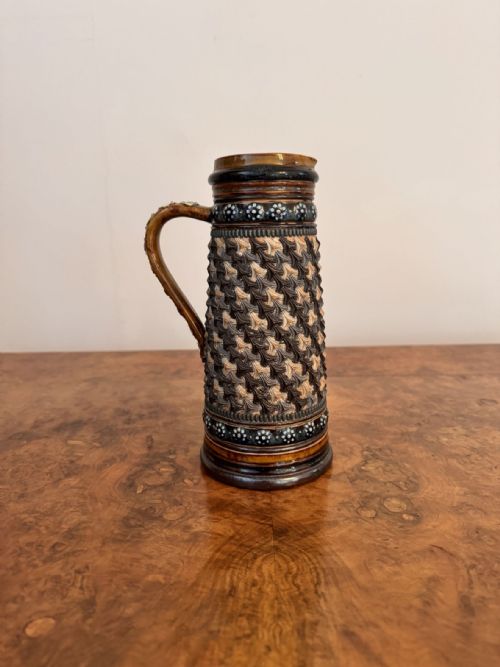
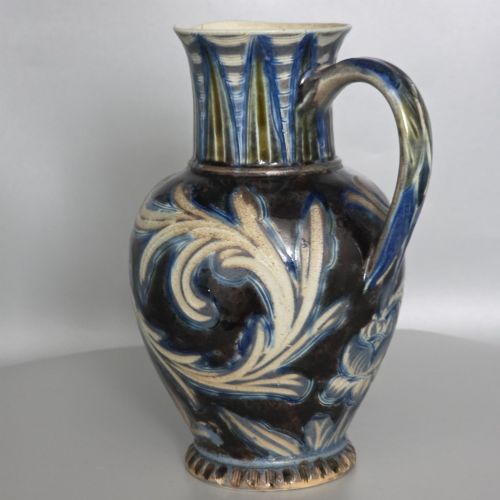



Salt Glaze Water Pitcher
These salt glaze water pitcher listings bring together sturdy stoneware vessels designed for everyday service and ornamental display during the Victorian era.
Salt Glaze Water Pitcher
When you search for a salt glaze water pitcher, you encounter durable stoneware and ceramic vessels produced primarily during the Victorian period, spanning from eighteen fifty through to nineteen ten. These forms include jugs, pitchers, decorative ewers, and harvest jugs shaped for functional use or commemorative display.
The pieces appearing on this page show distinct regional and stylistic origins, ranging from British workshops to continental stoneware carafes of pear shape. Many examples reflect Victorian arts and crafts movements alongside jubilee commemorations and exhibition pieces.
How they were made
Potters built these vessels using heavy stoneware and ceramic bodies, often finished with distinctive salt glazes or lead glazes that created textured, pitted surfaces during firing. Artisans applied cream sprigged ornamentation and incised decoration directly into the damp clay before kiln firing.
Certain substantial jugs received fitted silver rims to reinforce the upper edges and elevate their decorative appeal for domestic service or celebratory exhibition.
Salt Glaze Water Pitcher Retail Price Guide 2026
Typical asking prices for salt glaze water pitcher among the pieces listed under this phrase on Sellingantiques today, from the lower quarter to the upper quarter. They describe what is for sale here now, not the wider market.
The listings here span the Victorian era from eighteen fifty to nineteen ten, featuring stoneware, salt glaze, and silver-rimmed formats.
What varies in quality
The distinction between standard utility vessels and exceptional exhibition pieces rests in the crispness of the sprigged reliefs and the depth of the incised ornament. Master decorators working in established potteries achieved sharper botanical or narrative detailing than jobbing potters producing basic harvest jugs.
Proportion and scale also dictate the calibre of a piece, particularly in large jubilee jugs and heavy stoneware ewers where maintaining structural balance during high-temperature firing required advanced technical skill.
Doulton Lambeth·Emma Shute·Royal Doulton
The Salt Glaze Water Pitcher Glossary
- Salt Glaze
- A finish achieved by throwing common salt into the kiln during high-temperature firing, creating a distinctive orange-peel texture on the stoneware surface. This chemical reaction vitrified the clay body and rendered the vessel impervious to liquids.
- Sprigged
- A decorative technique where separately moulded clay motifs are applied to the surface of a leather-hard vessel using slip as an adhesive. These raised ornaments frequently depict hunting scenes, floral patterns, or royal insignia.
- Ewer
- A large jug or pitcher with a wide spout and a curved handle, traditionally utilised for pouring water at table or for washing. Victorian examples often served purely decorative functions in domestic interiors.
- Harvest Jug
- A large stoneware vessel traditionally filled with cider or beer during agricultural gathering celebrations. These jugs frequently incorporate robust silver rims and incised inscriptions relating to rural life.
Salt Glaze Water Pitcher: Frequently Asked Questions
What were salt glaze water pitchers used for?
These stoneware vessels served practical roles in nineteenth-century households for holding and pouring water, beer, or cider at the dining table. Larger examples also functioned as decorative ewers or commemorative items for royal jubilees.
Their robust construction made them suitable for daily domestic service, while highly ornamented exhibition pieces were displayed in prominent interior spaces.
How do I identify a Victorian salt glaze jug?
Look for characteristic nineteenth-century forms such as pear-shaped bodies, applied cream sprigged motifs, and salt-glazed stoneware surfaces with a textured orange-peel finish. Many pieces from this era incorporate stamped maker marks or inscribed details near the base.
The presence of decorative elements like silver rims or commemorative jubilee inscriptions also points toward Victorian manufacture between eighteen fifty and nineteen ten.
How should I display a stoneware pitcher at home?
Place your pitcher on a sturdy sideboard, shelf, or mantelpiece where its weight and textured salt-glaze finish can be appreciated safely. Ensure it sits away from high-traffic edges because stoneware vessels are heavy and can cause damage if knocked over.
Grouping a stoneware jug alongside other nineteenth-century ceramics highlights the contrasting glazes and decorative sprigwork.
What is the difference between stoneware and ceramic?
Stoneware is a specific type of pottery fired at higher temperatures until the clay body vitrifies and becomes completely non-porous, even without glaze. Ceramic is a broader term encompassing all fired clay objects, including earthenware and terracotta.
Pithed salt-glaze surfaces are unique to vitrified stoneware bodies produced in specialised kilns.