

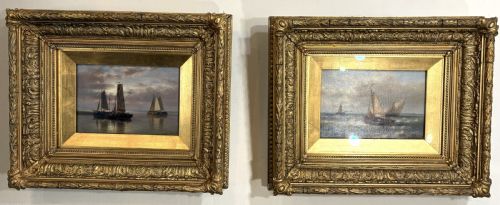


Victorian Sailing Boat Painting
These works capture the movement of vessels under canvas across coastal waters, rivers and open seas.
Victorian Sailing Boat Painting
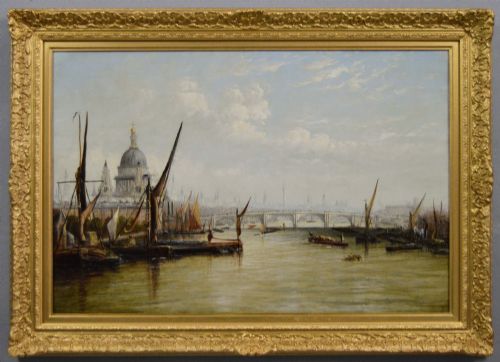
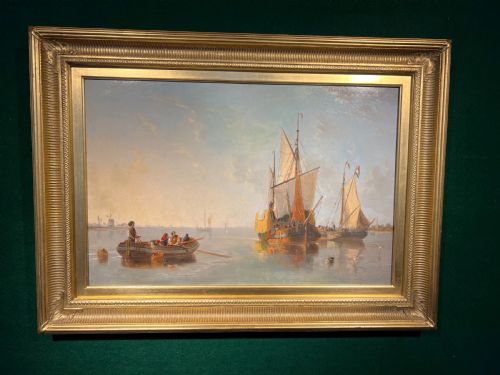
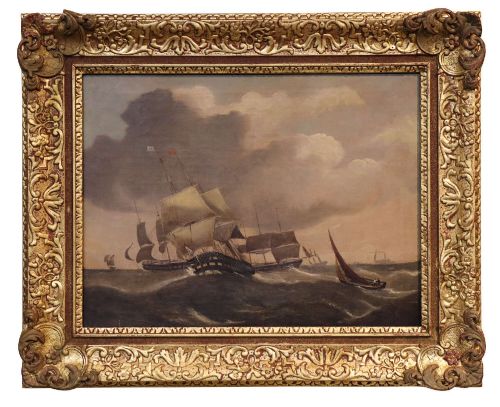
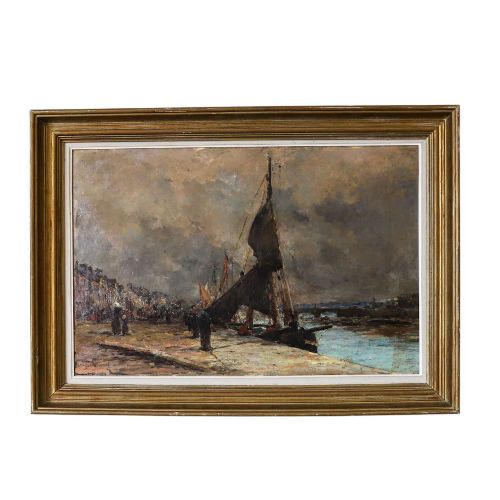
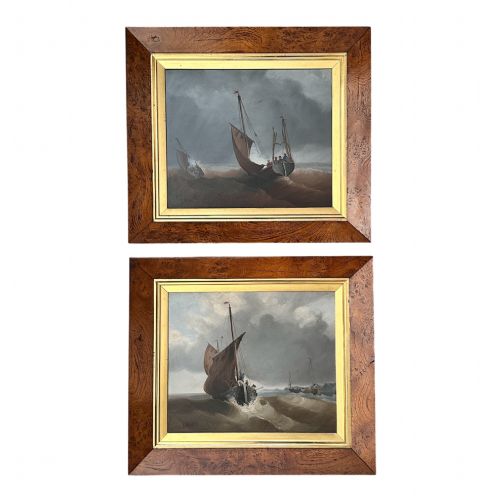
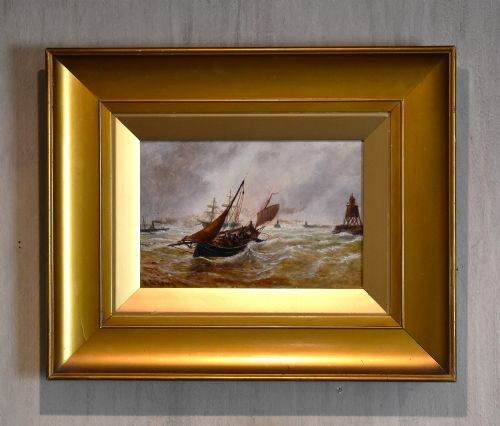
A victorian sailing boat painting depicts maritime vessels navigating coastal waters, harbours and open seas during the nineteenth century. These artworks record the maritime trade, fishing fleets and leisure craft of the era through the eyes of contemporary artists.
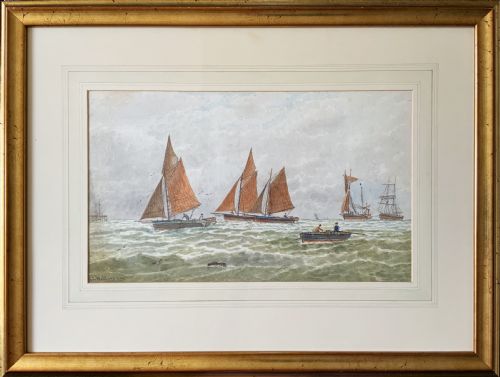
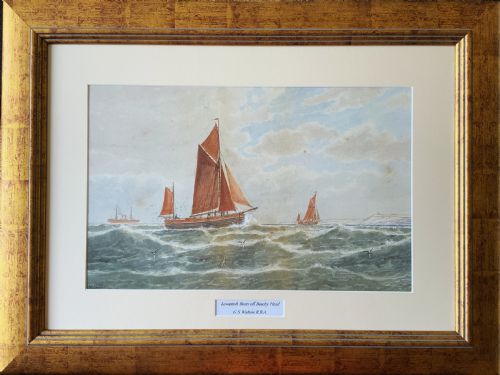
The selections available here range from detailed watercolours on paper to substantial oil paintings on canvas and board. Buyers frequently encounter coastal scenes, harbour townscapes and dramatic depictions of shipping in heavy seas.
Originating predominantly from British and continental schools, these paintings reflect a period of intense maritime activity. The works vary from intimate watercolour studies to large framed oil paintings designed for prominent display.
Materials and Technique
Artists of this period utilised oil paint on canvas, board or card to build rich, textured surfaces that could capture the turbulent weight of heavy seas and stormy skies. Alternatively, watercolour on paper allowed painters to achieve luminous transparency for calm harbours and coastal atmospheres.
Works are frequently housed within period gilt wood frames that complement the composition and protect the paper or canvas. The handling of medium combines fine brushwork for rigging and hulls with looser applications of pigment for water and weather.
The listings show works spanning the Victorian era and the early twentieth century, utilising paper, canvas, oil paint and watercolour.
Distinctions in Quality
The distinction between standard works and exceptional pieces lies in the artist's command of light, atmosphere and maritime anatomy. Superior examples demonstrate a precise understanding of rigging, hull construction and the movement of water under varying weather conditions.
Compositional balance and the preservation of the original medium further separate fine works from routine examples. Pieces retaining their original gilt wood frames and clear artist attribution command greater interest among collectors.
Francis Moltino·John Wilson Carmichael·John Moore of Ipswich·Bernard Benedict Hemy·George Stanfield Walters·Abraham Hulk I·Thomas Bush Hardy·Clara Montalba·Alfred Henry Vickers·George Henry Knight·John Callow·Edward Henry Holder·Thomas Clavering Alder·Lennard Lewis·Robert Anderson·Frederick William Booty·Frank Wasley·William Edward Webb·J Syer
The Victorian Sailing Boat Painting Glossary
- Watercolour
- A painting method where fine pigment is suspended in water-soluble binders on paper. It creates delicate, translucent effects suited to coastal light.
- Gilt wood
- Wood carved and coated with gold leaf or a gold-coloured finish. This material is traditional for framing nineteenth-century fine art.
- Seascape
- A work of art depicting the sea, coastal views or maritime vessels. These compositions form the core of nineteenth-century marine art.
- Canvas
- Heavy woven fabric stretched across a wooden frame to act as a stable support for oil painting. It provides texture that interacts with the applied pigment.
Victorian Sailing Boat Painting: Frequently Asked Questions
How do I care for a nineteenth-century watercolour?
Keep works on paper away from direct sunlight to prevent the pigments and paper from fading over time. Ensure they are displayed in dry environments behind glass with acid-free mounts.
Regularly check the backboards for signs of dampness and consult a conservator if the paper shows discolouration or foxing spots.
Were these paintings created as records or decoration?
Artists during this era produced marine art both to document the bustling trade and fishing fleets of the coast and to satisfy domestic demand for picturesque scenery. Many works reflect a national fascination with maritime power and coastal life.
Buyers purchased them to adorn drawing rooms, reflecting an era deeply connected to shipping and overseas trade.
How can I distinguish an oil painting from a watercolour?
Oil paintings utilise thick pigments on canvas, board or card, often presenting a textured surface with visible brush marks that require no glass for protection. Watercolours utilise thin, translucent washes on paper and must be framed behind glass to prevent surface damage.
Examining the piece closely under natural light reveals the absorbent matte finish of paper versus the slight sheen of dried oil paint.
What subjects are most common in these maritime scenes?
Common subjects include bustling harbour townscapes, fishing vessels weathering rough seas, and moored yachts in calm coastal inlets. Artists frequently captured specific British ports as well as continental rivers and coastal European destinations.
These varied motifs offer insight into nineteenth-century commercial shipping and leisure sailing.