






Victorian Marine Watercolour Painting
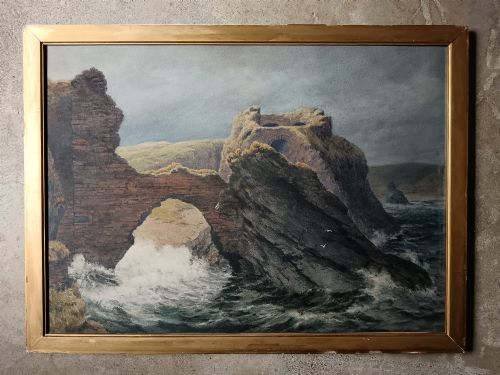
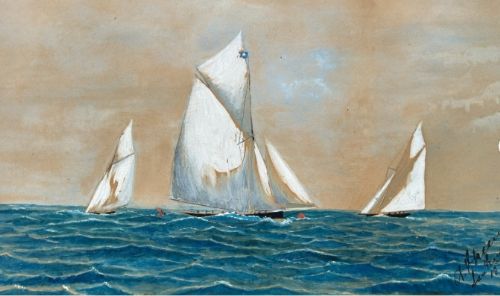
When you collect a victorian marine watercolour painting, you bring home nineteenth-century coastal life rendered in delicate washes on paper.
Victorian Marine Watercolour Painting
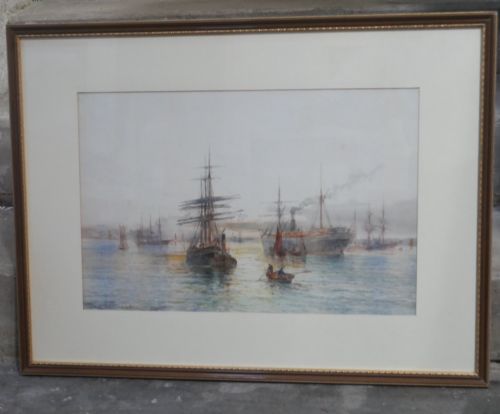
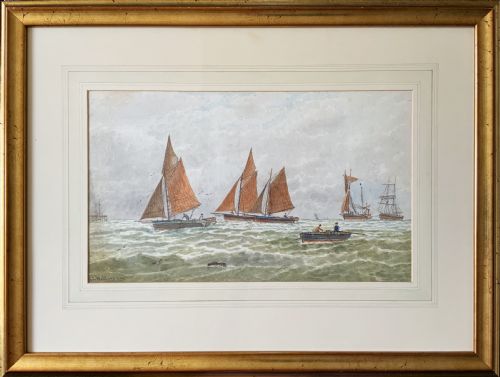
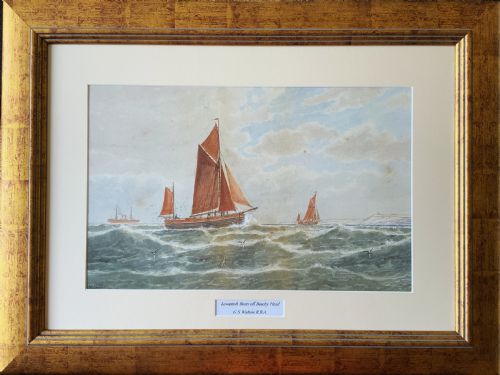
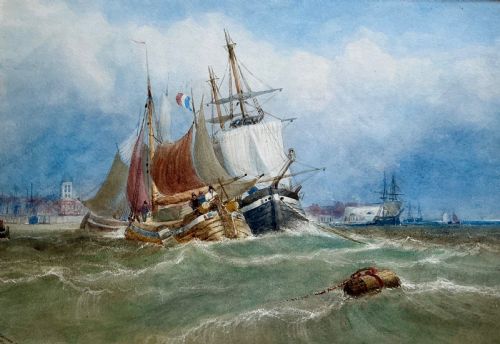
A victorian marine watercolour painting depicts coastal views, harbour scenes, and shipping activity executed during the nineteenth century. The works on this page capture British and European waters, from quiet fishing villages to bustling estuaries.
Most pieces date from the later decades of the century, produced by artists who recorded maritime scenes with careful observation. Buyers encounter depictions of sailing vessels, stormy seas, and tidal flats framed for display on walls.
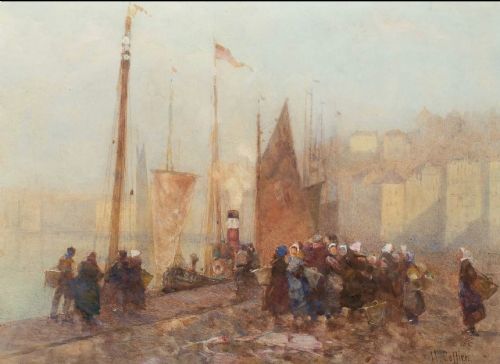
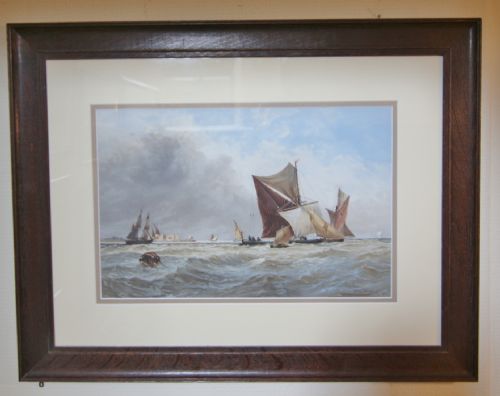
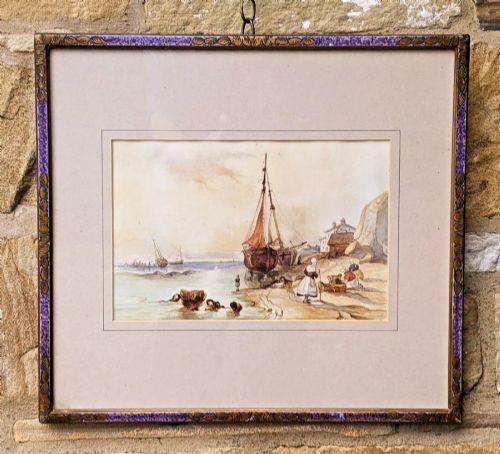
The subjects range from local fishing boats off Yorkshire and Norfolk to grand views of Venice and the Medway. Each painting preserves a specific moment of nineteenth-century maritime labour and coastal geography.
Materials and technique
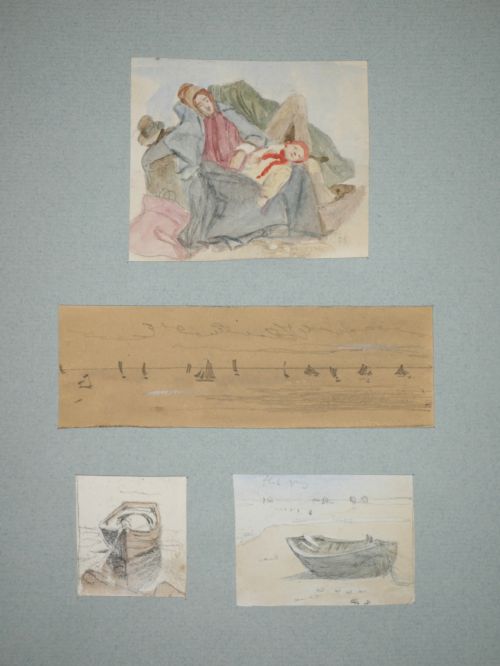
Painters applied watercolour pigment and ink onto paper supports, often building up translucent washes to capture the movement of water and sky. Artists utilised the white of the unpainted paper to suggest breaking waves and highlights on clouds.
Many surviving examples retain their original gilt wood frames and glass protection, which preserved the delicate pigments from atmospheric damage over the decades. The combination of paper, pigment, and framing reflects standard Victorian studio practices.
Portraits of named vessels, fishing luggers, and commercial barques dominate the maritime scenes recorded here.
What separates the best from the rest
Quality rests upon the artist's command of atmospheric perspective and the confident handling of water and sky. Stronger works convey the weight of shipping vessels and the dampness of coastal air through precise brushwork rather than formulaic composition.
The preservation of the paper and the vibrancy of the pigment determine the visual impact of each piece. Faded washes or heavy foxing diminish the clarity of the scene, while well-preserved examples retain their original tonal balance.
James Orrock·James Smetham·William Banks Fortescue·Hector Caffieri·TB Hardy·George Stanfield Walters·Henry Barlow Carter·John Moxon·William Frederick Settle·Alfred George Morgan·John Bedloe Goddard·Charles William Adderton·Thomas Bush Hardy·Ernest Dade·F J Aldridge·John McDougal·Frederick William Hattersley·James Thomas Watts·John Mitchell·Frederick William Booty·Charles Harmony Harrison·Kate E Booth·Clara Montalba·William Wyld·Walter Duncan
The Victorian Marine Watercolour Painting Glossary
- Seascape
- A work of art depicting the sea or marine subjects. These form the primary focus of the paintings found within nineteenth-century maritime collections.
- Wash
- A thin, fluid layer of diluted watercolour pigment applied to paper. Artists use this technique to create smooth skies and translucent expanses of water.
- Gilt wood
- Wood coated with a thin layer of gold leaf or gold-coloured paint. This material is standard for the traditional frames housing these works.
- Estuary
- The tidal mouth of a large river where the tide meets the current. Many Victorian painters chose these locations to depict shipping traffic and coastal structures.
- Foxing
- Brown spots or discoloration that develop on old paper due to chemical reactions over time. Collectors monitor this condition when assessing works on paper.
Victorian Marine Watercolour Painting: Frequently Asked Questions
How should I hang a watercolour painting?
Keep watercolours away from direct sunlight to prevent the pigments from fading over time. Indirect light in a stable environment preserves the paper and the integrity of the washes.
Ensure the room humidity remains moderate to protect both the paper support and the antique wooden frame. Professional framing with acid-free backing boards adds further security.
What subjects appear most often in these paintings?
Artists frequently recorded fishing boats, harbour entrances, and trading vessels at anchor along British shores. Coastal towns in Yorkshire, Norfolk, and Cornwall provide familiar settings across the collection.
Foreign views, particularly scenes around Venice and the Dutch coast, also feature prominently among nineteenth-century marine works. These subjects reflect the travel habits of Victorian painters and buyers alike.
How can I identify the date of a painting?
Signatures, dates inscribed by the artist, and framing styles offer the most reliable clues to a work's creation period. Many Victorian watercolours carry contemporary exhibition labels on the reverse.
Stylistic conventions in maritime painting also shift between the early and late nineteenth century. Rigorous depiction of ship rigging often points toward specific decades of Victorian output.
Did Victorian artists paint outdoors?
Many painters made preliminary sketches and watercolours directly on location to capture changing light and weather conditions. They then completed larger finished works back in the studio.
The availability of portable watercolour boxes during the nineteenth century encouraged artists to travel widely along the coast for fieldwork.