


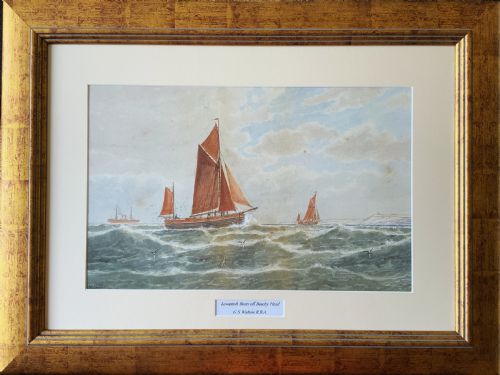
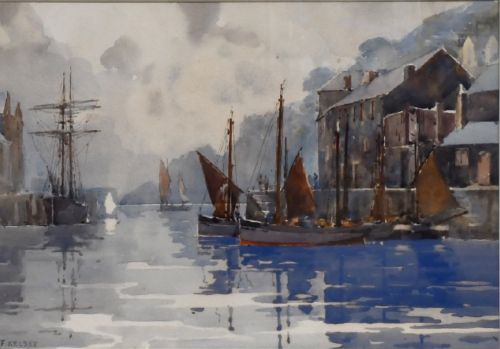
Blue Maritime Watercolour Painting
A blue maritime watercolour painting captures the changing moods of the sea, bringing coastal light and historic vessels directly into a room.
Blue Maritime Watercolour Painting
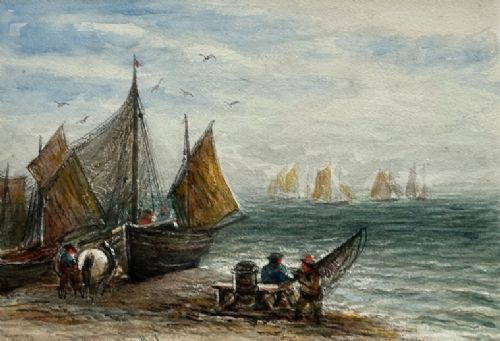
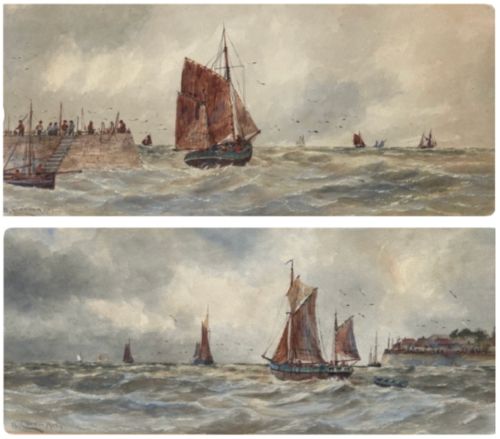
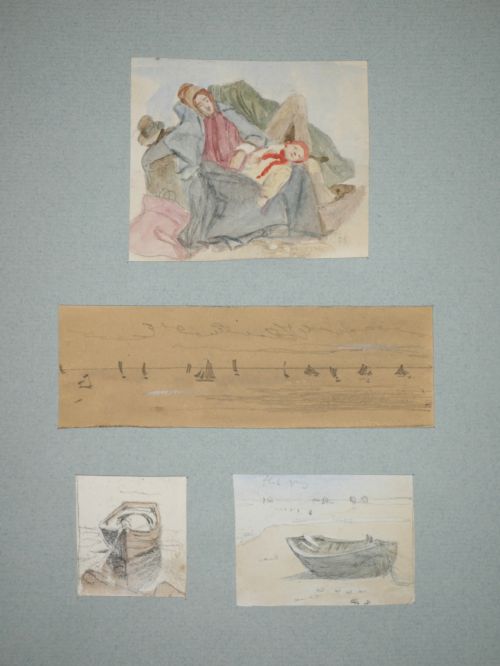
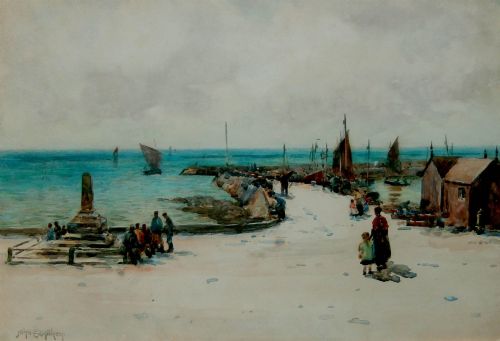
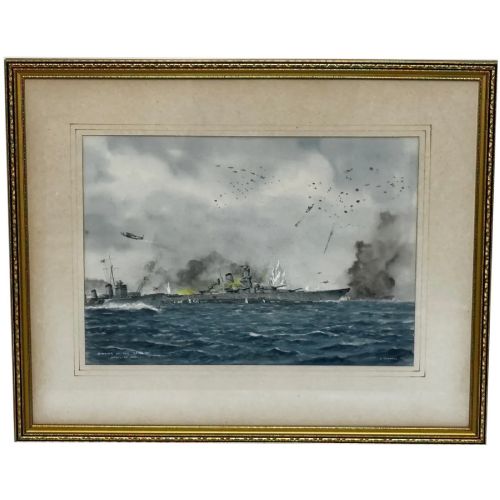
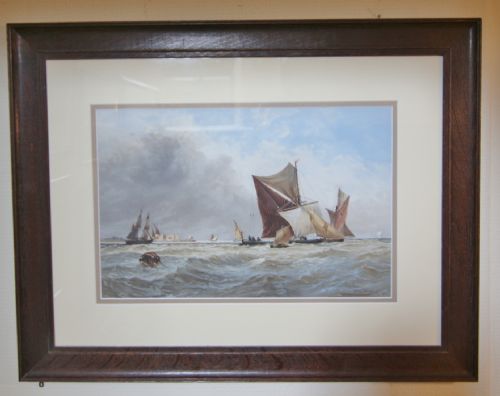
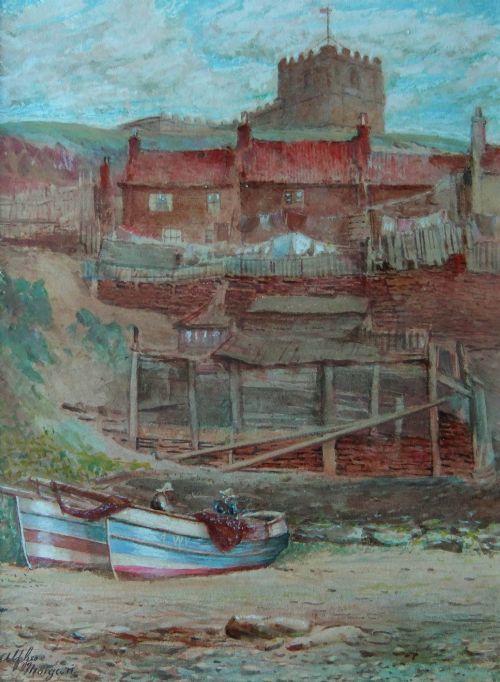
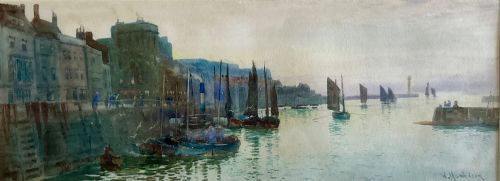
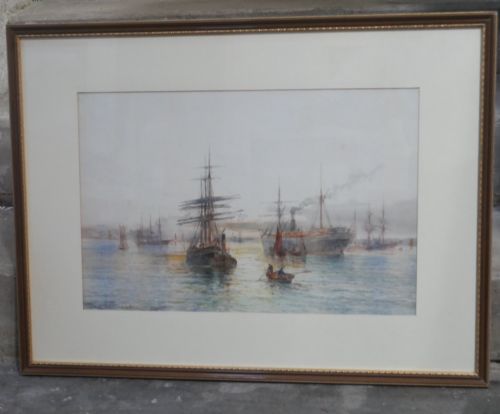
A blue maritime watercolour painting focuses primarily on marine subjects, encompassing coastal landscapes, bustling harbours, and open sea voyages rendered in aqueous blue tones. These works capture specific moments in maritime history, from Victorian fishing boats off Yorkshire coasts to mid-century naval vessels in foreign harbours. Collectors encounter a rich variety of forms, ranging from intimate marine sketches and pairs of harbour views to large-scale framed gallery works.
The pieces available span from the nineteenth century through the Edwardian era into the mid-twentieth century, reflecting evolving styles of British and European marine art. Common settings include traditional fishing ports like Whitby and St Ives, alongside international coastal scenes from Normandy to Sydney Harbour. Such works appeal directly to those who appreciate maritime heritage, coastal topography, and the translucent qualities unique to water-based pigments on paper.
Materials and technique
Artists painted these marine scenes using watercolour pigment and fluid washes applied directly onto paper supports, often enhanced with touches of ink or bodycolour for finer details such as rigging and foam. The translucent nature of watercolour required a precise, confident hand, as light areas were preserved by leaving the bare paper untouched rather than applying white paint.
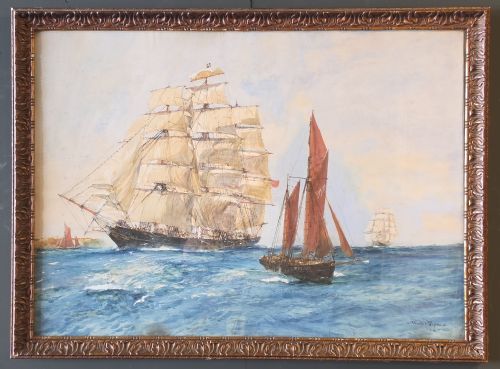
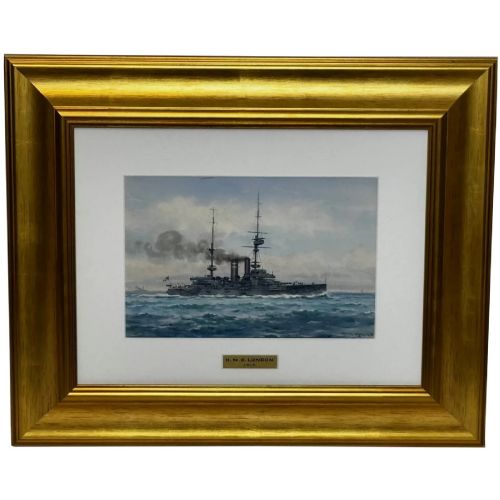
Finished works were typically mounted behind protective glass and housed within wooden frames, sometimes featuring gilt mouldings that complemented the maritime subject matter. The synergy between paper, pigment, and glass has preserved the luminosity of these coastal scenes across successive decades.
Listings feature works from the Victorian era, Edwardian period, and mid-twentieth century, executed primarily in watercolour on paper.
Assessing quality and execution
Quality in these marine works rests upon the artist's command of atmosphere, water movement, and structural accuracy regarding sailing vessels or architecture. Superior pieces demonstrate confident brushwork that conveys the weight of a hull or the luminosity of a breaking wave with minimal, deliberate strokes.
Composition and historical context also elevate certain examples, particularly where named vessels or specific coastal locations are rendered with documentary precision. The retention of vibrant blues and clear paper grounds, free from excessive fading or acidic discolouration, distinguishes the finest survivals from standard decorative works.
James Orrock·William Cannon·Charles Edward Dixon·Thomas William Morley·Thomas Bush Hardy·George Stanfield Walters·Edward Seago·Frank H. Mason
The Blue Maritime Watercolour Painting Glossary
- Watercolour
- A painting method in which the paints are made of pigments suspended in a water-based solution. This medium is prized for its translucent washes and luminous effects.
- Seascape
- A work of art depicting the sea, ocean, or coastal views. These subjects often feature ships, waves, and shorelines under changing weather conditions.
- Gilt Wood
- Wood that has been treated with a thin layer of gold leaf or metallic gilding. Frames of this material frequently encase fine nineteenth-century watercolours.
- Works on Paper
- An inclusive classification for artistic creations executed on paper supports, including drawings, sketches, and finished watercolour paintings.
Blue Maritime Watercolour Painting: Frequently Asked Questions
How should I hang a watercolour painting safely?
Watercolour paintings on paper require careful placement away from direct, strong sunlight to prevent the pigments and paper grounds from fading over time. Maintaining a stable indoor environment helps protect the paper and the wooden or gilt frame from humidity fluctuations.
Using conservation-grade backing materials and UV-filtering glass during any future framing updates provides an extra layer of preservation for these historic marine works.
How do I identify the period of a maritime painting?
The period of a maritime watercolour is often indicated by the attire of figures on the shore, the architectural details of harbour buildings, and the specific types of vessels depicted. Signatures, dates inscribed by the artist, and framing styles also offer reliable clues to the decade of creation.
Comparing the depicted ships, such as nineteenth-century fishing cobles versus twentieth-century naval carriers, helps narrow down the artistic era.
What subjects are most common in these watercolours?
Traditional fishing boats, coastal harbours, and sailing ships navigating coastal waters dominate these historical scenes. Many works record specific British ports like Whitby, Scarborough, and St Ives, while others capture international coastal views.
Naval vessels, shipping vessels, and racing yachts also appear frequently, reflecting the maritime interests of the nineteenth and twentieth centuries.
Are these paintings original works or prints?
The pieces recorded are original, hand-painted watercolours executed directly onto paper by individual artists rather than mechanical reproductions. Close inspection under magnification reveals the delicate brushstrokes, pooling of pigments, and texture of the paper fibres unique to hand-painted art.
Signatures, artist monograms, and occasional preparatory pencil lines further confirm the hand-created nature of each maritime piece.