
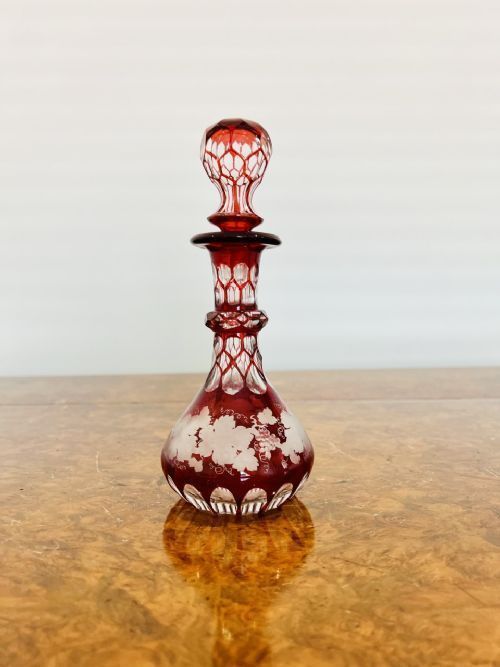
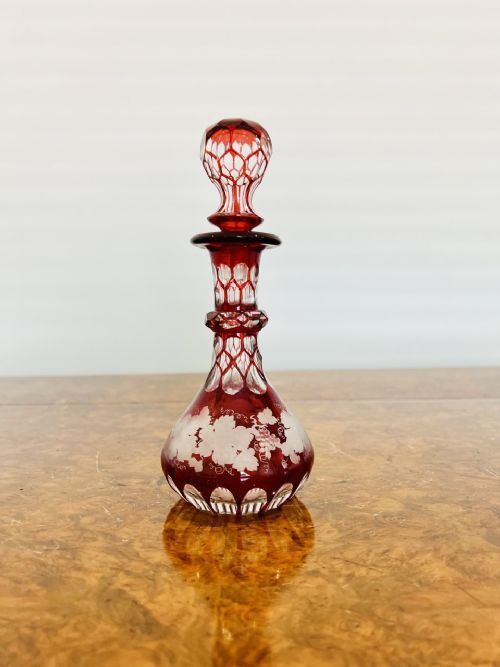


Victorian Ruby Glass Perfume
Victorian ruby glass perfume bottles are striking, richly coloured scent containers from the nineteenth century that bring vibrant warmth to a collection.
Victorian Ruby Glass Perfume
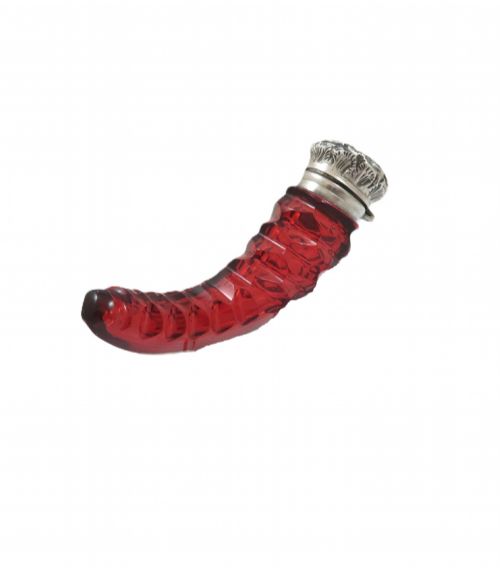
The aesthetic of these pieces draws heavily upon Victorian and Edwardian sensibilities, with certain examples reflecting French nineteenth century or French Victorian origins. Makers also produced Bohemian overlay cranberry glass pieces and mercury glass items featuring silver overlay. Collectors frequently encounter smaller pocket items such as the cranberry penny scent bottle or whimsical figural designs like the owl scent bottle.
How they were made
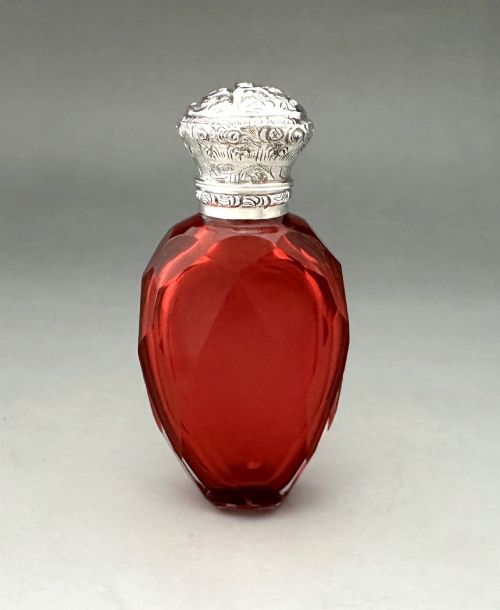
These items rely upon the skilled manipulation of ruby glass and cranberry glass, often enhanced through overlay techniques where a clear or contrasting layer is cut back to reveal the rich red beneath. Cut crystal and cut glass provide sharp facet work that catches the light across the body of the bottle. Glassblowers shaped these vessels by hand before they were fitted with metal components.
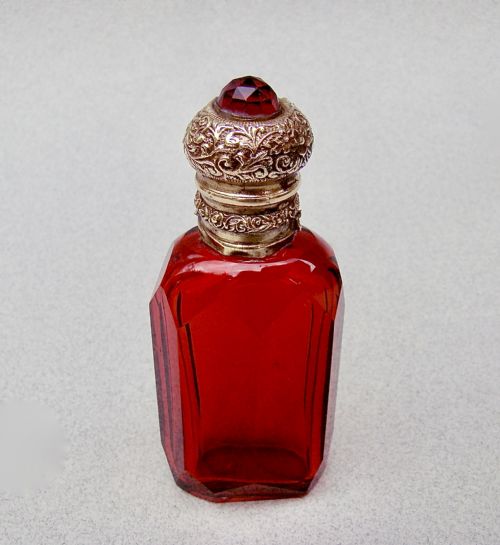
Mounts and caps utilise sterling silver, silver, ormolu, and gilt metal, securely fastening to the glass necks or ends. Engraved silver caps appear on double end bottles, while other examples integrate silver overlay directly onto mercury glass. Metalwork was cast, chased, or engraved to complement the deep tones of the glass.
Victorian glassmakers once formed scent bottles into delightful silver-mounted owls and pocket-sized pennies.
What varies in quality
The standard of cutting and overlay work creates a distinct separation between average and superior examples. Deep, precise facet cutting on ruby glass or crisp execution in cranberry overlay reveals the hand of a more accomplished glasshouse. The complexity of the glass body, such as triangular forms or figural shapes like an owl, demands higher technical skill.
The integration of the metal mount dictates much of the overall refinement. Substantial sterling silver or finely chased ormolu and gilt metal mounts elevate a piece beyond standard silver plated or basic metal collars. Engraved detailing on silver caps and the weight of the glass itself contribute to a more substantial object.
The Victorian Ruby Glass Perfume Glossary
- Ruby glass
- A deep red glass coloured typically with gold chloride during production. It forms the primary body of many nineteenth century scent bottles.
- Cranberry glass
- A transparent pinkish red glass produced by adding copper or gold to the metal batch. This material appears frequently in Victorian and Edwardian scent containers.
- Ormolu
- Finely ground high-carat gold applied in a mercury amalgam to bronze. This technique decorated French mounts and hardware on nineteenth century perfume bottles.
- Mercury glass
- Silvered glass blown with a double wall, featuring a reflective interior coating. It is often found beneath silver overlay decoration.
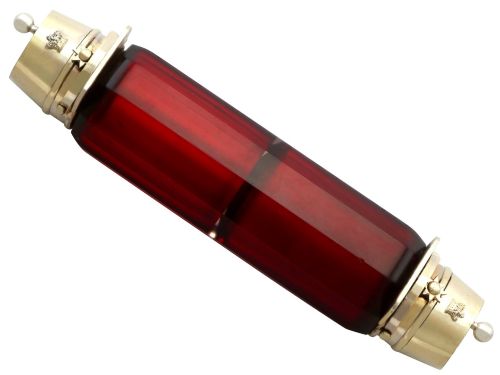
- Double end perfume bottle
- A symmetrical scent container with two separate compartments and caps, allowing the user to carry two different fragrances.
Victorian Ruby Glass Perfume: Frequently Asked Questions
What is ruby glass?
Ruby glass is a deep red ornamental glass created by introducing gold into the molten batch during the manufacturing process.
This rich coloration defines the appearance of many nineteenth century scent bottles found in collections today.
How were double end bottles used?
Double end bottles allowed a Victorian user to carry two distinct scents simultaneously in a single pocket container.
Each end featured a separate cap, often made of engraved silver, sealing independent compartments within the glass body.
What is overlay glass?
Overlay glass involves fusing a layer of coloured glass over a base layer of a different colour or clear glass. Craftsmen then cut away portions of the outer layer to expose the contrasting glass beneath.
How do I care for these bottles?
These antique scent bottles require gentle handling and dry dusting to preserve the delicate silver mounts and glass surfaces.
Harsh cleaning chemicals must be avoided to protect both the metalwork and the historical integrity of the glass.