

Victorian Vanity Perfume Bottle
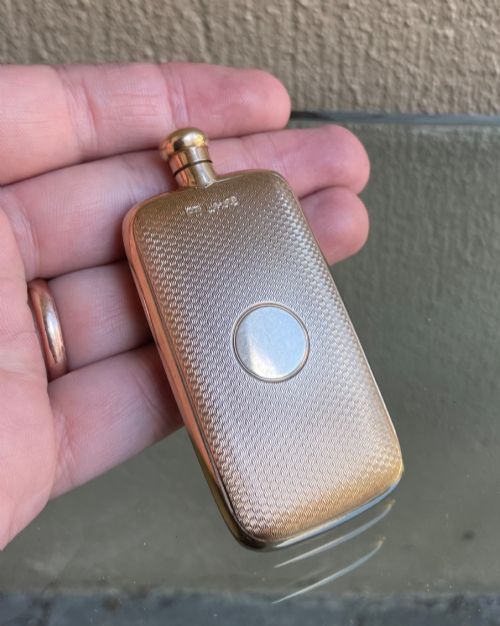
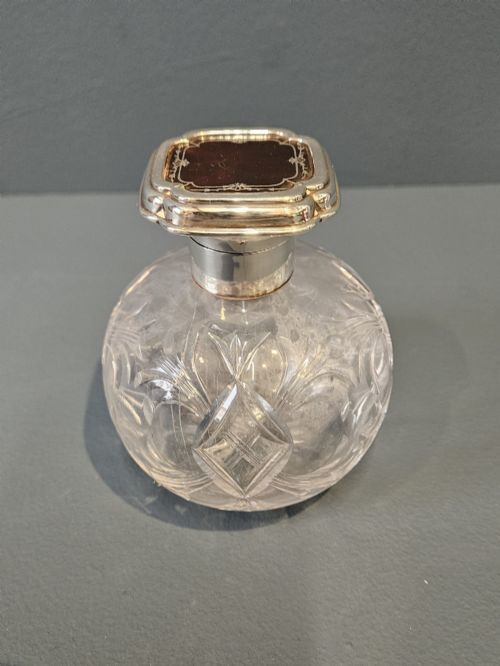
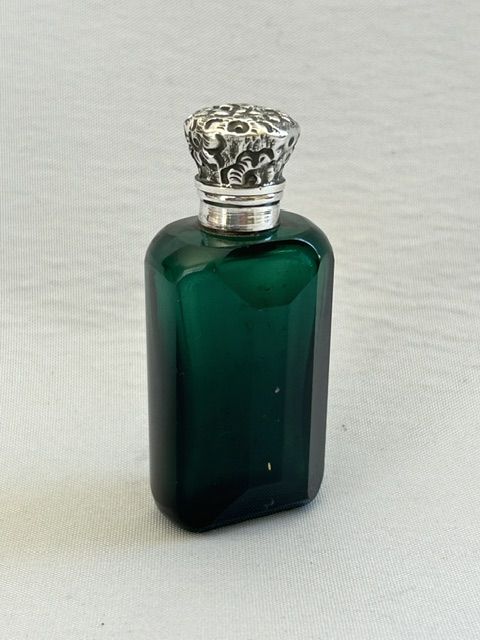
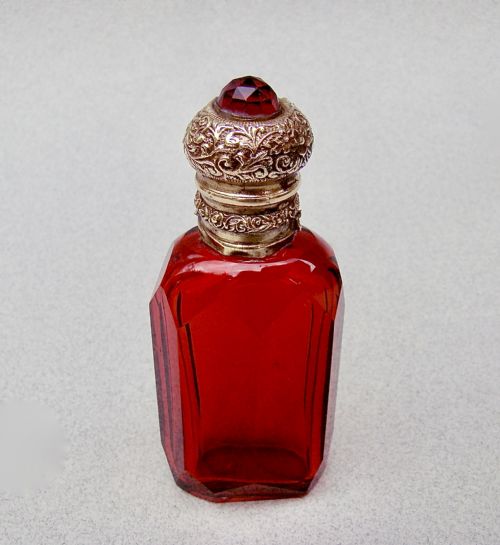
A victorian vanity perfume bottle brings tactile elegance to a dressing table, combining coloured glass with chased silver.
Victorian Vanity Perfume Bottle
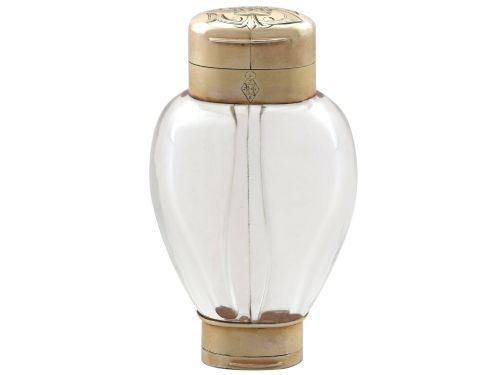
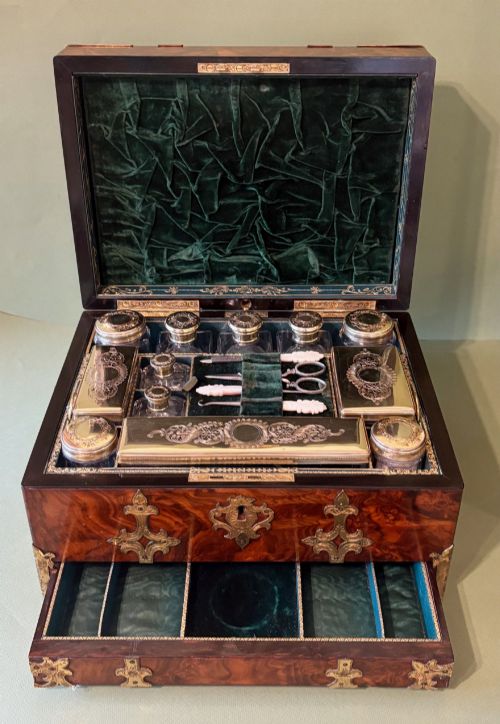
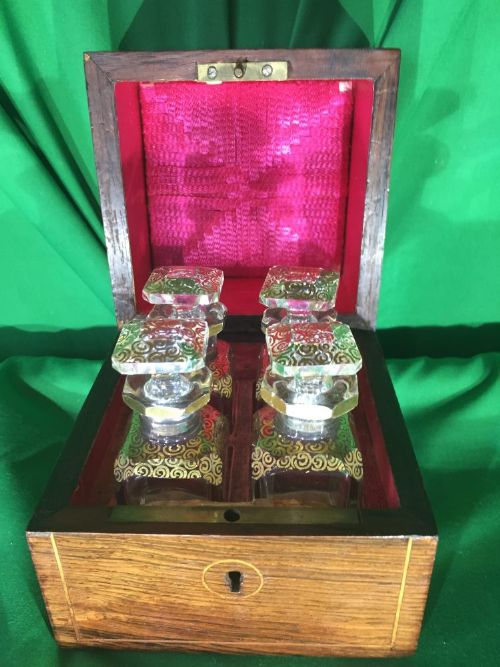
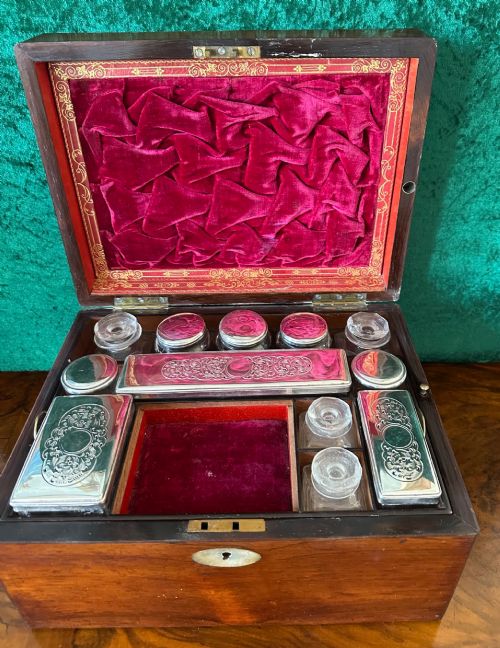
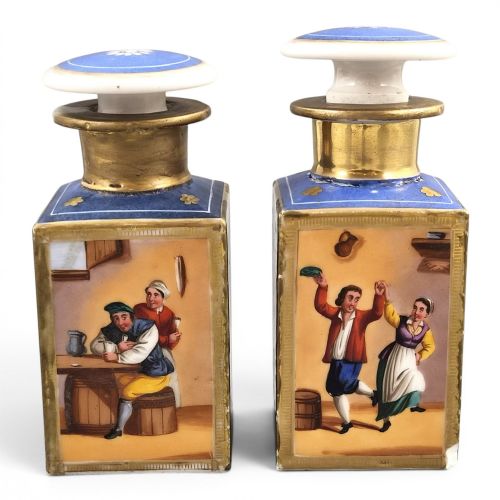
A victorian vanity perfume bottle is a portable glass or crystal vessel fitted with a metal cap, designed for holding liquid fragrance on a dressing table or inside a travelling case. The selection here spans compact individual scent flasks and multi-bottle sets housed within fitted rosewood, walnut, or coromandel caskets.
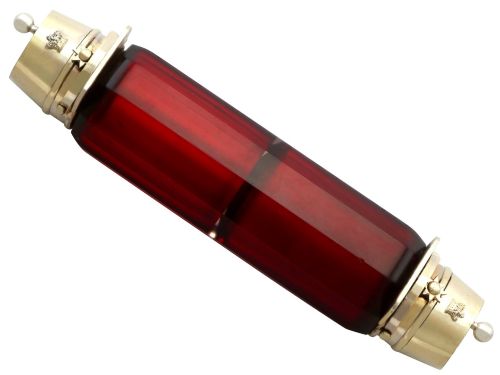
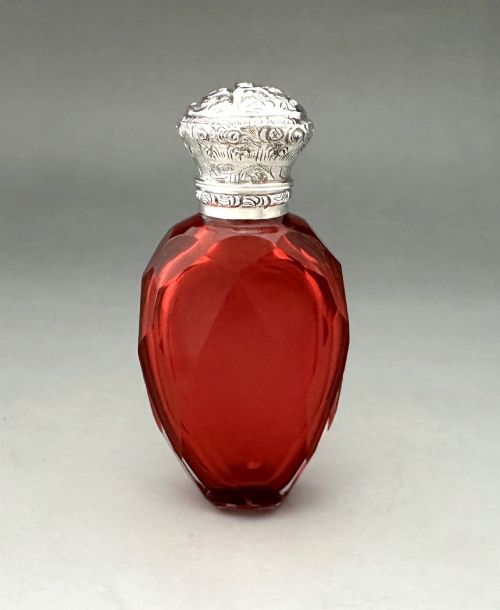
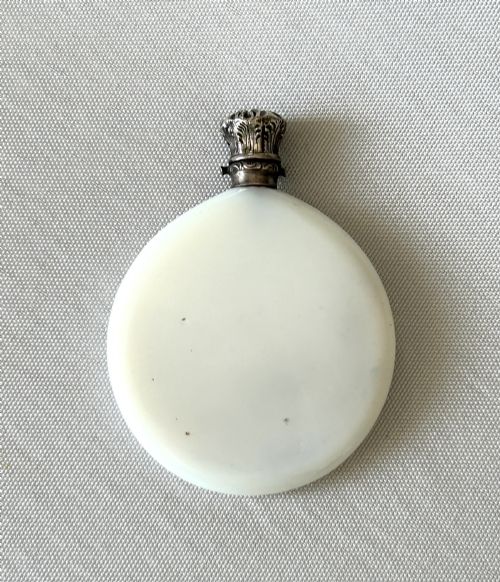
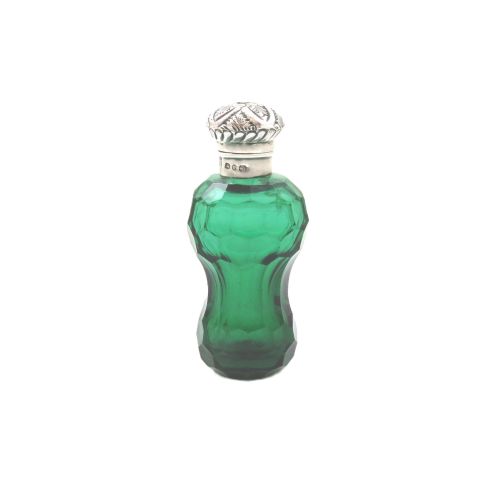
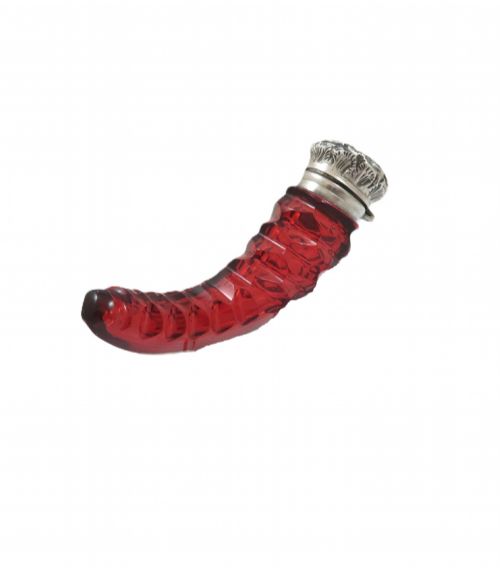
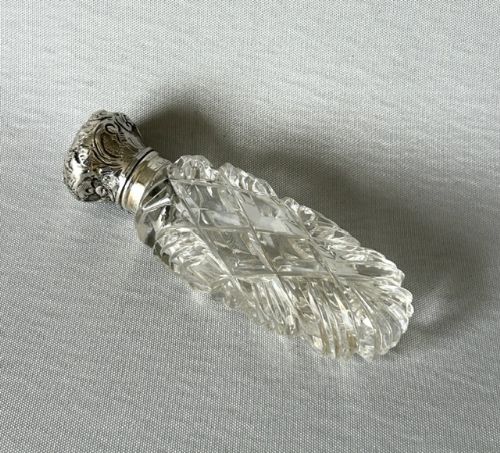
Most examples date from the nineteenth century, ranging from clear cut glass to rich ruby, cranberry, teal, and opaline glass mounted in sterling silver or brass. Alongside single bottles, buyers encounter vinaigrettes and travelling vanity sets that integrate perfume containers with compartments for jewellery and accessories.
How they were made
Glassmakers utilised mould-blowing, slicing, and overlay techniques to shape coloured, opaline, or clear crystal bodies. Metalworkers then formed sterling silver collars, hinged lids, and decorative mounts by hand, frequently employing repoussé and engraving to pattern the silver.
Wooden caskets and vanity boxes required precise joinery in exotic timbers like coromandel and rosewood, lined with velvet and fitted with brass hardware to cradle the glass bottles securely.
Makers such as Edward Smith and Horton & Allday appear on silver mounts across the Victorian period.
What varies in quality
Quality rests upon the depth of the glass colour, the precision of the hand-cut facets, and the weight of the silver mounts. Finer pieces feature heavy glass bodies paired with thick, hallmarked sterling silver collars rather than lightweight plated metal.
The integrity of fitted wooden caskets also dictates the tier of the piece, with sound hinges, intact velvet linings, and matching sets of glass bottles commanding greater regard than assembled or damaged examples.
Horton & Allday·Edward Smith·Jacob Petit·Franchini & Bigaglia
The Victorian Vanity Perfume Bottle Glossary
- Vinaigrette
- A small ornamental box or bottle containing a perforated grille, originally holding a sponge soaked in aromatic vinegar.
- Opaline glass
- An opaque or translucent glass developed in various pastel and bright shades, popular for nineteenth-century vanity items.
- Cranberry glass
- A rich red glass produced by adding gold chloride to the molten batch, frequently seen mounted in silver for scent bottles.
- Ormolu
- Gilded bronze used for decorative mounts and casket frames, adding a bright metallic accent to wooden and glass objects.
- Murrine
- A glasswork technique involving heated canes sliced to reveal complex patterns, seen in specialised nineteenth-century vessels.
Victorian Vanity Perfume Bottle: Frequently Asked Questions
What is a victorian vanity perfume bottle?
A victorian vanity perfume bottle is a small glass or crystal container fitted with a silver or metal cap, created during the nineteenth century for holding personal fragrance.
These pieces were kept on dressing tables or fitted into travelling vanity boxes for use during journeys.
How were these perfume bottles used?
They held liquid scents and perfumes, dispensed through stoppers or hinged caps for daily grooming and toilette.
Many were paired with matching accessories inside fitted wooden caskets or carried individually in pockets and chatelaines.
How do I date a perfume bottle?
Dating relies on silver hallmarks, glass colours, and manufacturing techniques associated with the Victorian and Edwardian eras.
Assay office marks and date letters stamped on the silver mounts provide precise years of production.
Are the stoppers usually original?
Many bottles retain their original glass or metal stoppers, though replacements occur due to the fragile nature of early glassware.
Examining the fit and the type of glass helps determine whether the stopper matches the collar and body.