
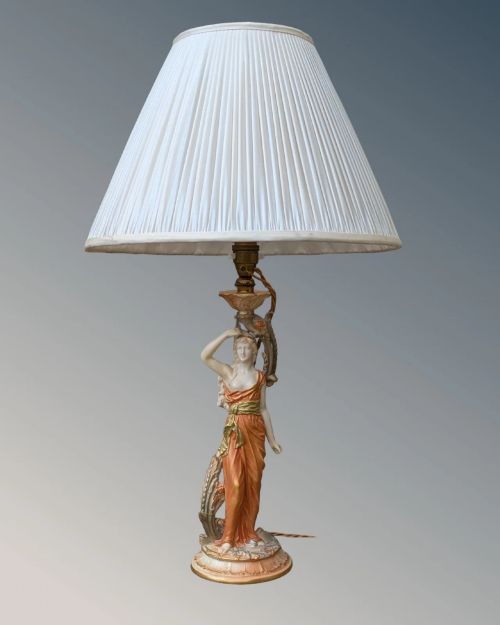


Victorian Royal Worcester Ceramic
These Victorian Royal Worcester ceramic pieces combine intricate hand-painting, delicate gilding and sculptural form, capturing the pinnacle of nineteenth-century decorative art for collectors today.
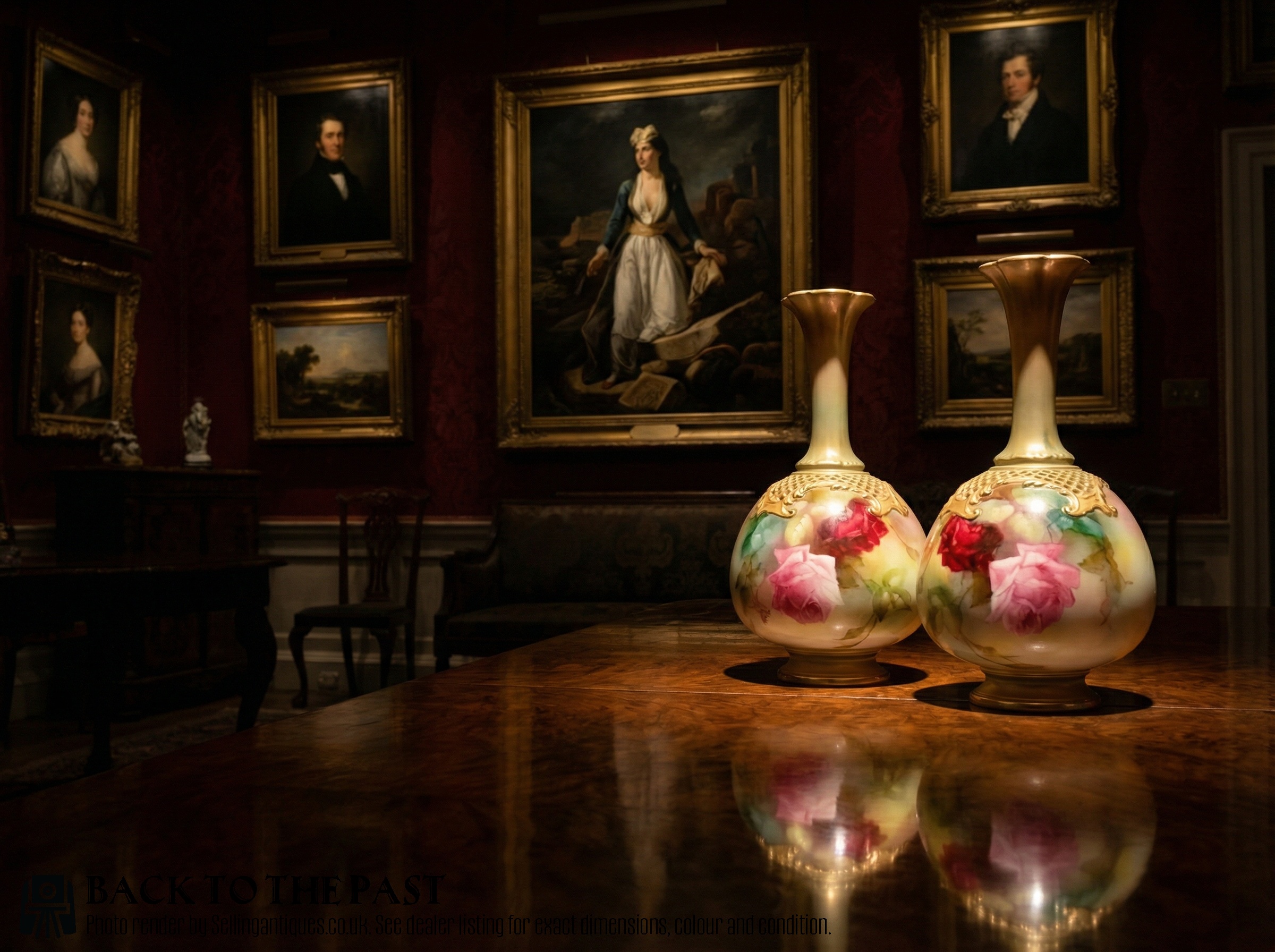
Victorian Royal Worcester Ceramic
When searching for victorian royal worcester ceramic, buyers encounter a diverse range of ornamental and utilitarian objects spanning the nineteenth century and early twentieth century. The selection includes vases, figural salts, jardinières, ewers, and porcelain figurines produced across periods such as Victorian, Edwardian, and the late nineteenth century.
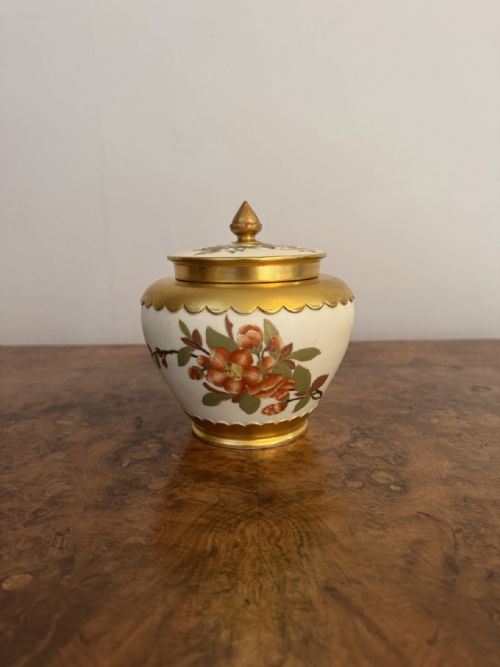
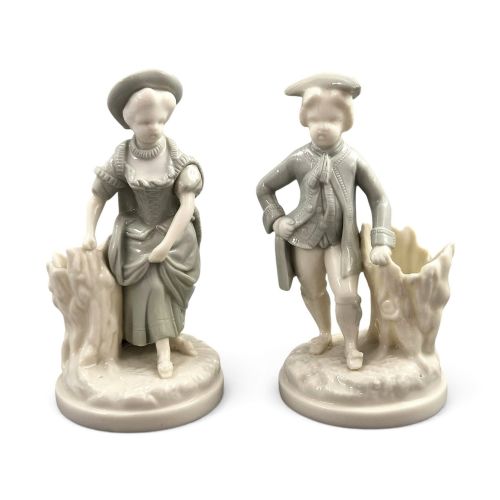
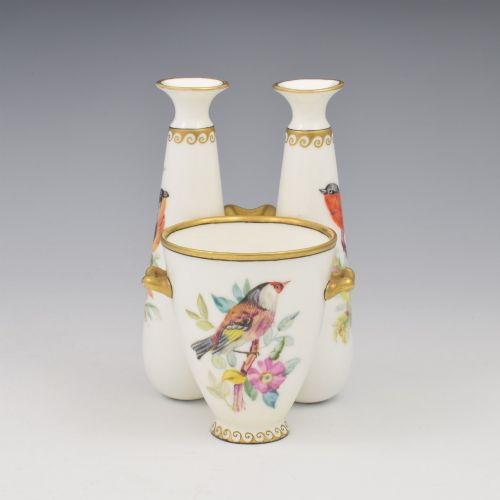
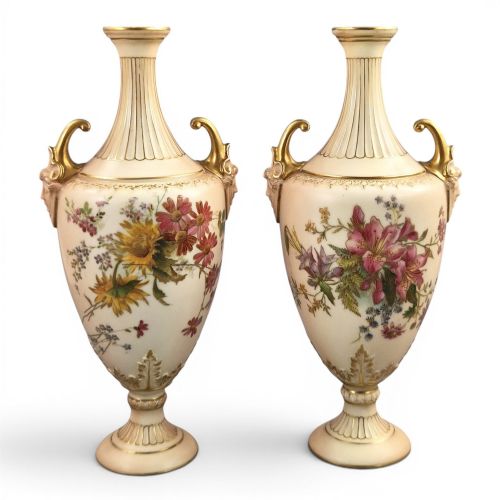
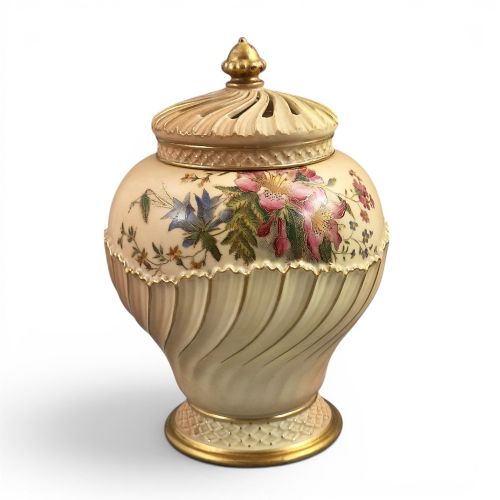
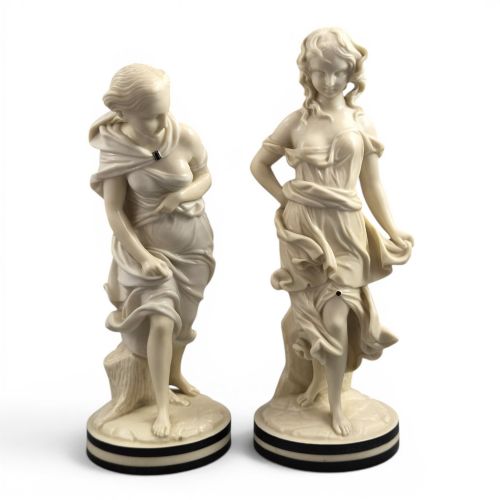
Vessels span shapes like blush ivory pot-pourri jars, shell dishes, and ovoid vases decorated with floral sprays or birds. Sculptural works encompass figural groups, maiden figures, and orientalist subjects modelled by prominent designers like James Hadley.
The most common examples on this page date from the Victorian era and the Edwardian transition, featuring soft ivory grounds paired with gilding, enamel, and naturalistic painting.
Materials and production techniques
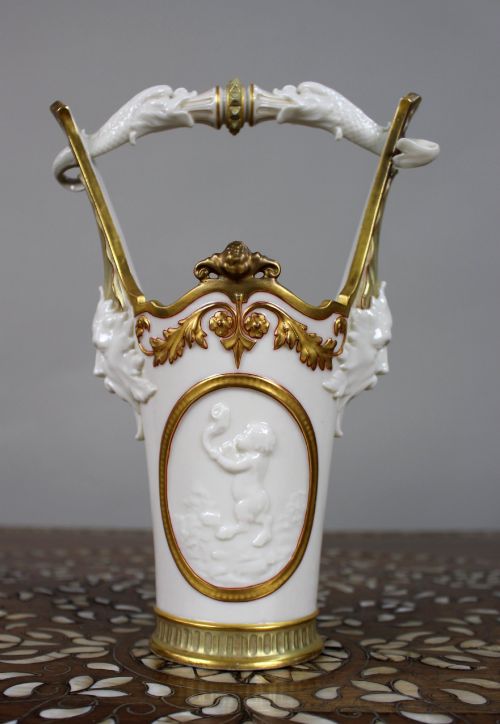
Production relies primarily on fine porcelain, earthenware, and parian ware, shaped into complex vessels and figures. Potters utilised specialised techniques including blush ivory bodies and patent metallic finishes to achieve distinctive tactile surfaces.
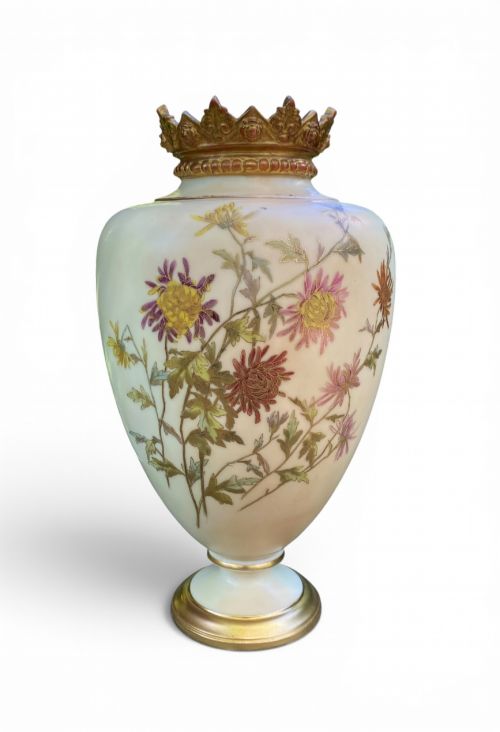
Decoration involves hand-painted details, often depicting ornithological subjects, chrysanthemums, and swans, complemented by gold leaf, gilt edges, and enamel encrustations. Pierced handles and moulded rockwork further demonstrate the intricate craftsmanship of the factory.
Ceramic lizards cling faithfully to porcelain tree stumps across several Victorian sculptural studies.
Distinctions in quality and execution
Quality varies according to the precision of the modelling and the complexity of the hand-painted decoration. Pieces bearing specific artist signatures or attributed to master modellers like James Hadley command distinct artistic standing.
The refinement of the gilding, the delicacy of the enamel work, and the subtlety of the blush ivory shading separate standard production wares from exhibition-grade pieces.
James Hadley·C Baldwyn·John Hopewell·Chivers
The Victorian Royal Worcester Ceramic Glossary
- Blush Ivory
- A specialised soft ivory-tinted porcelain ground developed by the factory. It provides a warm matte background for floral and gilt decoration.
- Parian Ware
- A fine white unglazed porcelain resembling marble. It was frequently utilised for sculptural figures and busts.
- Pot-Pourri
- A perforated vessel designed to hold dried scented plant materials. These jars often feature removable lids and decorative pierced work.
- Ewer
- A large jug with a wide spout and flared handle. They were primarily produced as decorative cabinet pieces during the nineteenth century.
- Gilding
- The application of gold leaf or gold paint to ceramic surfaces. It accentuates rims, handles, and sculptural details.
Victorian Royal Worcester Ceramic: Frequently Asked Questions
Who was James Hadley?
James Hadley was a principal modeller and designer for the pottery during the late nineteenth century. He created numerous figural groups and sculptural vessels.
His works often depict figures in regional or orientalist dress, modelled with high sculptural detail.
How are pieces dated?
Dating relies on factory date codes stamped or painted on the underside of the ceramics. These marks changed annually or periodically to record the year of manufacture.
Stylistic elements like blush ivory grounds and artist signatures also help narrow the production period.
Were these items meant for daily use?
Many ornamental items functioned purely as decorative cabinet pieces or centrepieces for nineteenth-century drawing rooms. Ewers, pot-pourri jars, and figurines were displayed to showcase taste and wealth.
Certain forms like soup dishes and teapots served functional dining purposes within affluent households.