




Hand Painted Rose Urns
Hand painted rose urns bring together botanical illustration and ceramic form, offering decorative focal points shaped across European and Chinese workshops.
Hand Painted Rose Urns
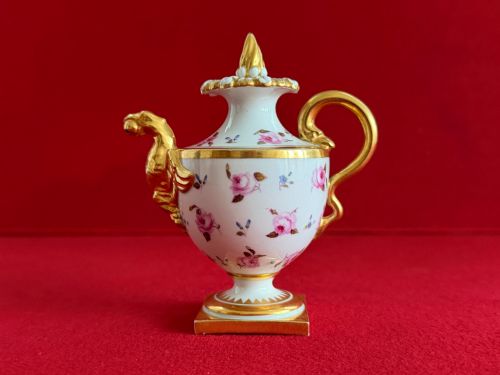
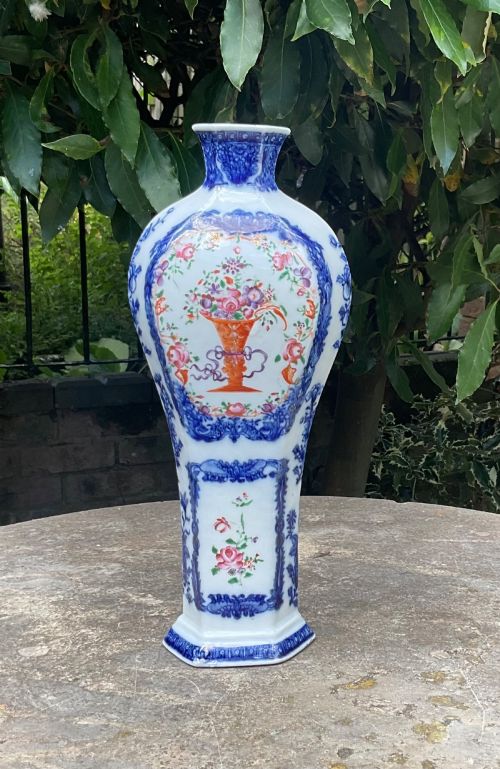
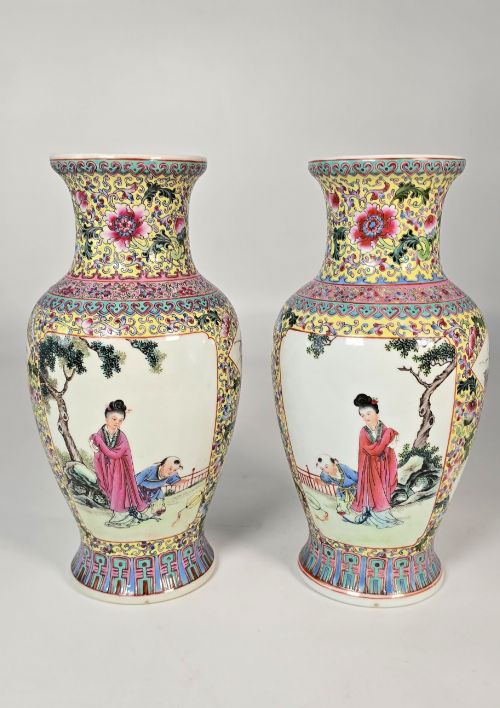
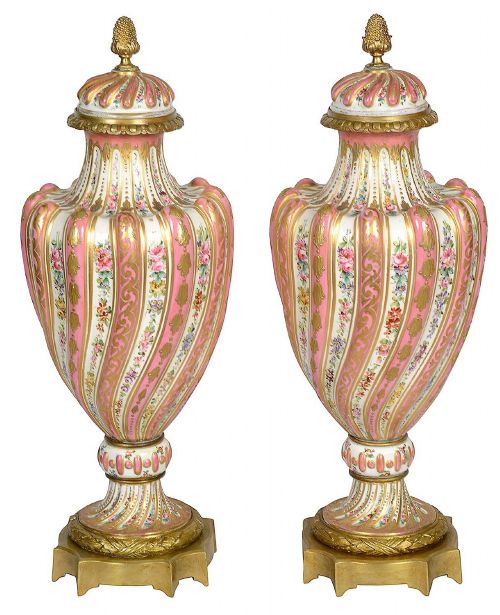
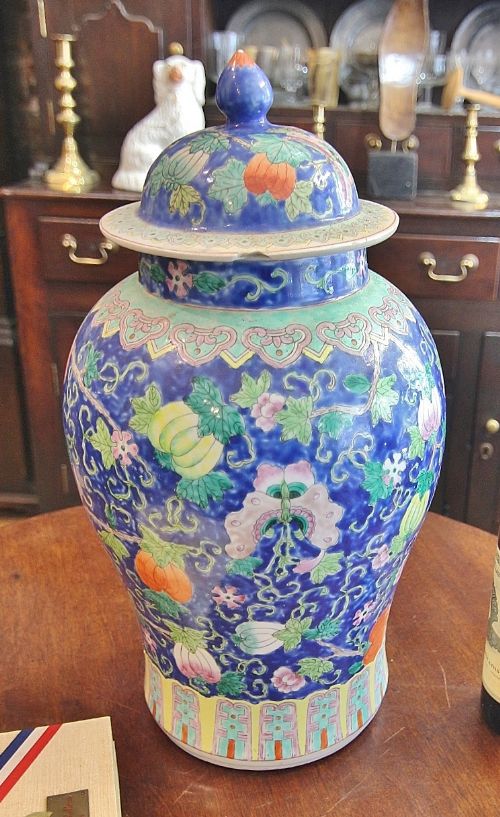
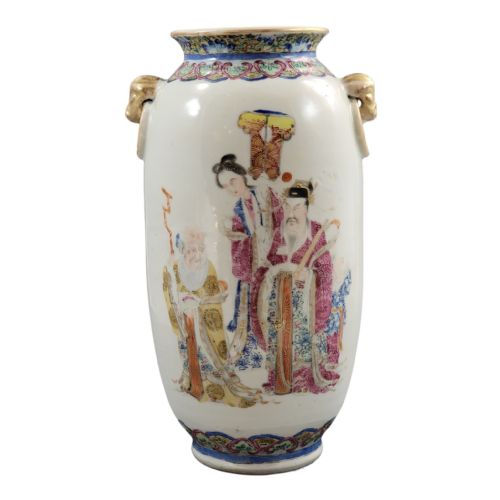
Hand painted rose urns encompass decorative ceramics, lidded jars, and vases produced across the nineteenth and twentieth centuries. Buyers searching this phrase meet English porcelain from factories like Royal Worcester and Flight, Barr & Barr, alongside French Sevres style pieces and Chinese export wares including Canton Rose Medallion and Famille Rose pieces.
The forms range from monumental floor vases and table lamps to delicate water sprinklers and pot pourri jars. Nineteenth-century examples dominate the selection, showing both Regency elegance and late Victorian elaboration.
How they were made
Makers utilised hard-paste and soft-paste porcelain bodies, shaping them on wheels or casting them in moulds before firing. The surfaces received white or tinted glazes that provided a smooth ground for subsequent overglaze enamel painting.
Gilding, gold leaf, and brass mounts added structural and decorative contrast to the painted botanical motifs. Enamel glaze techniques allowed artists to build up intricate floral petals and figural scenes before a final low-temperature fixation firing.
Listings span the nineteenth and twentieth centuries, uniting Regency porcelain, Victorian Canton export wares, and 1930s Chinese Republic period vases.
What varies in quality
The refinement of the brushwork dictates the standing of individual pieces, separating hurried factory output from carefully observed botanical artistry. Superior examples display delicate shading in the rose petals and precise control over the surrounding giltwork.
The weight and purity of the porcelain body, combined with the crispness of moulded details such as handles and lidded mounts, mark out the better productions. Potteries employing named artists or retaining factory marks achieve greater distinction than unrecorded domestic wares.
Flight, Barr and Barr·Samson of Paris·Royal Worcester·Minton
The Hand Painted Rose Urns Glossary
- Famille rose
- A major palette of Chinese ceramic glazes introduced in the Qing dynasty, distinguished by opaque pink or purple enamels used alongside other soft colours. The term translates to pink family and covers extensive export porcelain.
- Rose medallion
- A specific style of Chinese export porcelain decorated in panels with alternating birds, flowers, and figures, tied together by dense green and gold botanical borders. This style proved immensely popular during the nineteenth century.
- Blush ivory
- A specialist porcelain ground developed by Royal Worcester in the late nineteenth century, created by applying tinted ivory glazes under hand-painted floral decoration. It mimics the warm tone of elephant ivory.
- Ormolu
- Gilded bronze mounts applied to the bases, rims, and handles of European porcelain urns during the nineteenth century, particularly on French pieces in the Sevres style. The technique adds architectural weight to decorative vessels.
- Baluster
- A vertical ceramic form characterised by a rounded lower body that tapers upward to a narrow neck, resembling a traditional architectural pillar. Many nineteenth-century Chinese export vases use this silhouette.
Hand Painted Rose Urns: Frequently Asked Questions
Were these urns made for display or use?
The majority of these pieces served as decorative ornaments, centrepieces, or mantel garnitures rather than functional vessels. Forms like pot pourri jars held dried scented petals, while water sprinklers and ewers had specific domestic functions before becoming purely display items.
Many nineteenth-century vases and urns were later converted into table lamps during the twentieth century, altering their original display context. Collectors today appreciate both the unconverted ceramic forms and those adapted for electrical lighting.
How do I distinguish Chinese export from European pieces?
Chinese export pieces, such as Canton and Famille Rose wares, typically feature dense enamel palettes involving characteristic pinks, greens, and gilt detailing across heavy porcelain bodies. The motifs often incorporate court figures, birds, and butterflies alongside formal geometric borders.
European factories like Royal Worcester, Minton, and Sevres employ naturalistic botanical painting set against white or blush ivory grounds. The paste, potting style, and base marks provide further clues to geographical origin and period.
What do factory marks tell us?
Marks stamped, painted, or incised on the underside of ceramics identify the manufacturing pottery and often narrow down the production period. English works like Royal Worcester utilised evolving systems of dots, letters, and ciphers to date individual years.
Chinese pieces frequently bear reign marks from dynasties such as Guangxu or Daoguang, though these must be evaluated alongside the physical characteristics of the paste and enamel. Unmarked pieces rely entirely on stylistic comparison and material analysis.