


Victorian Royal Figurines
These victorian royal figurines capture the portraiture and pageantry of the nineteenth century in porcelain, earthenware, and bronze.
Victorian Royal Figurines
Victorian royal figurines encompass portrait models of monarchs, romantic pairs, and exotic figures produced during the nineteenth century. These pieces record royal personages, historical alliances, and classical revivals across several decades of British and European manufacturing.
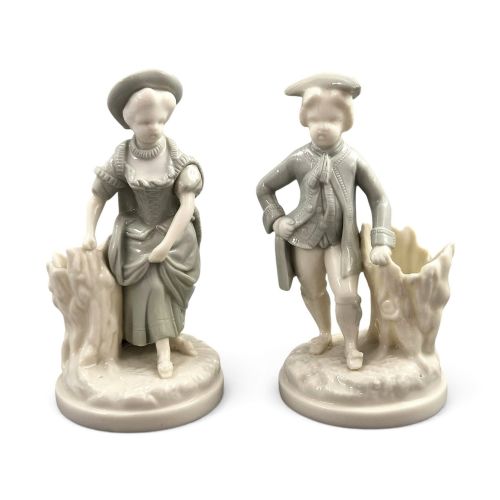
Staffordshire flatbacks and Royal Worcester sculptures dominate the selection on this page. Collectors frequently encounter Staffordshire portrait groups depicting Queen Victoria alongside family members or political allies, alongside finely modelled Royal Worcester figures designed by makers such as James Hadley.
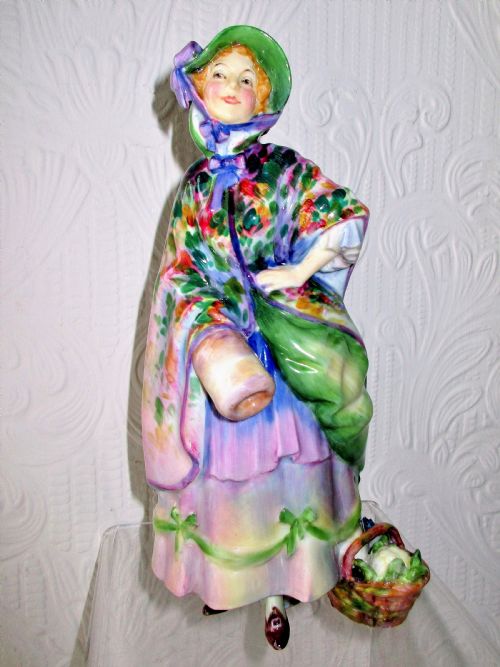
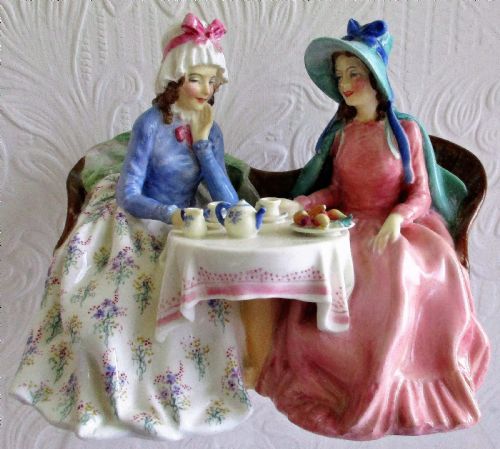
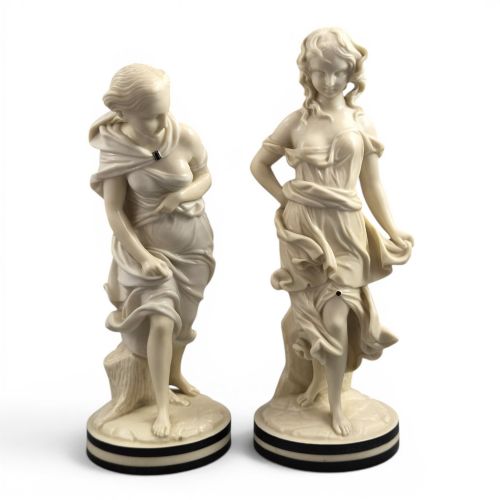
The assortment extends from modest earthenware mantel ornaments to large sculptural porcelain maidens and candle snuffers. Styles shift from traditional Staffordshire folk portraiture towards intricate Victorian Orientalism, classical revivals, and early twentieth-century decorative porcelain.
Materials and production methods
Potters utilised porcelain, ceramic, and earthenware as the primary bodies for these figures. Moulded clay formed the foundational shape, which was then hand-finished and painted before firing.
Glaze, enamel, and gilding provided surface decoration and colour. Many pieces incorporate gold leaf or delicate gilt highlights to accentuate costume details and regalia.
Listings feature porcelain, earthenware, and parian ware across the nineteenth century and early twentieth century.
Assessing quality and execution
The application of glaze and gilding also differentiates standard production items from exhibition pieces. Careful enamel work preserves fine details in costume and facial expressions across successive firings.
Royal Worcester·Royal Doulton·Royal Dux·Staffordshire potteries·Kerr and Binns
The Victorian Royal Figurines Glossary
- Flatback
- A ceramic figure designed with an unglazed or finished flat rear side intended to stand against a mantelpiece wall. These pieces were often moulded in two parts and joined before firing.
- Parian ware
- A fine-grained unglazed porcelain developed to imitate marble. This material allowed manufacturers to produce neoclassical and sculptural figures with a smooth, matte finish.
- Majolica
- A colourful lead-glazed earthenware characterised by rich, vibrant tones. Potters applied these metallic oxide glazes directly to the raw clay body.
- Gilding
- The application of gold leaf or powdered gold paint to ceramic surfaces. This technique highlighted decorative elements such as crowns, jewellery, and garment trims.
- Enamel
- Vitreous colouring applied over the glaze and fired at a lower temperature. This process permitted a broader palette of bright, permanent hues on porcelain figures.
Victorian Royal Figurines: Frequently Asked Questions
What subjects do these figures represent?
These sculptures portray prominent historical figures, including Queen Victoria, Prince Albert, the Prince of Wales, and foreign leaders. Other subjects include classical maidens, musicians, and literary characters.
Makers also produced romantic pairs, children on horseback, and exotic water carriers reflecting nineteenth-century artistic interests.
How were Staffordshire figures displayed?
Staffordshire portrait groups and flatbacks typically stood on mantelpieces in nineteenth-century homes. Their flat backs allowed them to rest flush against walls in living rooms and parlours.
These ceramic ornaments served as patriotic displays and decorative conversation pieces for middle-class households.
What is the difference between earthenware and porcelain?
Earthenware is a porous, opaque ceramic fired at lower temperatures, commonly found in nineteenth-century Staffordshire portrait groups. It provides a heavier, sturdier body for folk figures.
Porcelain is a denser, vitrified ceramic fired at much higher temperatures, allowing for delicate translucent qualities seen in fine factory figurines.