



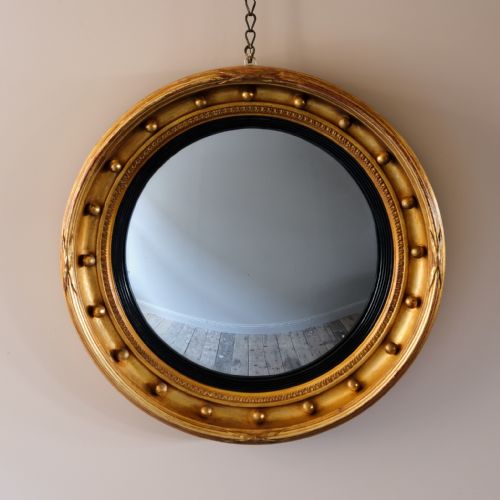


Victorian Round Wall Mirror
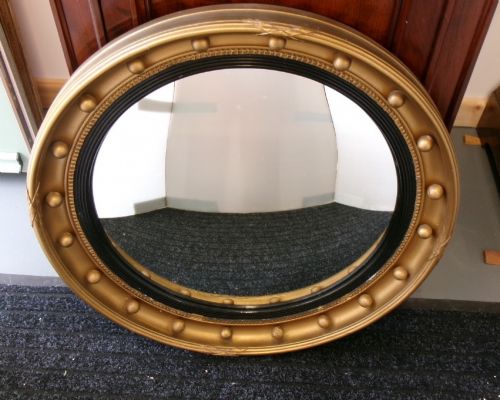
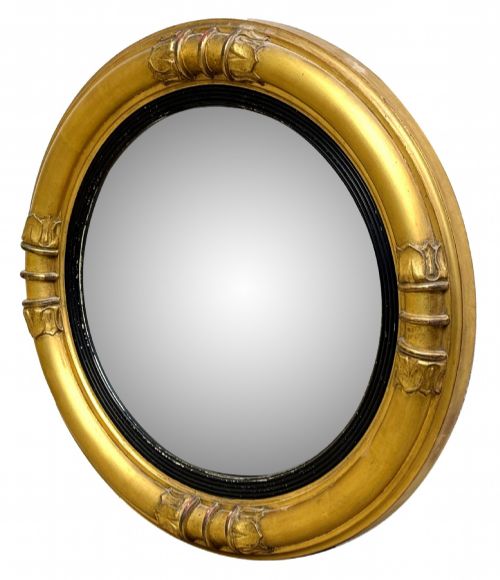
These Victorian round wall mirror pieces offer deep convex plates and gilded frames that catch the light of any room.
Victorian Round Wall Mirror
A victorian round wall mirror brings a distinct circular form to domestic spaces, drawing the eye with curved glass and ornate frames. You will frequently encounter convex porthole and witch's mirror variants dating across the nineteenth century.
The selection ranges from small circular hall mirrors to larger giltwood and brass framed objects designed for prominent interior placement. Pieces span periods from the mid nineteenth century into the Edwardian era, often utilising timber, oak, or burr walnut.
Makers and craftsmen of this period utilised classical circular geometries, sometimes incorporating Regency revival motifs or Gothic details. These mirrors serve both functional and decorative purposes within period room schemes.
Materials and construction methods
Frames rely on carved wood, gesso, and giltwood, with gold leaf applied to create reflective, luminous surfaces. Ebonised wood and solid brass also feature prominently in framing the circular glass plates.
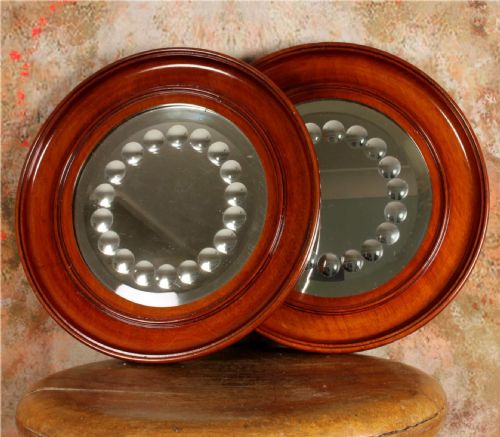
Glass plates are frequently convex or bevel-edged, producing distorted panoramic reflections characteristic of nineteenth century optical manufacturing. Timber substrates such as mahogany and oak provide sturdy structural backings for the heavy glass.
Early convex mirrors were nicknamed witch's balls because people believed their wide-angle reflection warded off domestic mischief.
Distinctions in craftsmanship
The refinement of the carved wood and gesso ornamentation dictates the sophistication of the frame. Intricately moulded giltwood displays deeper relief and sharper detail than simpler timber iterations.
Originality of the glass plate and the presence of natural foxing influence the character of the object. Finely cast brass frames and well-preserved gold leaf gilding indicate superior nineteenth century workshop production.
The Victorian Round Wall Mirror Glossary
- Convex mirror
- A circular mirror with an outward-curving glass surface that reflects a wide, curved field of vision. These are often referred to historically as witch's or porthole mirrors.
- Giltwood
- Timber that has been coated with a thin layer of gold leaf or gilt paint. This technique creates a bright, reflective surface popular in nineteenth century frame design.
- Gesso
- A plaster-like material applied to wood frames before gilding to create smooth surfaces for intricate carving. It allows craftsmen to model complex decorative relief details.
- Foxing
- Age-related spots and discoloration within the glass plate. This chemical ageing process creates mottled dark patches across the reflective surface.
- Overmantel mirror
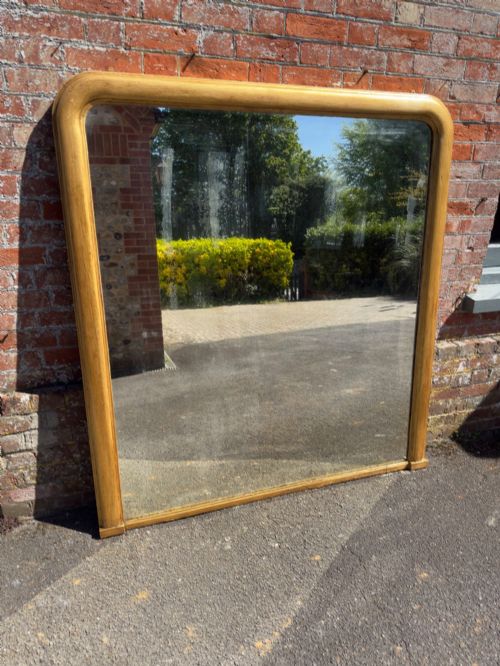
- A large mirror designed to hang above a fireplace mantelpiece. They frequently incorporate arched tops or wide rectangular and circular wooden frames.
Victorian Round Wall Mirror: Frequently Asked Questions
Where should I hang a convex mirror?
These pieces suit principal reception rooms, hallways, and dark corners where the curved glass can gather and distribute ambient daylight. Their wide optical field makes them effective above mantelpieces or console tables.
Ensure secure wall fixings support the considerable weight of the timber and gesso frames. Positioning the mirror at eye level maximises its decorative impact within the room.
How do I identify a nineteenth century frame?
Examine the construction materials at the reverse, where older timbers, hand-cut fixings, and traditional gesso layers indicate period manufacture. Nineteenth century frames often show subtle irregularities in the wood carving and gilding.
Look for genuine foxing within the glass plate, which develops naturally over decades. The weight and density of the giltwood or brass also point to authentic Victorian craftsmanship.
What is a sorcerer's mirror?
A sorcerer's mirror is another term for a convex round wall mirror, historically believed to ward off evil spirits. The curved glass captures a distorted miniature view of the entire room.
Victorian makers revived these distinctive circular designs, often pairing them with ebonised or gilded wooden frames. They were prized as both decorative curiosities and functional optical devices.