


Victorian Rosewood Chairs
Victorian rosewood chairs bring dense grain and formal warmth to sitting rooms and dining spaces alike.
Victorian Rosewood Chairs
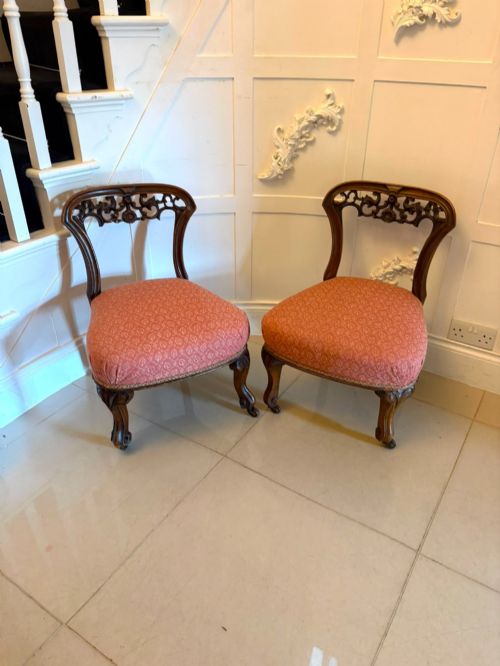
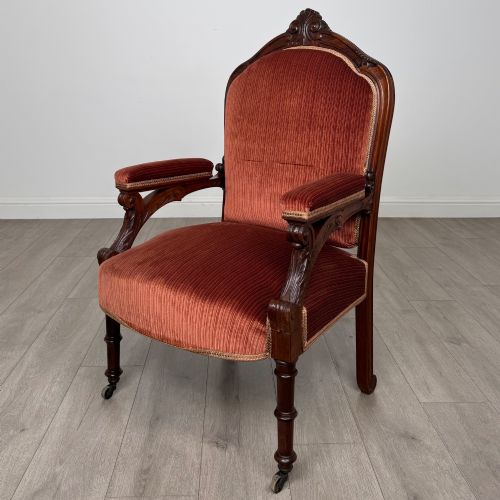
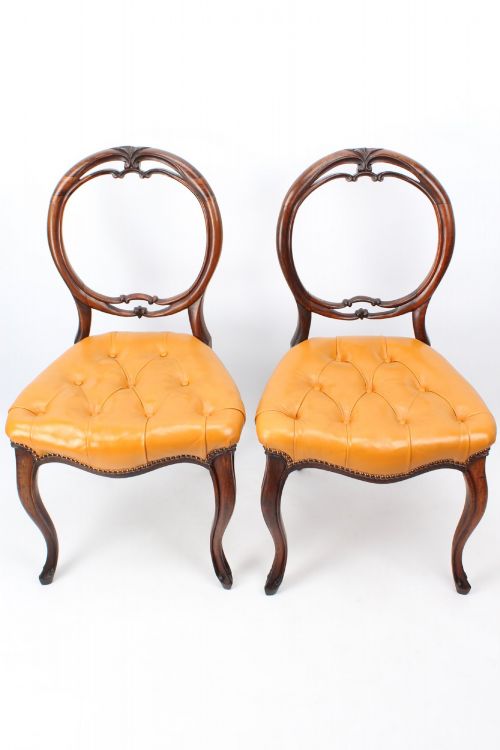
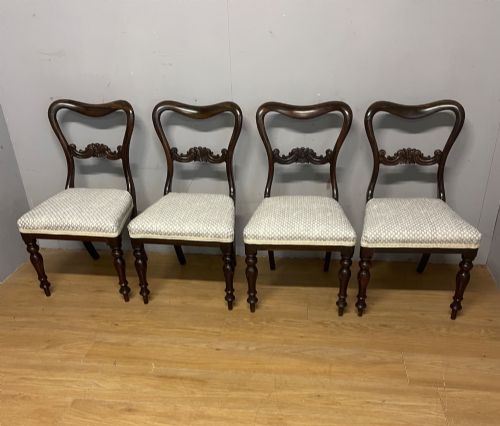
Victorian rosewood chairs comprise a wide variety of seating forms designed during the nineteenth century, ranging from single side chairs to extensive dining sets. The most common forms found here include balloon back dining chairs and carved armchairs, alongside smaller bedroom and side chairs.
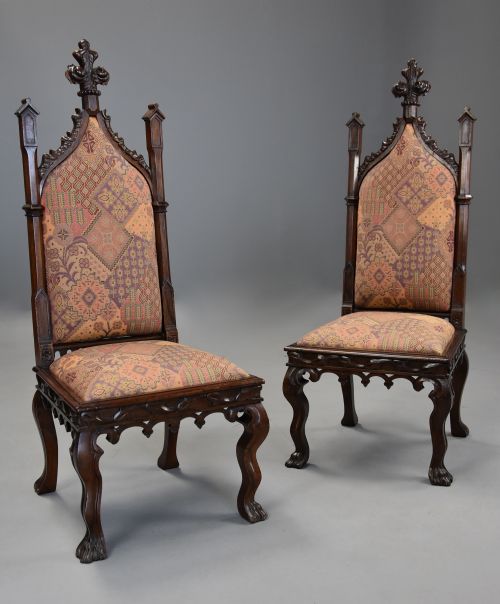
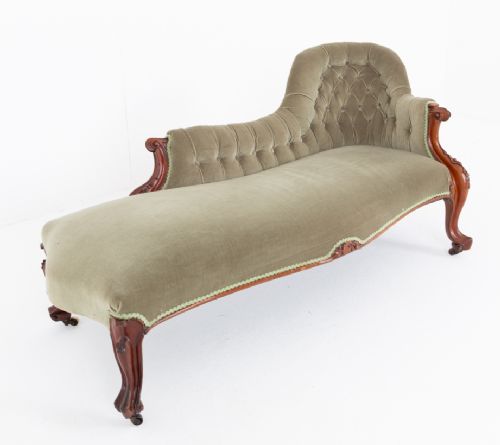
Makers produced these pieces across several distinct decades, incorporating stylistic influences such as Gothic revival, Rococo revival, and William IV designs. Dining chairs often appear in matched sets of four, six, or ten, while armchairs and chaise longues survive as individual pieces or pairs.
How they were made
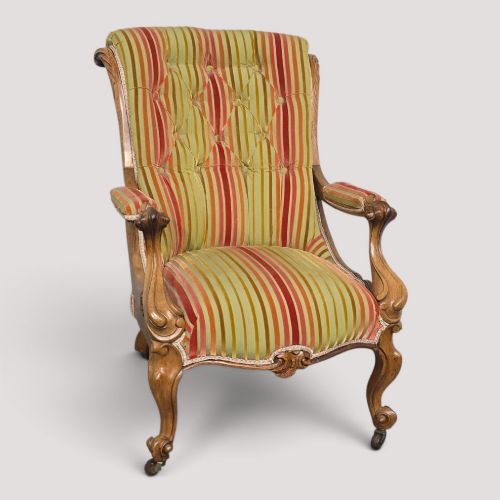
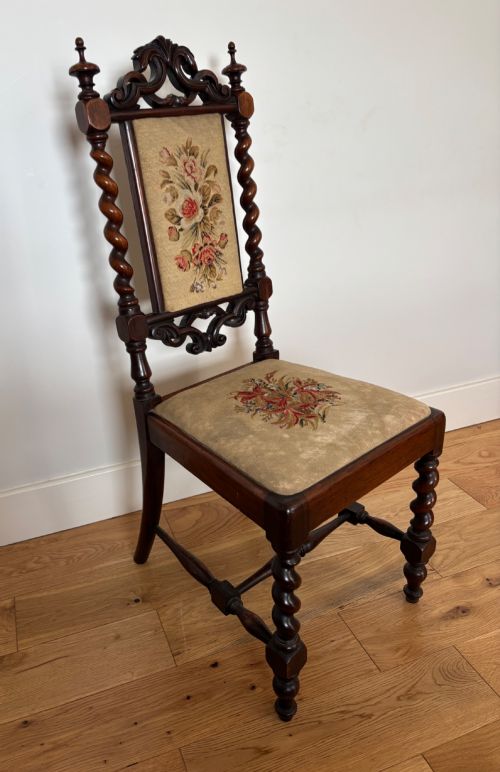
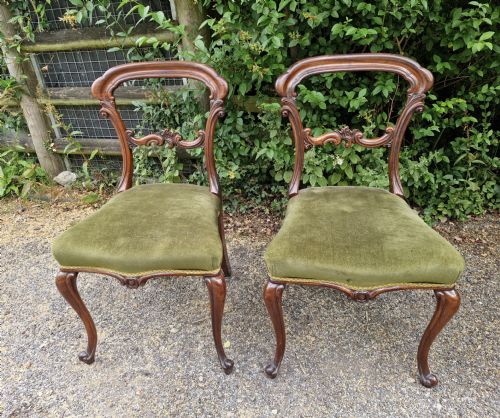
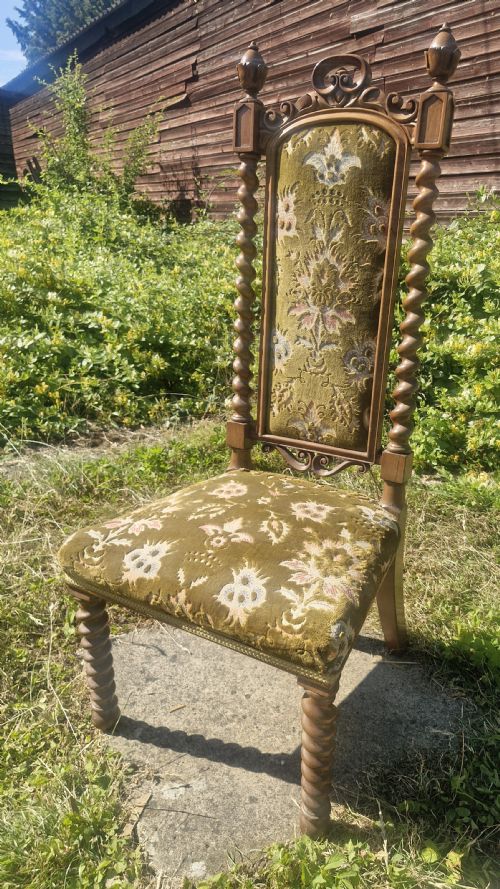
Cabinet makers utilised dense rosewood timbers for the structural frames, often shaping the timber into curved showwood outlines, cabriole legs, or barley twist supports. Carved details were hand-chiselled directly into the solid wood before finishing.
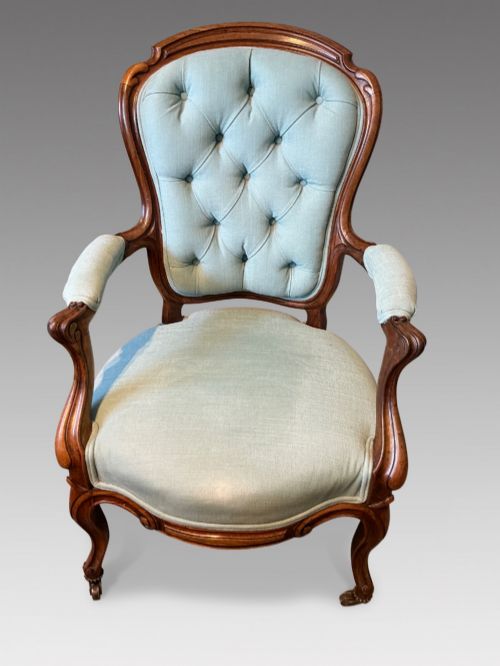
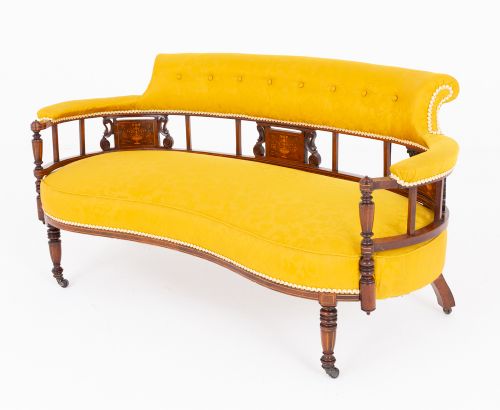
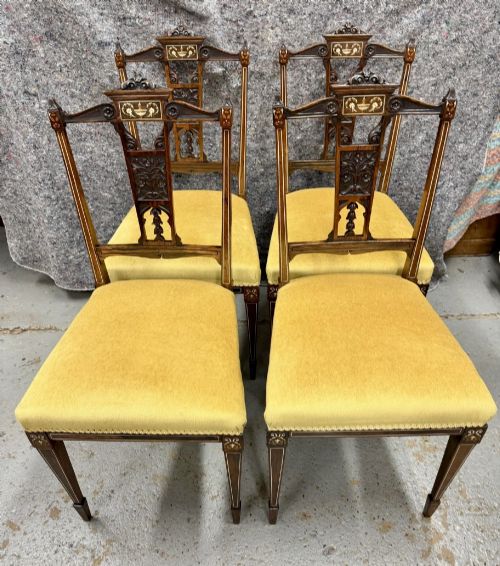
Upholstery techniques involved webbing and stuffing seats with textile, velvet, leather, or needlepoint fabrics, frequently secured with brass tacks or buttoning. Some examples also incorporate marquetry inlay set directly into the wooden back panels.
Victorian Rosewood Chairs Retail Price Guide 2026
Typical asking prices for victorian rosewood chairs among the pieces listed under this phrase on Sellingantiques today, from the lower quarter to the upper quarter. They describe what is for sale here now, not the wider market.
Several miniature chairs wait quietly on the floor, built perfectly to scale for Victorian children and their dolls.
What varies in quality
The standard of carving and the weight of the timber separate simpler frames from more ambitious pieces. Crisp, deep hand-carving on cabriole legs or showwood frames indicates greater workshop skill than shallow or mechanical shaping.
The integrity of the timber frame and the completeness of matching sets influence overall standing. Sets that retain their original upholstery materials or harmonious grain patterns command more attention than assembled harlequin groups.
W.A. Willcocks·J. Herbert McNair
The Victorian Rosewood Chairs Glossary
- Balloon back
- A chair back shaped in a continuous oval curve resembling the outline of a balloon. This form became extremely popular for dining and parlour seating during the mid-nineteenth century.
- Showwood
- Polished wooden framing left exposed around the upholstered portions of an armchair or settee. It displays the grain and carved details of the timber.
- Cabriole leg
- A furniture leg that curves outward at the knee and tapers inward toward the foot, often ending in a scroll or carved pad. This shape draws inspiration from earlier furniture styles revived during the Victorian era.
- Marquetry
- Decorative patterns formed by fitting contrasting pieces of veneer into a prepared wooden surface. It appears on select back panels and table-related seating.
- Barley twist
- A turned wooden column carved in a spiral resembling a twisted rope. It frequently appears on the legs and vertical supports of side and armchairs.
Victorian Rosewood Chairs: Frequently Asked Questions
Were rosewood chairs used for dining?
Dining sets formed a major part of nineteenth-century production, frequently found in groups of four, six, eight, or ten. These pieces prioritised sturdy frames and lower backs to fit around dining tables.
Armchairs occasionally accompanied these sets for the head of the table, though side chairs made up the majority of the seating.
What is a showwood armchair?
A showwood armchair leaves the polished rosewood frame visible around the padded back and armrests. Cabinet makers shaped these exposed wooden borders with elaborate carvings and curved arm supports.
This style allowed workshops to display the rich dark grain of the rosewood alongside the upholstered fabric.
How do I tell early Victorian from late Victorian pieces?
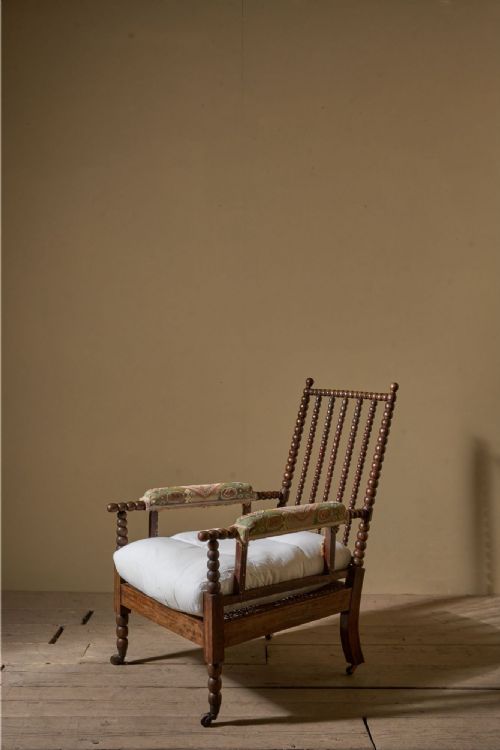
Early pieces from the mid-nineteenth century often display heavier proportions, rich carving, and robust cabriole legs influenced by Rococo revivals. Later examples from the final decades tend toward lighter frames, spindle details, or inlaid decoration.
Examining the turning methods and backrest shapes helps clarify the progression through the decades.