




Victorian Rococo Figurine
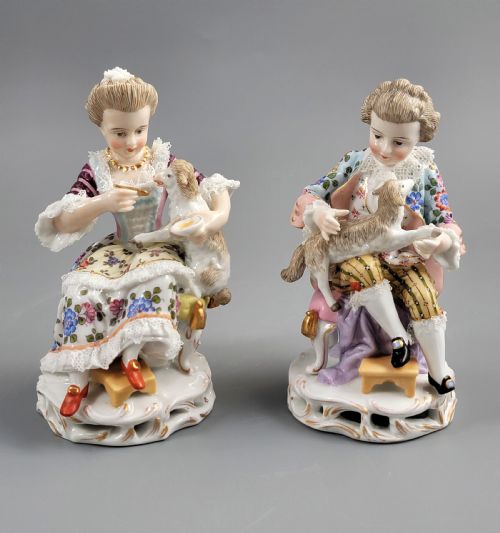
When you search for a victorian rococo figurine, you enter a world of romantic pastoral groups, gallant figures and porcelain children modelled in 19th-century European factories.
Victorian Rococo Figurine
A victorian rococo figurine takes the dynamic, scrollwork-heavy spirit of the 18th century and reinterprets it through 19th-century manufacturing. Buyers meet porcelain figures of shepherds, musicians, grape harvesters and romantic couples created across German and French ceramic centres.
The selections span single figures, seated pairs and elaborate figural groups engaged in pastoral or courtly pursuits. Many pieces adopt the playful style of earlier Meissen, Chelsea or Derby models while bearing the distinct production marks of the Victorian era.
Beyond standalone ceramics, the aesthetic crosses into decorative tablewares and timepieces, integrating sculpted figures with gilt mounts, glass decanters and variegated marble clock bases.
Materials and technique
Makers shaped these objects using hard-paste porcelain, bisque porcelain and parian, often finishing surfaces with delicate hand-painting, enamel colours and touches of gold leaf. Skilled modellers cast figures in moulds before applying intricate applied floral elements and detailed drapery by hand.
Gilt bronze, silver mounts and heavy variegated marble support the ceramic components in clock cases and decanters. The combination of high-fired ceramic with gold gilding creates the rich, reflective surface characteristic of the style.
Gentlemen in powdered wigs share cabinet space with mischievous cherubs riding sea shells and children harvesting grapes.
What separates the grades
The standard of modelling defines the finer examples, where facial expressions, hands and fingers retain crisp definition rather than softening in the kiln. Hand-painted polychrome details and precise application of lace or tiny porcelain flowers require exceptional dexterity from the factory painter.
Substantial weight in the ceramic body and clean execution of scroll-moulded bases separate ambitious studio pieces from standard commercial production. Preservation of delicate projecting elements, such as musical instruments and leafy boughs, dictates the integrity of surviving specimens.
Meissen·Sitzendorf·Volkstedt·Samson Paris·Carl Thieme Dresden
The Victorian Rococo Figurine Glossary
- Bisque porcelain
- Unglazed porcelain with a matte, marble-like texture often used for detailed figurative sculpture. It allows fine anatomical modelling to remain sharp without the softening effect of a glossy glaze.
- Hard-paste porcelain
- A dense, durable ceramic composed of kaolin and petuntse fired at very high temperatures. This material forms the durable body of most continental European figures.
- Gilding
- The application of gold leaf or powdered gold suspended in a medium to ceramic surfaces or metal mounts. It provides the metallic enrichment typical of revivalist decorative objects.
- Sweetmeat
- A small decorative container or dish intended for sweet confections at a dining table. In porcelain form, these dishes are frequently supported by sculpted figures or cherubs.
- Parian
- A fine-grained unglazed porcelain developed to imitate carved marble. It gained popularity during the 19th century for classical and romantic portrait busts and small figures.
Victorian Rococo Figurine: Frequently Asked Questions
How were porcelain figures used originally?
Owners displayed these ornamental pieces on mantelpieces, side tables and enclosed cabinets within Victorian drawing rooms. Elaborate figural groups often served as decorative table centerpieces during formal dining.
Smaller examples were integrated into functional objects including scent bottles, clocks, candelabras and silver-mounted decanters.
How do I identify a Volkstedt or Sitzendorf piece?
Identification relies on examining the factory marks stamped or painted under the glaze on the base of the ceramic body. Stylistic traits such as applied floral work and distinct modelling of children and animals also offer clues.
German factories in regions like Thuringia maintained specific traditions for moulding and painting romantic pastoral figures during the 19th century.
How do I care for antique porcelain figures?
Display these delicate ceramics away from direct sunlight to protect the stability of hand-painted enamel colours and gold leaf. Dust them gently with a soft, dry brush rather than liquid cleaners.
Handle pieces firmly by their main body or base rather than projecting elements like outstretched arms, musical instruments or delicate lace borders.