


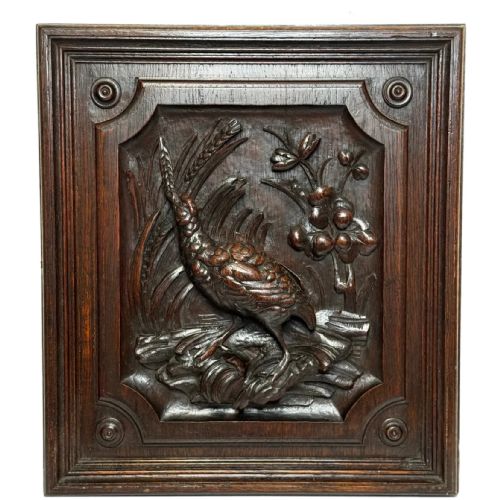


Victorian Relief Sculpture
Victorian relief sculpture brings three-dimensional modelling indoors, offering cast bronze, carved wood and moulded plaster panels for wall display.
Victorian Relief Sculpture
When you search for victorian relief sculpture, you encounter wall plaques, panels, and framed portraits that project from a flat backing. These pieces take various forms, from cast metal portrait plaques and bronze appliques to carved wooden hunting trophies and marble figural studies.
The versions most commonly met on this page span the nineteenth century, encompassing classical subjects, religious scenes, and heraldic shields. Makers utilised diverse media to achieve depth, resulting in works designed specifically for interior architectural decoration and wall hanging.
Materials and techniques
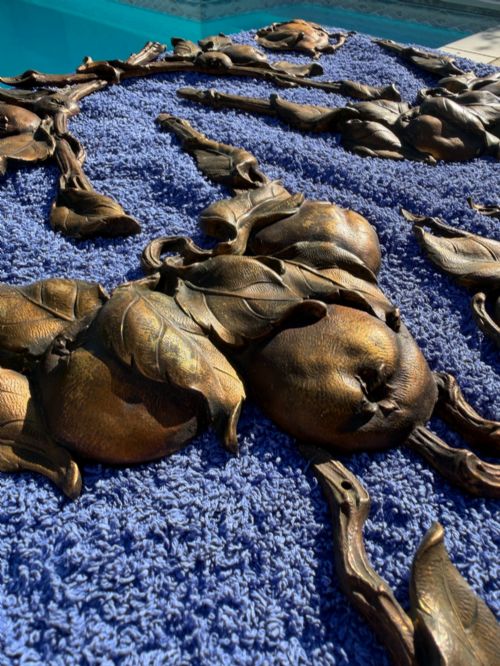
Craftsmen produced these works through casting, carving, and moulding in materials such as bronze, wood, plaster, and terracotta. Metal pieces typically involve cast bronze, gilt metal, or bronzed copper, sometimes mounted on ebonised timber or velvet grounds.
Carved wooden examples utilise walnut, tiger oak, and hardwood, often taking the form of deep relief panels and hunting trophies. Plaster and terracotta items capture fine detail through moulding, occasionally replicating earlier renaissance designs.
Subjects range from classical nudes and religious shadowboxes to heraldic crests, literary portraits, and black forest hunting trophies.
Judging quality in relief work
The integrity of the material and the preservation of original patination dictate the standing of a piece. Finer works often bear signatures, maker stamps, or detailed framing that complements the subject matter.
Poix Blin·Carlhian and Corbiere·Coalbrookdale
The Victorian Relief Sculpture Glossary
- Relief
- A sculptural technique where figures project from a flat background. High relief shows forms standing far out from the ground, while low relief keeps them flatter.
- Applique
- An ornamental fitting applied to a larger surface. These metal elements were frequently fixed to furniture or architectural woodwork.
- Patina
- The surface sheen and colour developed by age and handling on metals and woods. Original patination adds depth and character to bronze and copper surfaces.
- Ebonised
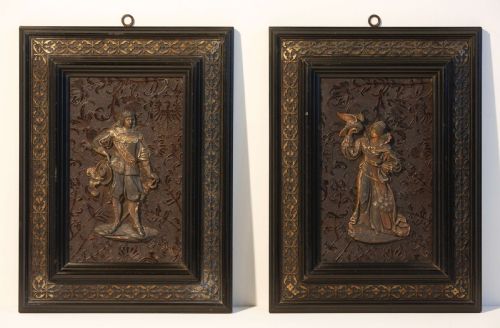
- Wood treated to imitate ebony. This dark finish was popular in the nineteenth century for framing plaques and mounting portrait reliefs.
- Terracotta
- Fired clay used for sculptural panels and masks. This material allows for expressive modelling before the baking process.
Victorian Relief Sculpture: Frequently Asked Questions
How were relief sculptures displayed?
These pieces were primarily designed as wall plaques, panels, or architectural decorations within nineteenth-century interiors. Many feature integrated mounting loops or are set within wooden frames for hanging.
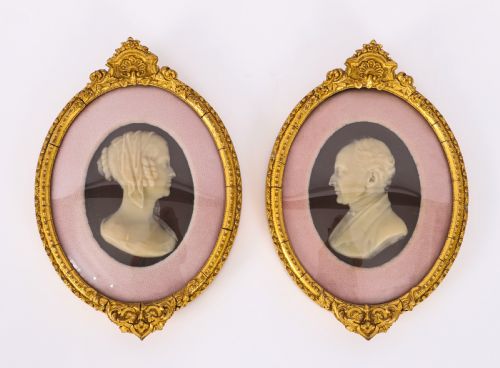
Larger heraldic crests and wooden trophies often served as focal points above mantelpieces or in libraries, while smaller bronze and wax portraits were displayed in groupings.
What subjects are most common?
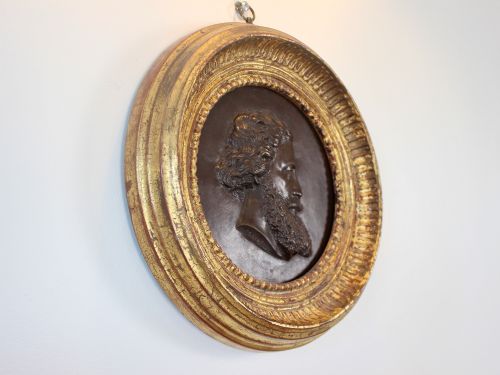
Portraits of historical figures, literary characters such as Charles Dickens, and classical or mythological scenes frequently appear. Religious subjects, including representations of Jesus Christ and saints, also feature prominently.
Additionally, hunting trophies, heraldic shields, and architectural putti reflect the period's taste for decorative revival styles.
How do I care for bronze and metal plaques?
Metal reliefs require minimal intervention to preserve their original surface patination. Dusting gently with a soft, dry cloth is usually sufficient.
Avoid using metal polishes or harsh chemical cleaners, as these strip away the aged surfaces and finishes that collectors value.
Are wooden wall panels heavy?
Many wooden panels, particularly those carved from tiger oak or walnut, carry substantial weight due to the density of the timber and the depth of the carving. Proper wall fixings and load-bearing hooks are essential for secure display.
Checking the stability of the backing board and any mounting hardware ensures the piece remains safely supported.