


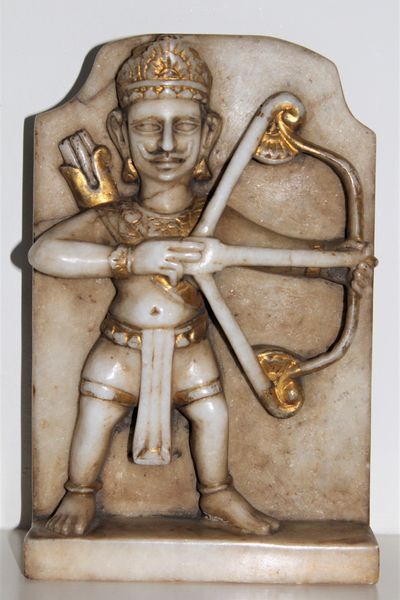

Carved Marble Plaque
A carved marble plaque brings classical relief work and portraiture indoors, offering solid stone portrait heads, memorials and architectural crests.
Carved Marble Plaque
When you search for a carved marble plaque, you encounter solid stone works ranging from small wall panels to framed reliefs and desk pieces. The items span several centuries, with particular strength in nineteenth-century interpretations of classical subjects.
Profile portraits of Roman emperors, literary figures like Virgil and Dante, and mythological subjects dominate the selection. You also find specialised forms such as pet memorials, architectural crests, and inlaid specimen pieces incorporating slate or malachite.
How they were made
Makers shaped these objects using white marble, Sienna marble, and dark stone or slate backgrounds, employing chisels and abrasive grits to achieve depth and smooth relief profiles. Some works involve intricate inlaid stone techniques, combining contrasting coloured marbles into geometric or pictorial compositions.
Framed presentation often complements the carving, utilising dark wood surrounds to frame white marble reliefs or cameo profiles. Sculptors worked both independently and in specialised workshops to produce high-relief profile portraits and wall panels.
A nineteenth-century pet memorial proves that mourning beloved animals with carved stone is a centuries-old tradition.
What varies in quality
Material selection also dictates distinction, with uniform white marble or rich Sienna marble commanding attention alongside multi-stone inlaid specimens. Signed works by documented sculptors or pieces associated with specific workshops elevate the historical interest of the object.
Thorvalsen Workshop·Kasper Hendrik Roskam
The Carved Marble Plaque Glossary
- Relief
- A sculptural technique where the figures project from a flat background. High relief stands out strongly, while low relief remains shallow.
- Grand Tour
- A nineteenth-century cultural journey across Europe undertaken by young gentry, who acquired souvenir antiquities and carved stone portraits. These pieces often record classical Roman themes.
- Breccia marble
- A composite stone made of broken fragments cemented together by a fine-grained matrix. It creates a variegated, angular pattern across desk pieces and panels.
- Cameo
- A method of carving an object such as a engraved gem or profile plaque in relief. It relies on contrasting colour layers within the stone.
- Bas-relief
- A form of surface sculpture where the figures project only slightly from the background plane. It is frequently seen on profile portrait plaques.
Carved Marble Plaque: Frequently Asked Questions
How do I hang a marble wall plaque safely?
Most heavy stone plaques require secure wall fixings, such as metal brackets or flush-mounted plates attached directly to masonry studs. Ensure the weight of the marble is fully supported rather than relying on the decorative frame alone.
For smaller desk pieces or framed items, display them on stable surfaces or use specialised picture wire rated for stone weight.
What subjects appear on these plaques?
The subjects range from classical Roman emperors and literary figures like Dante to nineteenth-century memorials and religious motifs. You also find regional pieces depicting Indian traditional subjects.
Portrait profiles and mythological scenes reflect the enduring popularity of classical antiquity among nineteenth-century collectors and travellers.
How do I clean carved marble?
Dust the surface regularly with a soft, dry cloth to prevent dirt from settling into the carved crevices. Avoid using household detergents, acidic cleaners, or excess water, which can damage unsealed stone.
For stubborn marks, consult a specialist restorer rather than attempting chemical cleaning yourself.
Were these made for travel souvenirs?
Many nineteenth-century profile portraits and cameo plaques were produced as souvenirs for travellers undertaking the Grand Tour across Italy. These portable pieces allowed visitors to bring home miniature representations of classical sculpture.
Other examples served as architectural wall panels, desk paperweights, or dedicated memorial stones.