


Grand Tour Souvenir Carving
A grand tour souvenir carving brings home the marble temples, bronze figures, and stone ruins that travellers gathered across Europe.
Grand Tour Souvenir Carving
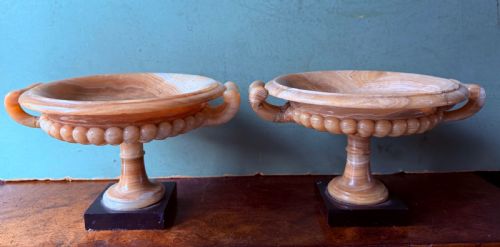
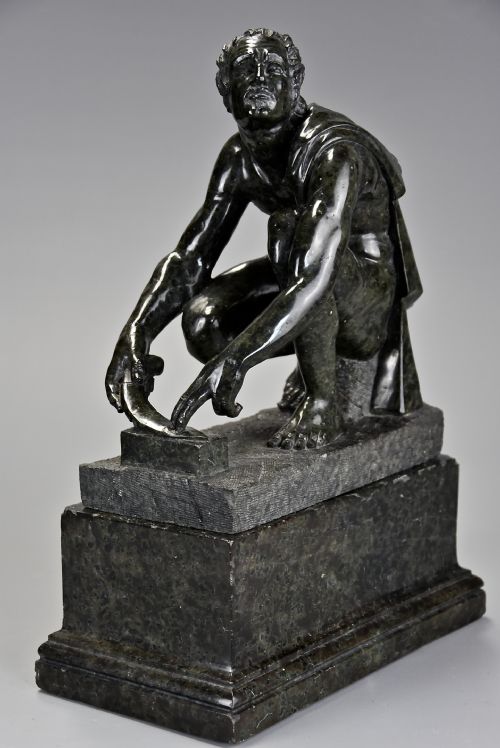
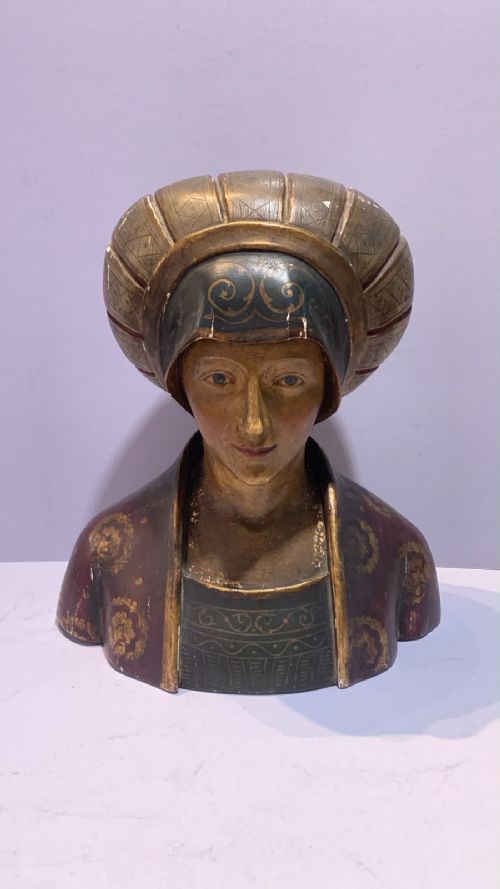
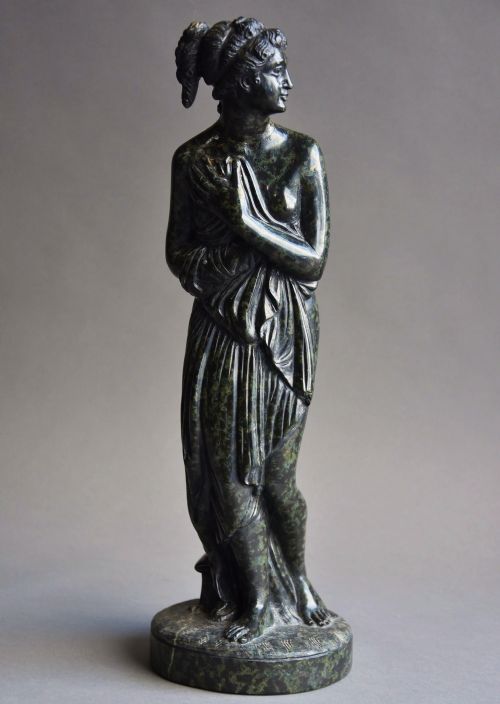
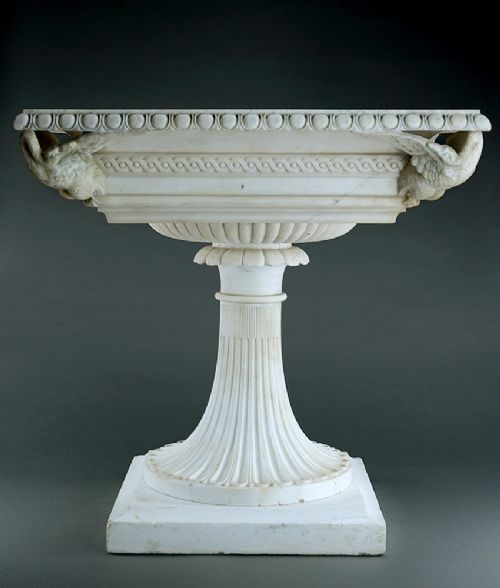
A grand tour souvenir carving represents the classical antiquities, Renaissance sculptures, and architectural monuments that wealthy travellers collected during their travels through Italy and Europe. These pieces take many forms, from miniature marble tazzas and alabaster urns to detailed figures of mythological subjects like Venus Italica and the Spinario.
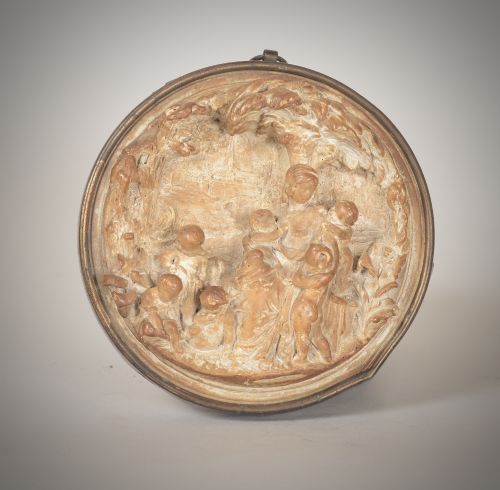
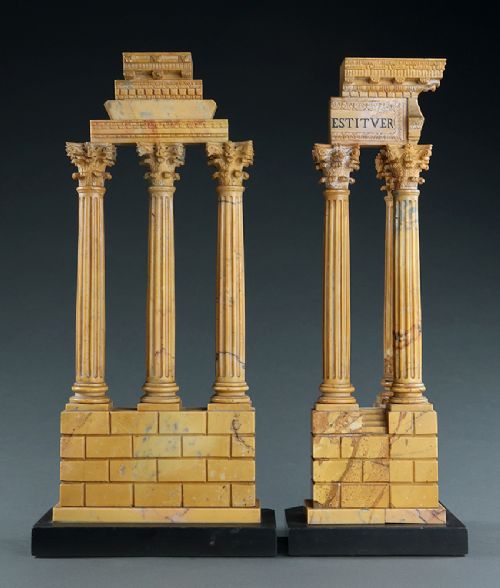
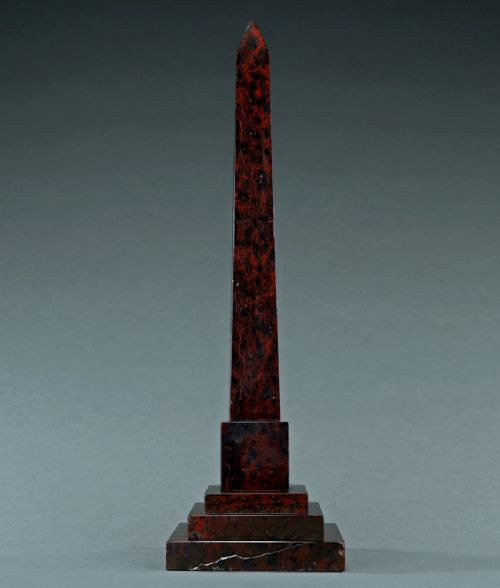
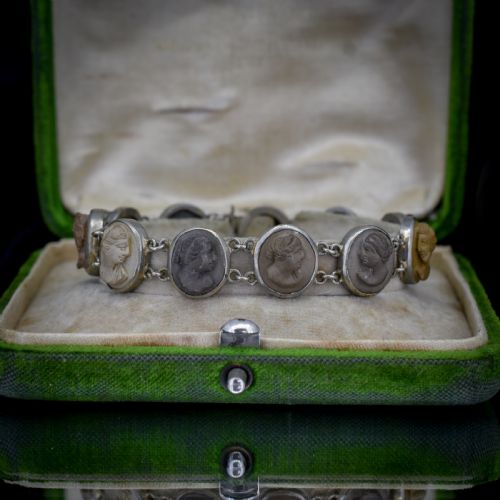
Most examples found here date from the nineteenth century, spanning periods from the 1850s to the late Victorian era, alongside several eighteenth-century reliefs and sculptures. The selection includes architectural models such as Forum temples and obelisks, as well as personal ornaments like lava cameo brooches and bracelets.
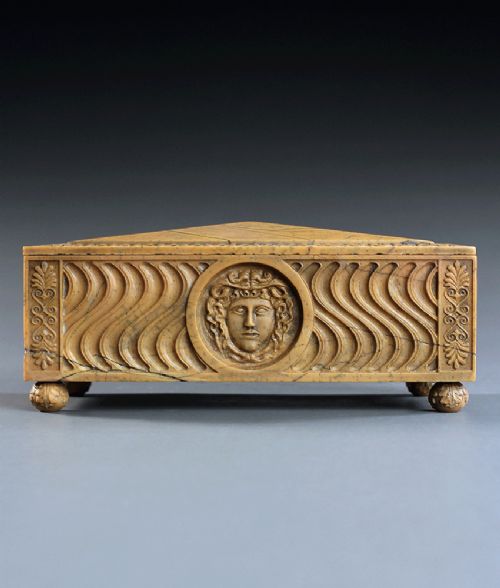
The materials reflect the geology of Italy and Britain, utilising various marbles, alabaster, serpentine, and lava stone alongside carved wood and brass. Buyers encounter both small cabinet pieces and larger decorative objects designed to display classical learning and refined taste in a nineteenth-century interior.
Materials and construction
Carvers shaped these objects from dense stones including white marble, coloured serpentine, alabaster, and volcanic lava, often turning them on lathes for tazzas and urns or carving them by hand for figural subjects. Artisans utilised contrasting marbles, such as black marble block bases, to mount smaller-scale pieces and give them stability and visual weight.
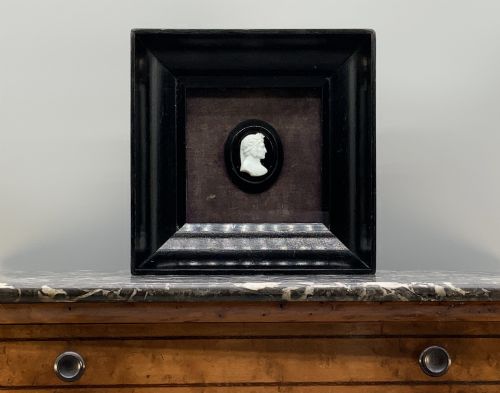
Detailed portrait plaques and wearable jewellery combine carved stone, shell, or plaster relief with silver mounts and inlaid olive wood boxes. Stonemasons and lapidaries followed ancient models, measuring classical statues and architectural ruins to produce accurate miniature representations for the export market.
Listings feature eighteenth and nineteenth-century pieces carved from marble, alabaster, serpentine, lava stone, and olive wood.
Distinctions in execution
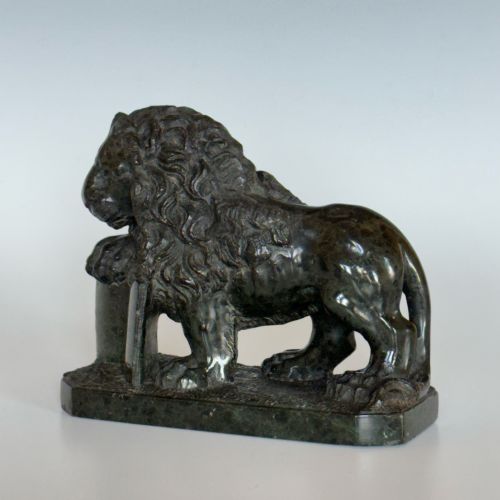
Quality rests in the fidelity of the carving to the antique source and the crispness of the anatomical detail in figural subjects such as lions, goddesses, and emperors. Finer pieces demonstrate careful hand-finishing that captures the drapery of clothing and the subtle musculature seen in original sculptures.
The choice and preparation of the stone dictate visual success, with highly figured alabaster, rich verdo prato, and unblemished Siena marble elevating simple forms into striking decorative objects. Smooth polishing across complex curves and recessed architectural elements separates ordinary workshop output from exceptional examples.
The Grand Tour Souvenir Carving Glossary
- Tazza
- A shallow cup or bowl set upon a stem and foot, frequently carved from marble or alabaster as a decorative centrepiece. These miniature vessels imitate ancient Roman tableware found during excavations.
- Serpentine
- A group of green silicate minerals resembling snake skin, highly favoured by Italian lapidaries for carving vases, obelisks, and animal figures. This dense stone polishes to a lustrous finish.
- Cameo
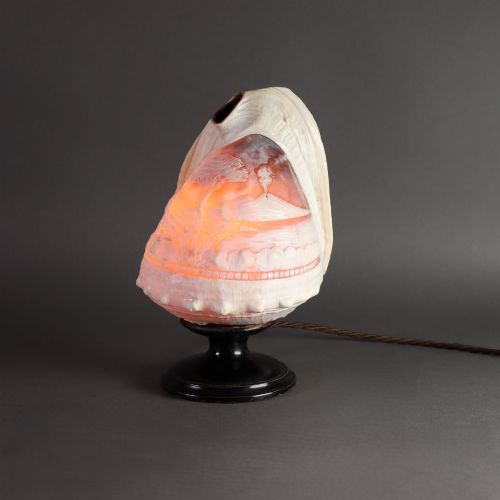
- A method of carving a gem, shell, or stone to raise a portrait or scene above a contrasting background. Victorian examples often depict classical deities and mythological figures in lava or shell.
- Spinario
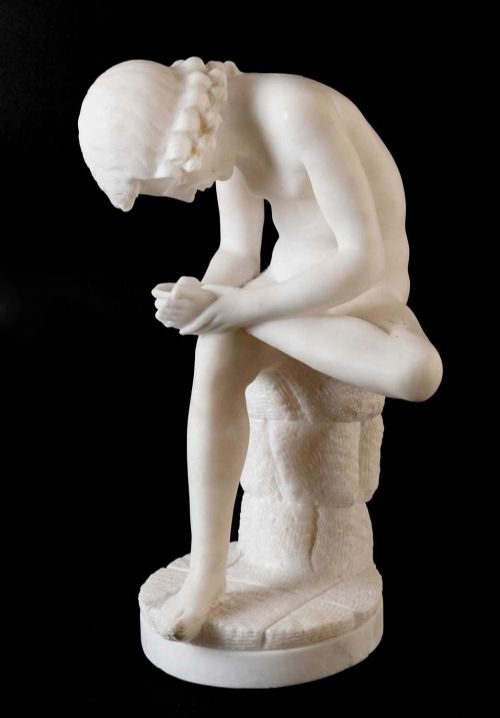
- An iconic Hellenistic bronze sculpture of a boy removing a thorn from his foot, frequently reproduced in alabaster and marble for nineteenth-century travellers. The subject remained exceptionally popular throughout the grand tour period.
- Labrum
- A large circular stone basin or fountain in classical architecture, adapted during the nineteenth century into decorative table objects carved from marble.
Grand Tour Souvenir Carving: Frequently Asked Questions
What is a grand tour souvenir carving?
These pieces are miniature or scaled-down replicas of classical statues, architectural ruins, and antiquities purchased by travellers touring Europe, particularly Italy, during the eighteenth and nineteenth centuries.
Craftsmen in Rome, Florence, and Naples produced them in materials like marble, alabaster, serpentine, and lava stone for visitors wanting to display their cultural education at home.
How were these stone carvings displayed?
Travellers placed obelisks, tazzas, urns, and figural statues on mantelpieces, libraries, and entrance halls as symbols of classical learning and refined travel.
Smaller items like lava cameo brooches, intaglios, and inlaid wooden boxes served as personal accessories or desk ornaments.
How do I identify nineteenth-century pieces?
Nineteenth-century examples often use specific regional stones like Siena marble, verdo prato, and volcanic lava, reflecting contemporary Italian lapidary production.
Stylistic cues match the revival movements of the Victorian era, including Neoclassical, Egyptian Revival, and Renaissance Revival designs.
What subjects appear most often?
Common subjects include famous classical sculptures like the Dying Gaul, Venus Italica, and the Dogs of Alcibiades, alongside architectural landmarks such as Roman temples and obelisks.
Portrait reliefs of Roman emperors and mythological figures like Demeter also feature prominently in plaques and jewellery.