
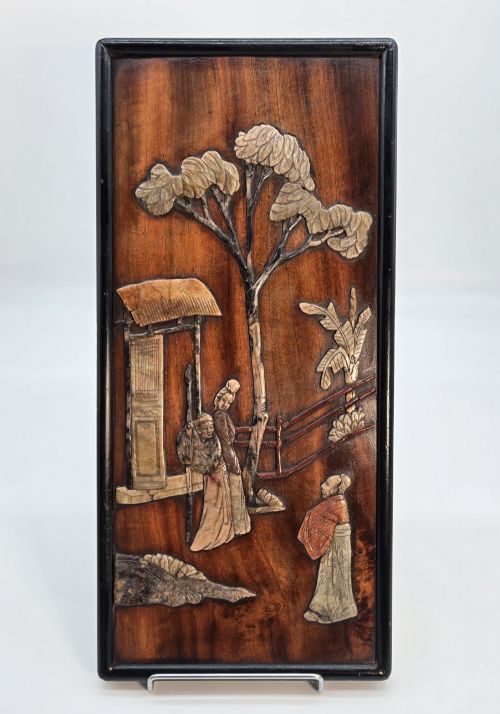


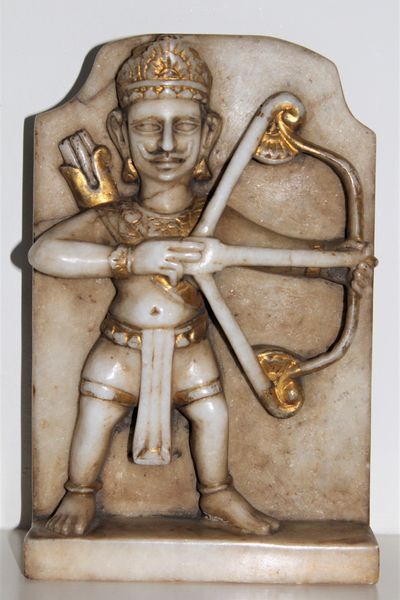

Antique Stone Relief Plaque
These antique stone relief plaques bring classical carving and architectural weight to a room, offering tactile depth that flat canvas simply cannot match.
Antique Stone Relief Plaque
An antique stone relief plaque is a sculpted wall piece projecting from a flat background, fashioned from materials ranging from fine white marble and red sandstone to Welsh slate and marble dust. These works often take the form of wall plaques, architectural salvage, and framed sculptures depicting classical figures, heraldry, and mythological scenes.
The examples most commonly met on this page span the eighteenth and nineteenth centuries, drawing heavily on Neoclassical, Victorian Classical Revival, and Italian Baroque styles. Buyers encounter everything from Grand Tour souvenir profile portraits of Roman Emperors to carved heraldic crests and religious subjects like a young saint or the St Mark's lion.
Originating largely from British and Italian workshops, these pieces function primarily as interior wall art or architectural elements mounted for display. They suit spaces needing a focal point with genuine historical resonance and physical presence.
Materials and technique
Makers carved directly into hard stones such as marble, sandstone, and slate using chisels and gouges to achieve varying depths of bas-relief and high relief. This subtractive method demanded immense precision, as any slip of the hand ruined the stone.
Some compositions utilise marble dust bonded with a binder to cast detailed sculptural forms efficiently. Frames in wood or specialised mountings occasionally support these plaques, giving structural rigidity to heavier panels.
Periods represented in the archive range from seventeenth-century Italian crests to mid-twentieth-century cast reliefs.
Judgement of quality
The distinction between ordinary and exceptional carving lies entirely in the fidelity of the musculature, drapery, and facial expression. Superior pieces capture vitality and anatomical truth in profile portraits and figurative scenes, whereas lesser works appear stiff and formulaic.
The choice of stone also dictates the grade of the piece, with fine-grained Italian marbles commanding greater appreciation than coarser sandstones or composite marble dust mixes. Crispness of edge retention where the relief meets the background ground indicates the carver's mastery.
Kasper Hendrik Roskam
The Antique Stone Relief Plaque Glossary
- Bas-relief
- A sculptural technique where the figures project only slightly from the flat background. This method was widely favoured for profile portraits and classical narrative panels.
- Grand Tour
- A traditional trip of Europe undertaken by upper-class young European men of means in the eighteenth and nineteenth century. Travellers frequently acquired carved marble souvenirs such as Roman Emperor plaques to demonstrate their cultural education.
- Neoclassical
- A Western cultural movement drawing on the art and culture of classical antiquity. Plaques from this style display restrained proportions, classical dress, and dignified subject matter.
- Keystone
- The wedge-shaped stone at the apex of a masonry arch. These were occasionally carved with dates, arms, or motifs and removed as architectural salvage.
- Armorial
- Relating to heraldry and family crests. Armorial plaques display coats of arms carved in relief to signify lineage and status.
Antique Stone Relief Plaque: Frequently Asked Questions
Can these stone plaques be displayed outside?
Most antique interior plaques are susceptible to frost damage and atmospheric pollution if placed outdoors. Sandstone and marble items intended for interior display lack the weather-resistant treatments needed for permanent external exposure.
Keep them within climate-controlled interior spaces to preserve the integrity of the carved surface and any delicate edges.
How do I clean an antique marble relief?
Dust the carved surface gently with a soft, dry brush to remove particulate matter without abrading the stone. Avoid harsh chemical cleaners, soaps, or water, which can penetrate porous marble and leave permanent stains.
Professional conservators should be consulted for deep cleaning or the removal of historic grime from valuable pieces.
What is the difference between marble and marble dust?
Solid marble is a natural metamorphic rock carved directly by hand from a single block. Marble dust pieces are cast composite objects created by binding crushed marble powder with resin or plaster into a mould.
Examining the edges and reverse of the plaque reveals whether the material shows natural veining and chisel marks or the uniform texture of a cast.