


Stone Relief Carving
These stone relief carving examples bring architectural history and classical portraiture directly to your wall, offering centuries of sculptural craft in marble, sandstone, and soapstone.
Stone Relief Carving
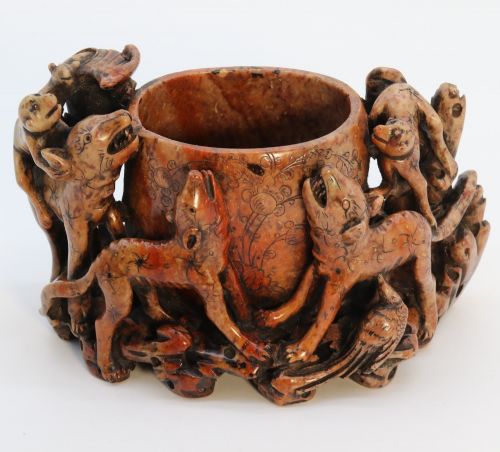
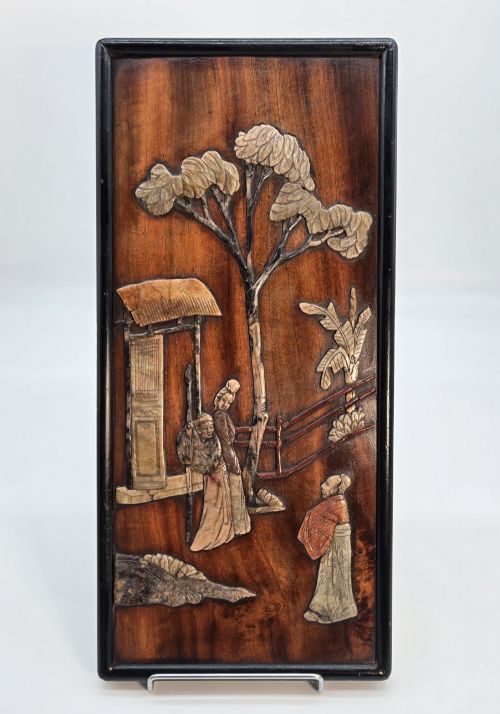
A stone relief carving captures three-dimensional depth on a flat plane, ranging from architectural keystones and wall plaques to intimate brooches and brush pots. When exploring stone relief carving, you encounter everything from early medieval ecclesiastical figures and Italian Grand Tour marble profiles to nineteenth-century Chinese soapstone and Welsh slate panels.
The materials span white and Sienna marble, red and northern Indian sandstone, soapstone, hardstone, and lava cameo, shaped into subjects as diverse as Roman Emperors, classical deities, and heraldic crests.
Materials and Technique
The makers of stone relief carving employed chisels, gouges, and hand drills to work direct into blocks of marble, sandstone, and soapstone, revealing forms through varied depths of bas-relief and high relief. Softer media like lava and hardstone permitted miniature portraiture and intricate snuffs, while dense architectural stones required robust mallet work for keystones, planters, and wall plaques.
A twelfth-century bishop shares shelf space with a Victorian lava cameo of Demeter, proving saints and agricultural goddesses make ideal neighbours.
Quality and Execution
The distinction in a stone relief carving lies in the precision of the chisel work, the crispness of anatomical detail in figures like Roman Emperors or nudes, and the natural figuring within the marble or sandstone. Greater depth and undercut sections demand higher technical skill from the carver, separating standard architectural fragments from masterworks of portraiture.
Kasper Hendrik Roskam
The Stone Relief Carving Glossary
- Relief sculpture
- A sculptural technique where figures project from a background plane of the same material. It is categorized into low relief and high relief depending on the depth of projection.
- Grand Tour
- A cultural journey undertaken by wealthy young Europeans in the eighteenth and nineteenth centuries, bringing home souvenir carved marble plaques and lava cameo profiles.
- Keystone
- The central wedge-shaped stone in an arch that holds the other stones in place. These often bear carved armorial bearings or dates.
- Soapstone
- A soft, talc-based metamorphic rock prized for its smooth texture and ease of carving. It frequently appears in nineteenth-century Chinese brush pots.
Stone Relief Carving: Frequently Asked Questions
How do I hang a heavy stone relief?
Heavy stone plaques and marble panels require robust wall fixings anchored directly into masonry or secure studs. Professional installation is recommended to support the substantial weight.
Ensure the mounting bracket engages the full depth of the stone frame or utilises a dedicated French cleat system designed for architectural salvage.
Can sandstone carvings go outside?
Sandstone items like garden planters and architectural keystones withstand external placement if protected from severe frost expansion. Porous stone absorbs moisture over time.
Position exterior carvings on raised footings to prevent ground damp from rising through the base of the stone.
What is a lava cameo?
A lava cameo is a small relief carved from solidified volcanic rock, popular during the Victorian era as a Grand Tour souvenir. These are typically mounted in silver or gold as brooches.
They depict classical figures and mythological profiles, utilising the tonal variations naturally present in the volcanic material.
How do I clean marble reliefs?
Dust marble surfaces gently with a soft dry cloth and avoid acidic household cleaners that etch the stone. Water should be used sparingly.
Professional conservators recommend pure distilled water for stubborn grime, followed by immediate drying with a lint-free cloth.