


Victorian Marble Art
Victorian marble art encompasses nineteenth-century sculptures, reliefs, and washstands that bring solid stone forms and classical carving into domestic spaces.
Victorian Marble Art
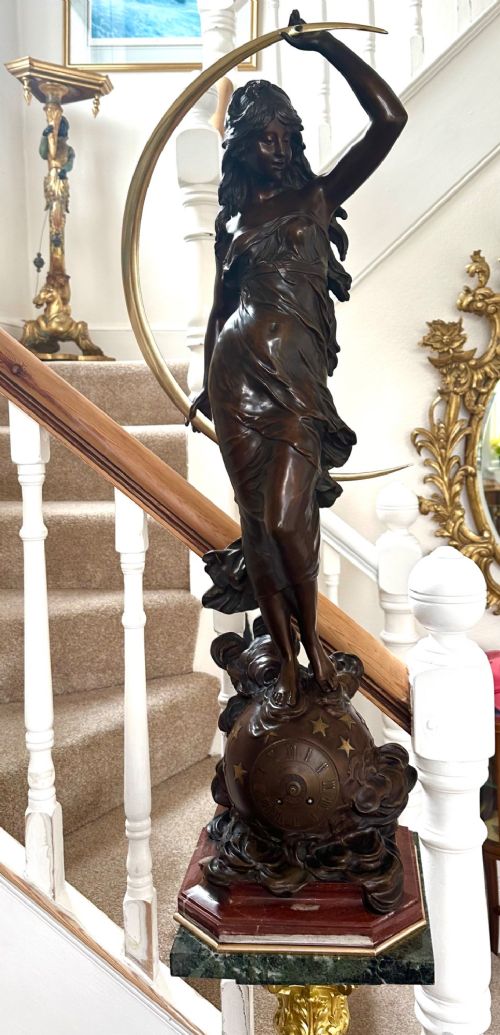
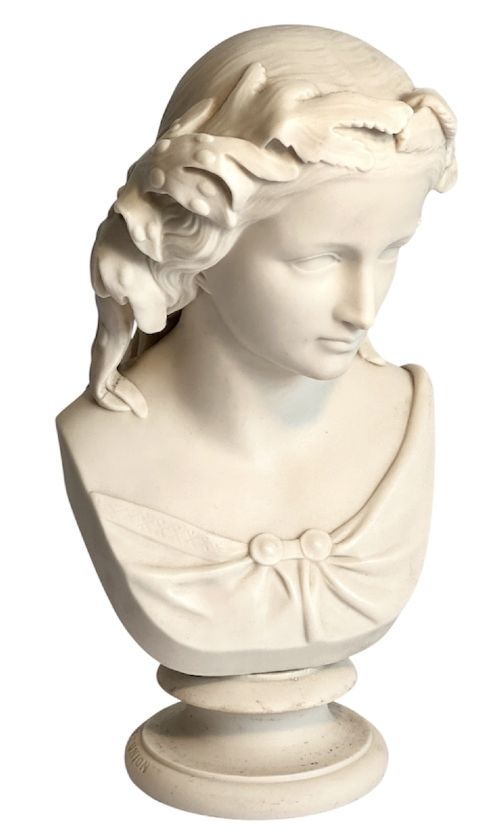
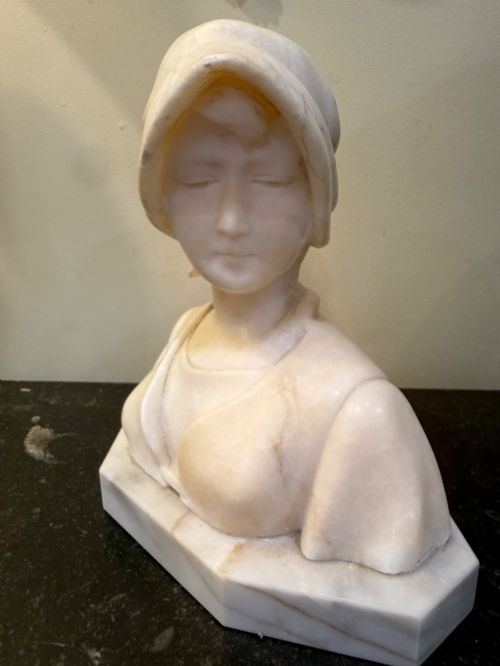
When looking for victorian marble art, you encounter carved stone portraits, relief panels, busts of young ladies, and decorative pedestals spanning the nineteenth century. These pieces range from classical reliefs of nudes to functional marble top washstands and architectural mantel clocks.
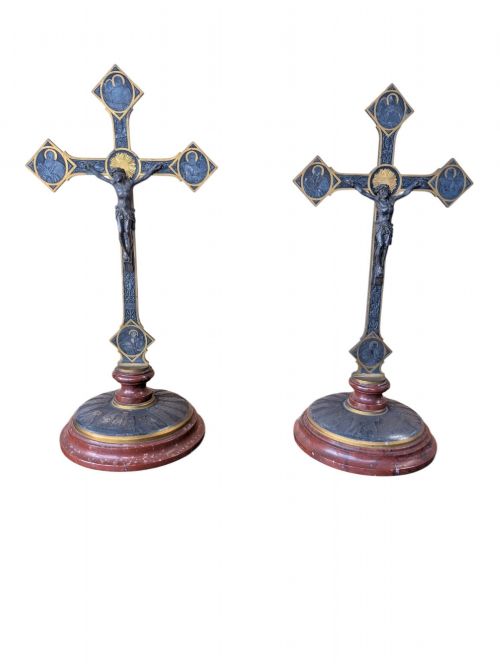
The objects frequently combine stone with bronze, brass, or carved wood, creating heavy decorative items intended for nineteenth-century interiors. Alabaster and Parian porcelain appear alongside solid marble to provide alternative white and translucent textures.
The style moves between strict Neoclassical revivalism, ornate French designs, and the simpler lines of the Arts and Crafts movement. You will find items that serve purely as sculptures as well as utilitarian furniture featuring stone surfaces.
Materials and methods
Makers shaped white and red marble through hand-carving and polishing, often mounting figures on contrasting bronze or wooden bases. Inlaid pietra dura panels demonstrate precise stone-cutting techniques using coloured minerals.
Foundries cast bronze and brass elements to complement the stone, producing mounts, figures, and lamp bases fixed directly to marble plinths. Alabaster and Parian porcelain offered softer alternatives for detailed portrait busts.
Joinery in oak, ash, and mahogany supports heavy stone slabs on washstands and sideboards, whilst slate provides a dense foundation for folk art hearth pieces.
The listings combine nineteenth-century sculpture and furniture using marble, alabaster, bronze, brass, oak, and ceramic tiles.
Assessing quality
Material selection separates standard utility pieces from fine decorative works, particularly in the choice of flawless statuary marble or intricate pietra dura inlay. The integration of cast bronze mounts with stone determines the overall cohesion of lamps and clocks.
August Moreau·Copeland Parian Ware·John Durham·Carl Kauba·A. Marionnet·Samual Marti and Sons
The Victorian Marble Art Glossary
- Parian porcelain
- A fine-grained unglazed ceramic developed in the nineteenth century to imitate carved marble for portrait busts and statuary. It takes its name from Parian marble of the Greek islands.
- Pietra dura
- An artistic technique using cut and fitted polished coloured stones to create geometric or pictorial images. Craftsmen embed these stone slices into a dark marble base.
- Alabaster
- A fine-grained translucent stone used historically for carved figures and relief panels. It offers a softer texture than marble.
- Relief sculpture
- Sculptural elements carved from a flat background plane so that the figures stand out in three dimensions. This technique appears frequently in nineteenth-century wall plaques and plaques.
- Pedestal
- A structural support or plinth designed to elevate sculptures, vases, or busts. Examples in this category utilise faux marble or solid stone surfaces.
Victorian Marble Art: Frequently Asked Questions
How do I clean nineteenth-century marble?
Dust surfaces regularly with a soft dry cloth to prevent grime accumulation in carved recesses. Avoid acidic cleaners or household detergents that etch polished stone.
For stubborn marks, use a damp cloth with mild soap, followed immediately by thorough drying with a clean towel.
Are marble top washstands practical today?
Marble top washstands offer durable, water-resistant surfaces that function well as modern console tables or bathroom vanity units. The heavy stone slabs require careful placement and stable flooring.
Wooden frames benefit from occasional waxing to maintain the finish against modern household humidity levels.
What is the difference between marble and alabaster?
Marble is a hard metamorphic rock formed from recrystallised carbonate minerals, capable of taking a high, durable polish. It resists scratching better than softer stones.
Alabaster is a softer stone composed of gypsum or calcite, prized for its translucency when carved into thin portrait busts.
How do I identify Art Nouveau styling?
Art Nouveau pieces feature flowing organic lines, stylised floral motifs, and asymmetrical plant forms. This aesthetic emerged in late nineteenth-century decorative arts.
Look for whip-like curves and naturalistic female figures combined with bronze or brass hardware.