
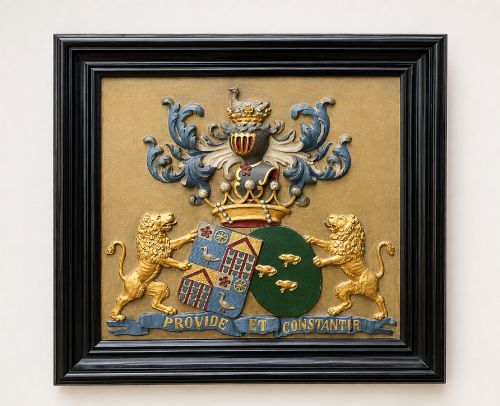
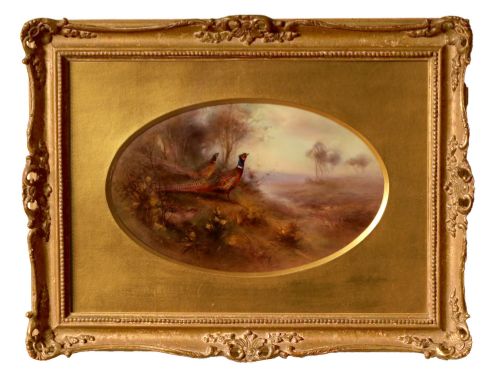
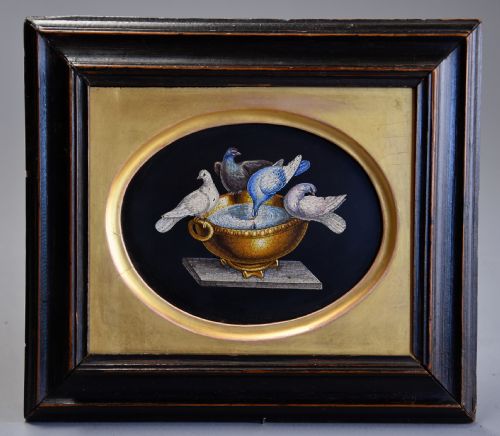
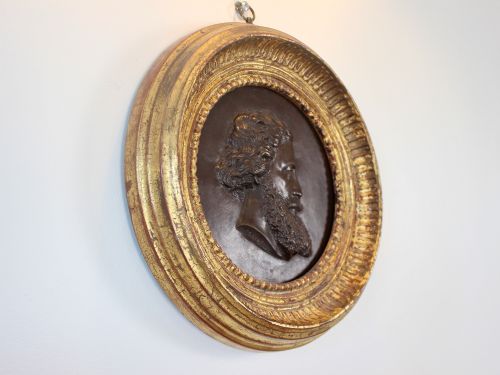


Gilt Framed Wall Plaque
A gilt framed wall plaque brings focused colour and tactile relief to a room, drawing the eye instantly with hand-painted porcelain or cast bronze.
Gilt Framed Wall Plaque
A gilt framed wall plaque combines sculptural relief or painted detail with a decorative metallic border, designed specifically for vertical display. When you search for a gilt framed wall plaque, you encounter pieces spanning multiple centuries, from eighteenth-century enamels to twentieth-century porcelain.
The selections on this page range widely across European traditions, including Italian micromosaics, German porcelain, French Limoges copper paintings, and British ceramic works. Styles stretch from Neoclassical and Victorian to Edwardian and Grand Tour aesthetics.
Most examples function as intimate portraits, mythological scenes, or heraldic marriage panels intended to command attention within a modest wall space. They arrive in various formats, encompassing single framed panels, symmetrical pairs, and sculptural reliefs.
Factors determining quality
The refinement of the central medium dictates the standing of a piece, separating mechanical production from master-painted porcelain or intricate micro-mosaic work. Precision in brushwork, especially on portraiture and figurative scenes after Renaissance masters, marks the highest grade of execution.
The integrity and material richness of the surrounding frame contribute significantly to the overall stature of the object. Heavy bronze castings, carved giltwood, and ormolu mounts signify superior workshop origins compared to simpler wooden housings.
Depicting fighting men, domestic dogs, and fighting waves, these plaques prove ancestors enjoyed drama on the wall just as much as we do.
James Stinton·Royal Worcester·KPM·Limoges·Sevres
The Gilt Framed Wall Plaque Glossary
- Micromosaic
- A detailed picture assembled from tiny coloured glass tesserae fused together to form pictorial scenes. This technique reached high levels of skill in nineteenth-century Italy.
- Giltwood
- Wood that has been coated with a thin layer of gold leaf or gilt finish. It provides a reflective, ornate border for wall art.
- Ormolu
- Gilding bronze furniture or decorative objects with finely ground gold. It adds a warm metallic sheen to frames and mounts.
- Pietre dure
- An artistic technique using cut and fitted polished coloured stones to create mosaic images. Artisans arrange marbles and semi-precious stones to depict figures and landscapes.
- Relief
- Sculptural elements that rise from a flat background rather than standing alone. High and low relief variations create strong shadow play within the frame.
Gilt Framed Wall Plaque: Frequently Asked Questions
How do I hang a heavy bronze plaque?
Heavy bronze and cast metal plaques require secure wall anchors and appropriate picture wire rated for the specific weight of the object. Ensure the hanging hardware engages directly with wall studs or heavy-duty hollow-wall fixings.
Check that the gilt frame itself is soundly attached to the backplate before mounting. Professional picture hangers provide the safest support for dense metal and ceramic pieces.
Where were porcelain plaques displayed historically?
Porcelain plaques appeared primarily in formal drawing rooms, libraries, and cabinets of curiosity during the eighteenth and nineteenth centuries. Wealthy travellers often acquired them during Grand Tour journeys across Europe.
Domestic interiors featured them mounted individually on panelled walls or arranged in balanced pairs. Their miniature scale invited close inspection rather than distant viewing.
How do I clean a gilt frame?
Dust gilt frames gently using a soft, dry ostrich feather duster or a clean artist brush to remove surface particles. Avoid applying water or chemical cleaning solutions, as moisture damages fragile gold leaf and underlying composition ornaments.
Professional conservators should handle flaking gilding or structural repairs to the frame. Regular gentle maintenance prevents dust accumulation without risking the metallic finish.
Are painted porcelain plaques fragile?
Painted porcelain and enamel plaques are delicate and susceptible to damage from impact or thermal shock. The glazed ceramic surface withstands normal light exposure, but drops or sharp blows will fracture the body.
Keep pieces away from high-traffic hallways where accidental contact might occur. Stable indoor humidity protects both the ceramic plaque and its wooden or gilt housing.
How do I distinguish KPM from Royal Worcester?
KPM pieces typically originate from Berlin and feature distinct factory sceptre marks alongside meticulous nineteenth-century portraiture or classical figural painting. Royal Worcester plaques often bear the signature of artists like Stinton and reflect British ceramic aesthetics of the same era.
Examining the marks on the reverse of the plaque reveals specific factory stamps. The style of framing and porcelain paste composition also point toward the respective German or British workshop.