





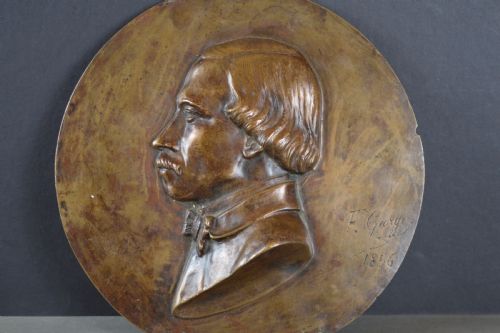


Victorian Wall Medallion
A victorian wall medallion brings tangible character to a room, offering sculptural depth and historic presence through cast metal, carved wood, or fine ceramic.
Victorian Wall Medallion
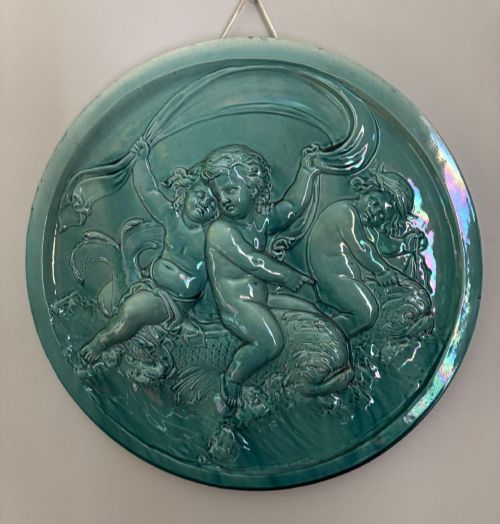
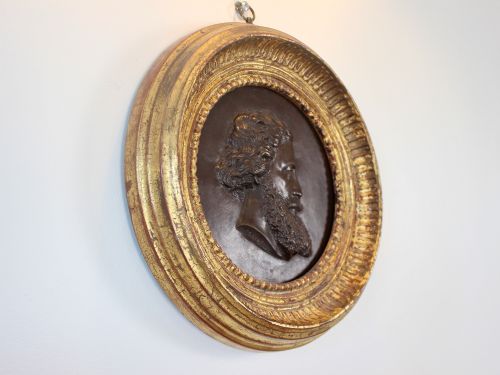
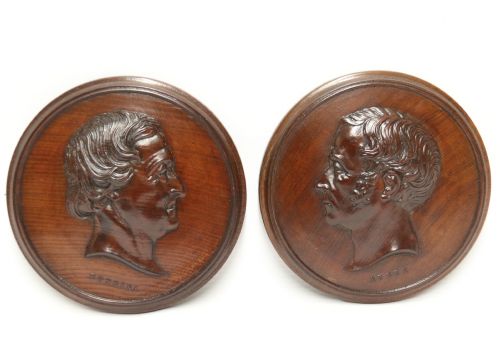
A victorian wall medallion encompasses a diverse array of decorative wall plaques, framed art, and sculptural reliefs spanning the nineteenth century and the Edwardian era. Buyers encounter everything from bronze portrait plaques and cast iron literary figures to porcelain tondos, carved mahogany panels, and commemorative jubilee pieces.
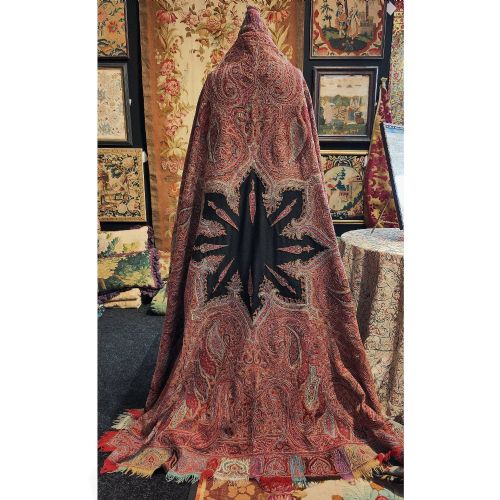
The selection frequently includes neoclassical subjects, Grand Tour cameos, French and English portraiture, and intricate Kashmiri textiles. Formats range from round copper plaques and oval porcelain pieces in ormolu frames to large overmantel mirrors and architectural ceiling roses.
Originating across England, France, and Italy, these pieces reflect both domestic commemoration and continental craftsmanship. The variety mirrors the eclectic tastes of the period, moving seamlessly from classical revival styles to French Art Nouveau.
Materials and Techniques
Foundries and studios utilised cast bronze, copper, and cast iron to achieve sharp relief in portraiture and commemorative medals. These metals often carry signatures or foundry marks, recording the hand of specific makers and manufacturers.
Carving and moulding formed another primary method, utilising mahogany, gilt wood, gesso, and plaster for wooden plaques, decorative wall panels, and ceiling roses. Artisans also worked with delicate porcelain, employing techniques such as pate sur pate.
Textile works involved intricate embroidery, as seen in Kashmiri square shawls mounted for display. Frames incorporated ormolu, gilt finishes, and black painted highlights to complement the central plaques.
You might find yourself hanging a mother holding her child right next to Shakespeare and Rubens.
Markers of Quality
The choice and execution of materials dictate the upper tier of pieces, such as finely painted porcelain tondos in original ormolu frames or deeply carved mahogany with clean structural joinery. Signatures by recognised artists or notable makers elevate the standing of a plaque.
Condition and originality play a vital role, preserving the integrity of the original gilt surfaces, patination, and framing without modern alterations.
Clement Messier·MAINFROY·Gustav Grohe·Smith, Beck and Beck·J Lavergne·Coalbrookdale·Mintons
The Victorian Wall Medallion Glossary
- Intaglio
- A gem or gemstone carved in concave relief so that an impression taken from it produces a raised image. These often appear in collections from the Grand Tour.
- Tondo
- A circular work of art, either a painting or a sculpture in relief. Porcelain examples are particularly prized by collectors.
- Ormolu
- Gilded bronze mounted as a decorative furnishing or frame. It provides a bright, metallic border for porcelain and ceramic plaques.
- Pate sur pate
- A ceramic decorating technique where relief designs are built up in successive layers of white slip on a coloured clay body. This method creates a cameo-like effect on fine porcelain.
- Ceiling rose
- A decorative circular moulding fixed to the ceiling from which a chandelier or light fitting is suspended. Plaster versions form part of period architectural decoration.
Victorian Wall Medallion: Frequently Asked Questions
What subjects do these wall plaques show?
The selections frequently portray literary figures, historical personages, and classical profiles. Notable subjects include Charles Dickens, Shakespeare, Rubens, and Queen Victoria.
Other pieces depict mythological scenes, religious moments, or botanical and abstract decorative motifs suited for domestic interiors.
How were these wall medallions displayed originally?
Many portrait plaques and framed works hung directly in libraries, studies, and drawing rooms as marks of cultural taste. Larger carved wooden panels and overmantel mirrors integrated into architectural woodwork above fireplaces.
Some ceramic and bronze items functioned as exhibition pieces or commemorative medals mounted for wall presentation.
How do I care for bronze and copper pieces?
Metal plaques require gentle dusting with a soft, dry cloth to prevent the accumulation of grime on the relief details. Avoid commercial metal cleaners or abrasive polishes that strip the historic patination.
Keep pieces away from damp environments and direct sunlight to protect any underlying wooden mounts or painted surfaces.
How can I tell a Victorian piece from an Edwardian one?
Victorian items often lean towards heavy ornamentation, Gothic and Renaissance revivals, and dense historicism. Commemorative pieces will frequently bear dates or references to specific jubilees and exhibitions.
Edwardian and early twentieth-century examples sometimes show lighter forms, softer neoclassical styling, or early hints of Art Nouveau curves.