

Victorian Reading Armchair
A victorian reading armchair is a heavy, deep-seated seat built for long hours with a book, often fitted with patent adjustments or leather upholstery.
Victorian Reading Armchair
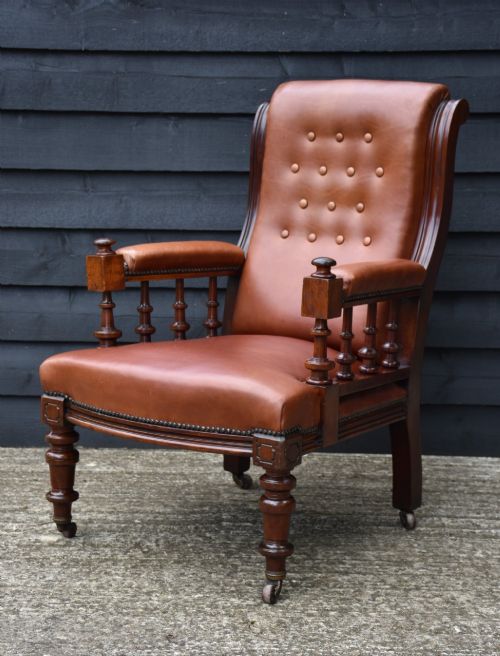
A victorian reading armchair combines solid timber frames with upholstered comfort, designed primarily for studies, libraries and drawing rooms during the nineteenth century. The typical pieces on this page span the early Victorian, mid-Victorian and late Victorian periods, alongside related Regency and William IV forms.
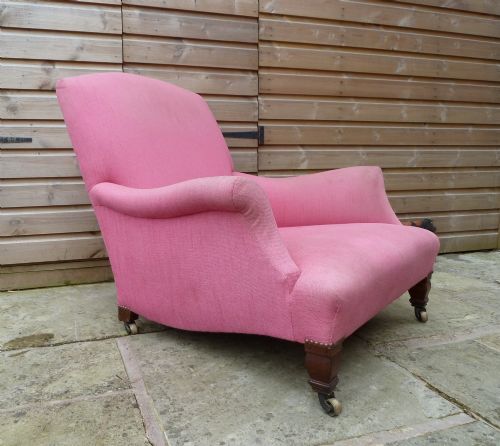
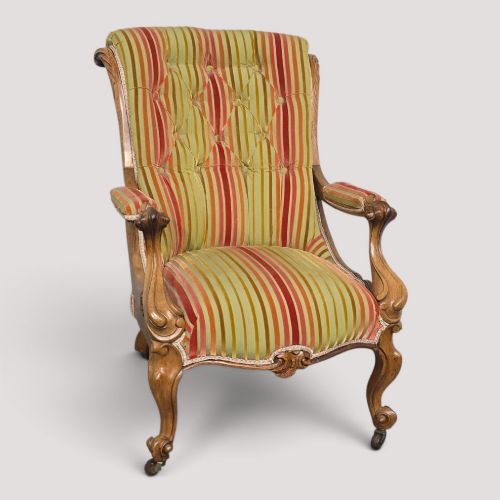
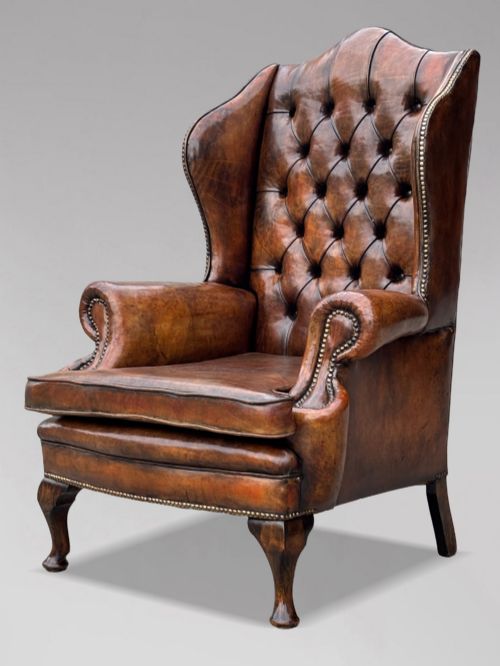
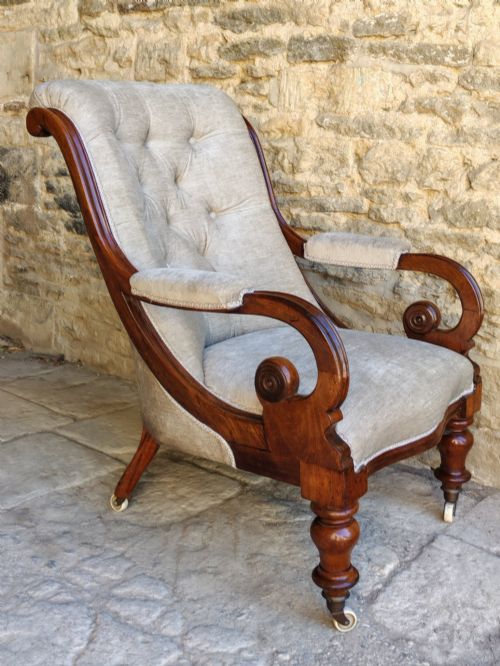
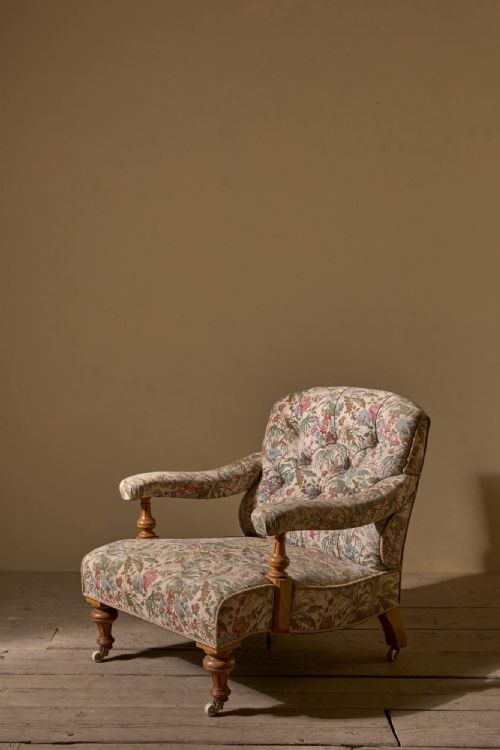
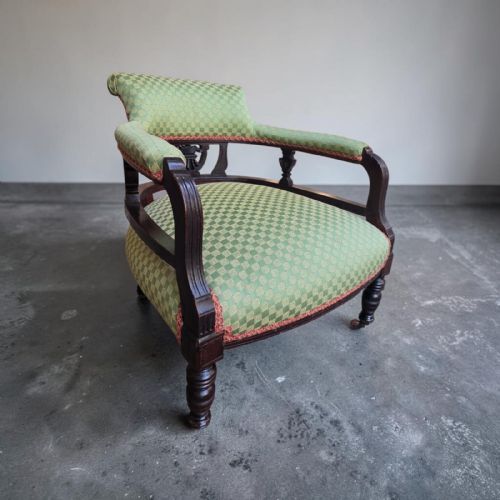
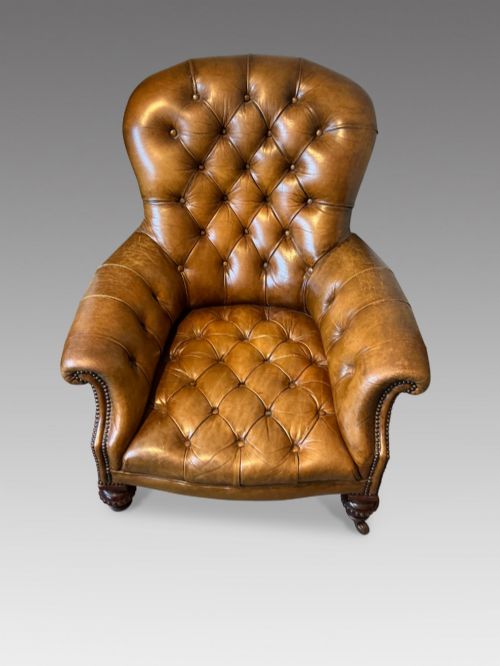
Most examples appear as heavy library chairs in mahogany, oak or walnut, frequently upholstered in buttoned leather, velvet or fabric. Makers of the era also produced lighter tub chairs, wing armchairs and specific adjustable reading seats featuring patent mechanisms.
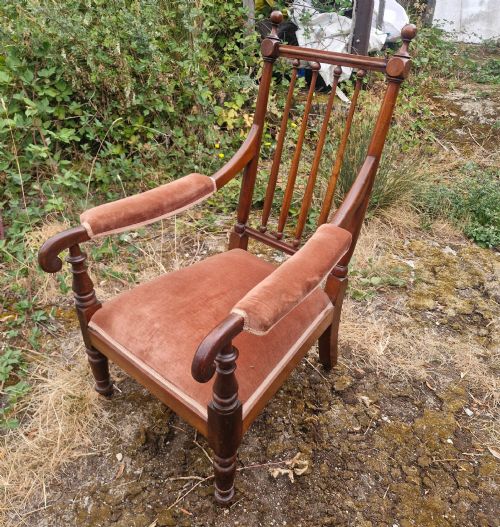
Country house pieces and town house models sit alongside distinctive workshop styles, showing variations from simple spindle backs to deeply padded open armchairs.
How they were made
Carpenters and cabinet makers built the foundational frames using dense timbers like mahogany, walnut and oak, often turning or carving the legs and arm supports by hand. Brass fittings appeared on castors, hinges and specialised reading stands.
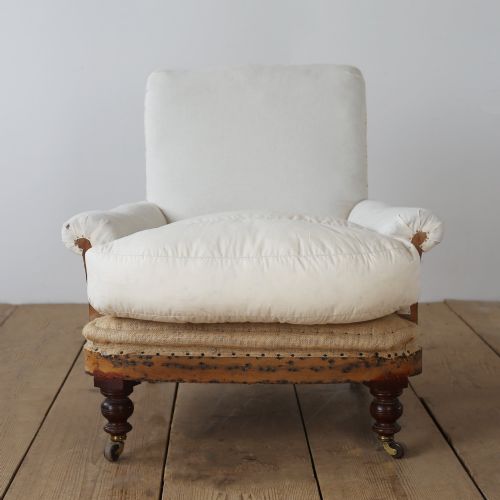
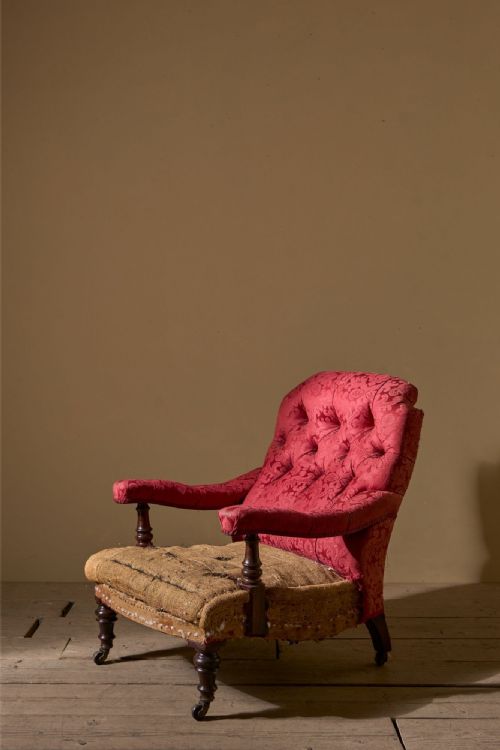
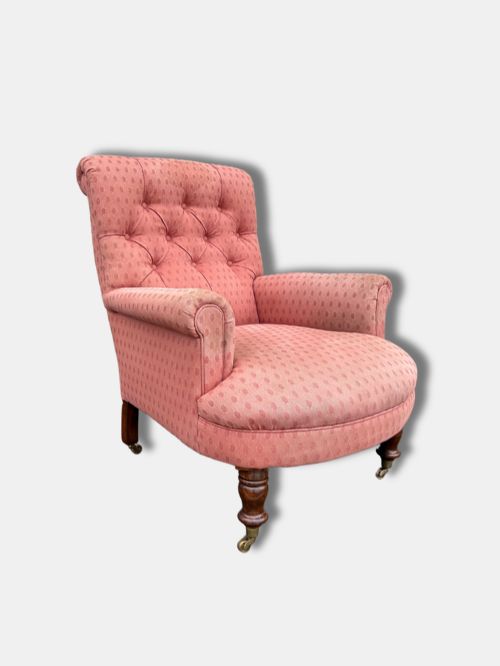
Upholsterers layered stuffing over webbing and springs, finishing the pieces with calico or hessian foundations before applying top covers of leather, velvet or fabric, frequently secured with deep buttoning.
Victorian Reading Armchair Retail Price Guide 2026
Typical asking prices for victorian reading armchair among the pieces listed under this phrase on Sellingantiques today, from the lower quarter to the upper quarter. They describe what is for sale here now, not the wider market.
Periods represented span from the Regency and William IV eras through early, mid and late Victorian up to Edwardian times.
What varies in quality
The substance of the timber frame and the complexity of any patent reading mechanism dictate the baseline grade of a piece, with solid mahogany or walnut structures outlasting softer woods. Maker attribution to notable firms elevates a chair beyond standard domestic production.
The integrity of the original show wood, the retention of period upholstery materials such as leather or horsehair stuffing, and the precision of the joinery mark the division between ordinary workshop output and finer examples.
Howard and Sons·Gillows·Morris and Co·Holland and Sons·Morison and Co·C Hindley and Sons
The Victorian Reading Armchair Glossary
- Button back
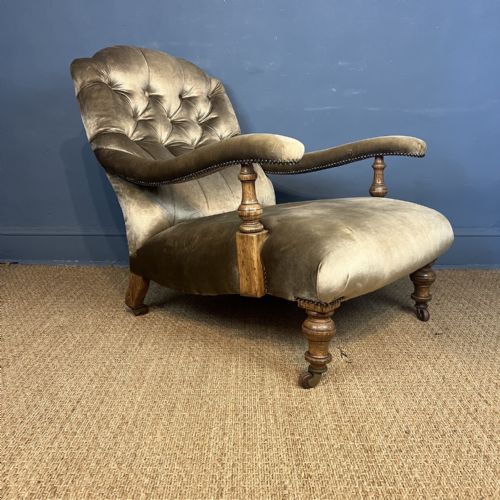
- A style of upholstery where depressions are formed in the padding by stitching through to the frame, often secured with fabric or leather buttons. This technique holds internal stuffing firmly in place while creating a distinct geometric pattern.
- Patent adjustable
- A mechanical system built into a chair that alters the angle of the back or seat using levers, ratchets or screws. Such devices allowed readers to recline or adjust their posture during extended periods of use.
- Wingback
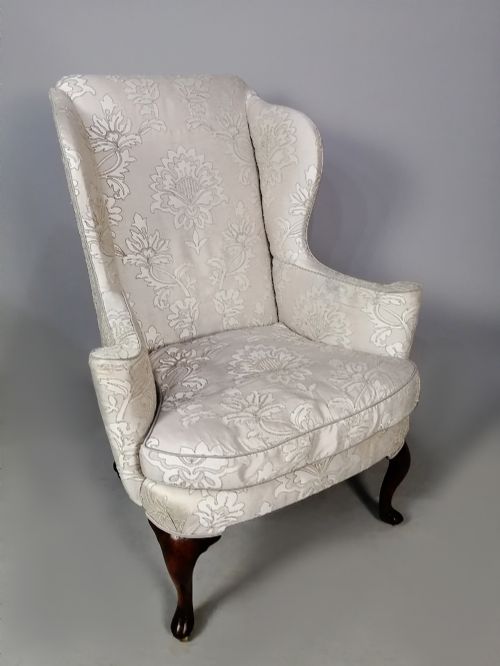
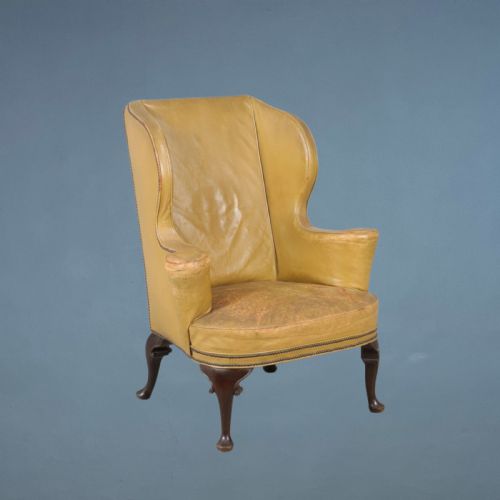
- An armchair featuring protective side panels attached to the arms and rising to the backrest. These wings originally blocked drafts in unheated rooms.
- Spoon back
- A padded chair back shaped like the bowl of a spoon, curving inward to fit the human spine. This form became popular during the mid-nineteenth century.
- Library chair
- A sturdy armchair designed for reading rooms, typically upholstered in dark leather or heavy fabric to withstand daily use.
Victorian Reading Armchair: Frequently Asked Questions
What is a victorian reading armchair?
A victorian reading armchair is a nineteenth-century seat designed specifically for comfort while reading, often featuring robust timber frames, deep padding, and occasionally built-in book rests or adjustable backs.
These chairs range from heavy library armchairs in mahogany and leather to lighter walnut or oak frames upholstered in velvet or fabric.
How do I tell different periods apart?
Periods are identified by changes in timber choice, carving styles and structural forms, moving from the heavier Regency and William IV shapes into the ornamented Victorian eras and later Arts and Crafts designs.
Early pieces often display restrained lines in mahogany, while mid-to-late Victorian examples favour buttoned leather, walnut frames and revival styles.
Were these chairs used in libraries?
Many of these chairs were commissioned specifically for country house libraries, studies and reading rooms where occupants spent long hours with books or newspapers.
Their sturdy construction and supportive upholstery made them ideal for private reading spaces and gentlemen's clubs.
How do patent reading chairs work?
Patent reading chairs incorporate mechanical ratchets, screws or hinges that allow the user to tilt the backrest or adjust integrated book stands to various angles.
These mechanisms required precise metalwork hidden within or attached to the wooden frame to ensure smooth operation.