


Olive Velvet Armchair
An olive velvet armchair brings rich texture and traditional seating to a room, offering both comfort and strong period character.
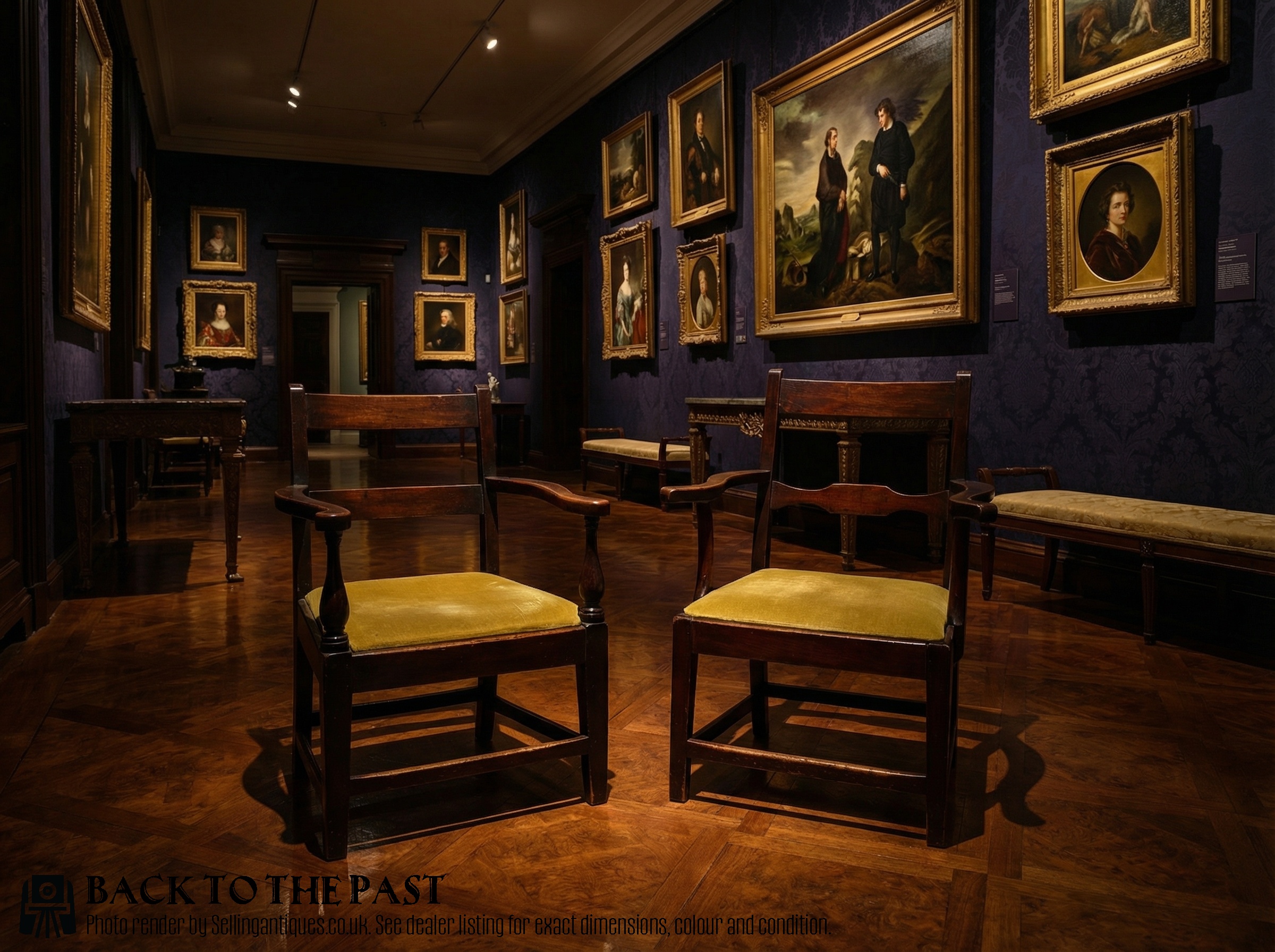
What these armchairs are
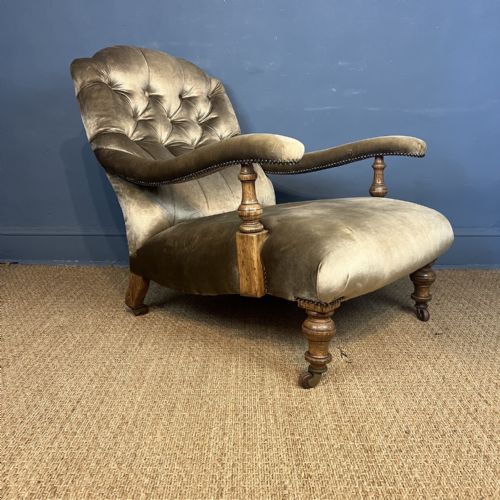
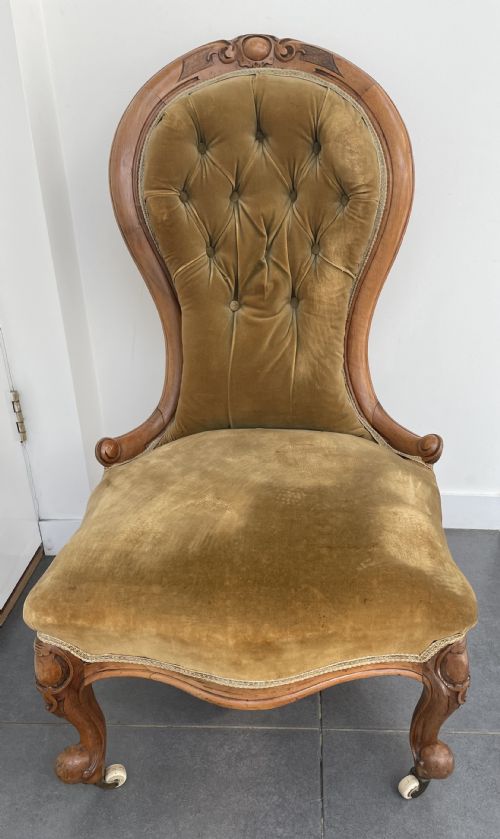
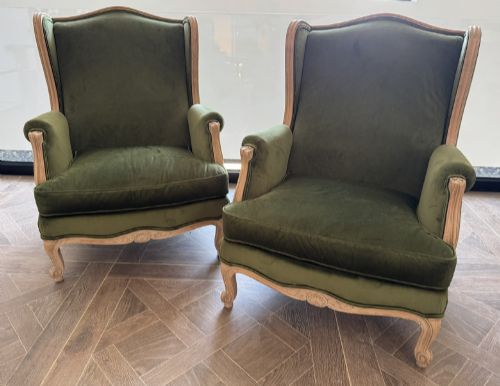
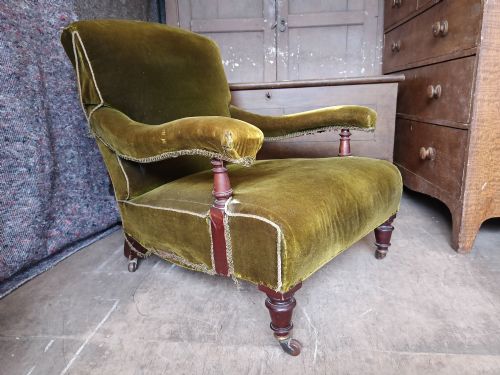
An olive velvet armchair spans several distinct eras, drawing from Regency, Victorian, and late nineteenth-century English design. These pieces include open armchairs, library chairs, tub armchairs, and pairs of English country seating.
The most common versions met on this page feature wooden frames paired with velvet upholstery, often accented by textile trim or brass details. Forms range from large open armchairs dated around eighteen eighty down to smaller Regency library chairs.
Buyers seeking an olive velvet armchair will find examples constructed from mahogany, walnut, oak, and ebonised wood. Each piece reflects the seating forms and craftsmanship of the eighteen fifties, eighteen sixties, and eighteen eighties.
How they were made
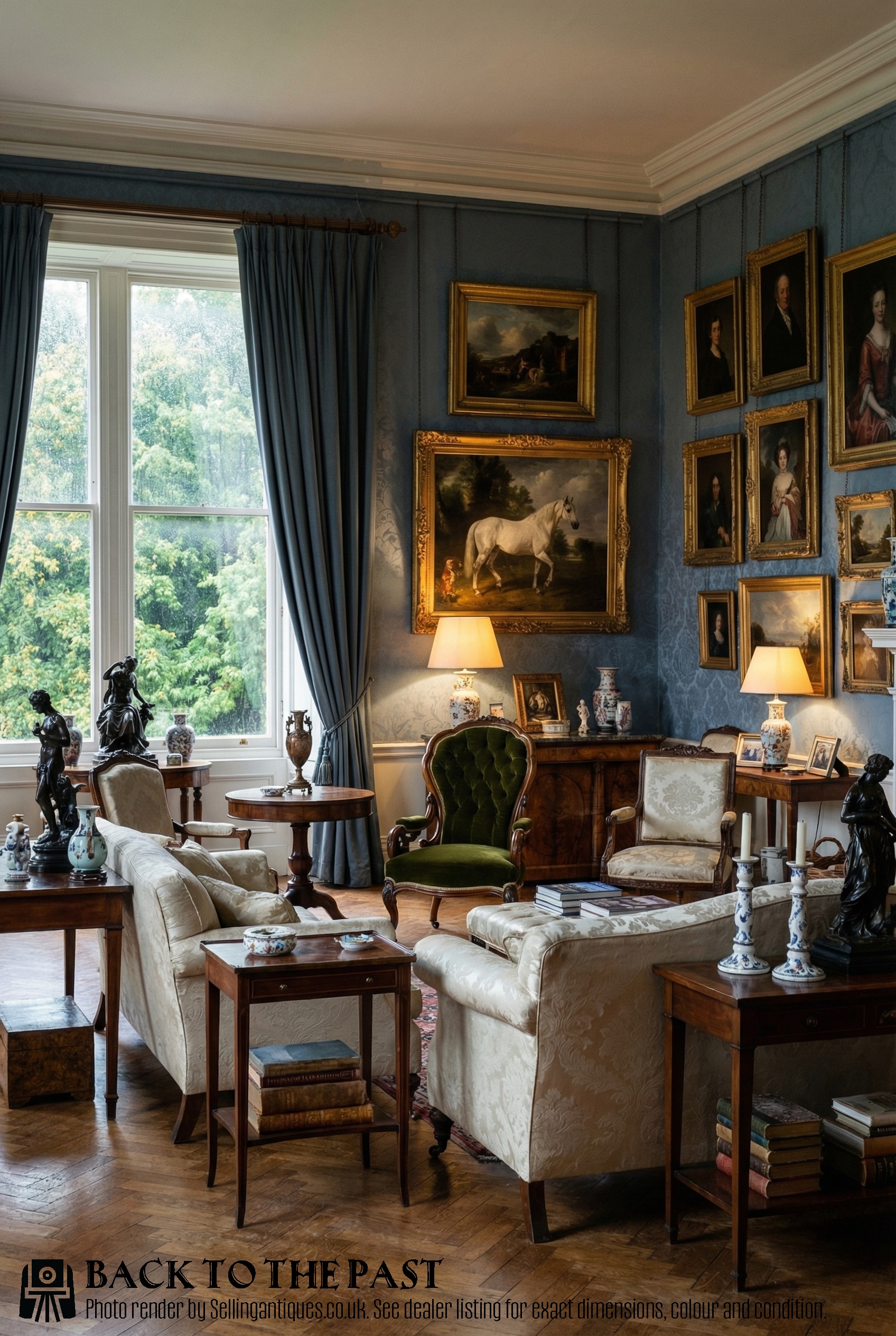
Makers built the structural frames of these armchairs using dense hardwoods including mahogany, walnut, oak, and ebonised wood. These timbers provided the necessary strength for open armchairs, tub chairs, and library seating.
Upholstery techniques combined traditional textile trim with velvet coverings secured to the wooden frames. Metal elements such as brass appeared in structural or decorative capacities depending on the period.
Retail Price Guide 2026
Typical UK retail prices for olive velvet armchair, calculated from the Sellingantiques database of over a million retail prices indexed since 2003. This retail price guide relies exclusively on Sellingantiques data; no external sources or auction records are used, so the figures do not describe the wider market.
Current listings feature armchairs spanning the Regency and Victorian periods, constructed from mahogany, walnut, oak, and ebonised wood.
What varies in quality
The distinction between standard and superior pieces rests on the choice of framing timber and the crispness of the woodwork. Dense hardwoods like walnut and mahogany command greater attention than simpler utility frames.
Detailing such as applied textile trim and the precision of the joinery mark out the finer examples. The proportion and balance of the open arms and tub backs also define the visual success of each armchair.
The Olive Velvet Armchair Glossary
- Regency
- A style period dating from the early nineteenth century known for classical restraint and elegance. Pieces from this era often display refined proportions.
- Victorian
- The period spanning the reign of Queen Victoria, encompassing diverse revival styles and robust seating forms. Furniture from this time frequently utilises walnut or mahogany.
- Open armchair
- A seat featuring un-upholstered wooden sides that expose the structural arms. This form allows for lighter visual weight in a room.
- Tub armchair
- A comfortable seat characterised by a continuous curved back and armrest enclosing the sitter. These provide a compact and enclosed profile.
- Ebonised wood
- Timber treated to resemble ebony through a dark staining or finishing process. This technique creates a striking contrast against velvet upholstery.
Frequently Asked Questions
What is an olive velvet armchair?
An olive velvet armchair is a period seating option upholstered in green velvet, spanning Regency, Victorian, and late nineteenth-century styles. These pieces utilise frames made from woods such as mahogany, walnut, and oak.
They appear in various configurations including open armchairs, tub chairs, and library chairs. Each piece reflects the furniture design of its specific decade.
How do I date a Victorian armchair?
Dating a Victorian armchair involves examining the choice of timber, the framing style, and the upholstery methods used. Walnut and mahogany were popular choices during the middle and late nineteenth century.
Specific forms like tub armchairs and open armchairs often correspond to particular decades between eighteen fifty and eighteen eighty. Comparing the woodwork style to known period examples helps narrow down the date.
Where were these armchairs used?
These armchairs served primarily in domestic reception rooms, libraries, and parlours across English homes. Library chairs were designed for reading spaces, while larger open armchairs suited formal sitting rooms.
Pairs of English country armchairs often furnished larger country residences. Their sturdy construction in oak or mahogany allowed for daily use.
How do I care for velvet upholstery?
Caring for velvet upholstery requires gentle brushing to maintain the nap and prevent the pile from crushing. Avoiding direct sunlight helps preserve the olive colour over time.
Professional cleaning is recommended for antique textiles to protect the underlying fibres. Regular light dusting keeps the fabric free from surface debris.