


Victorian Pottery Dog Statues
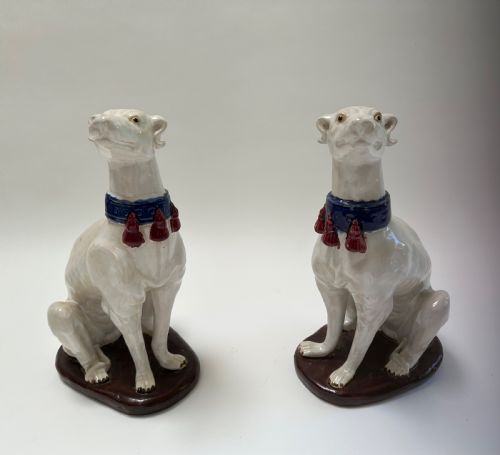
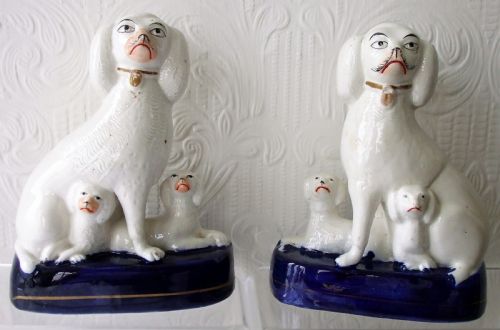
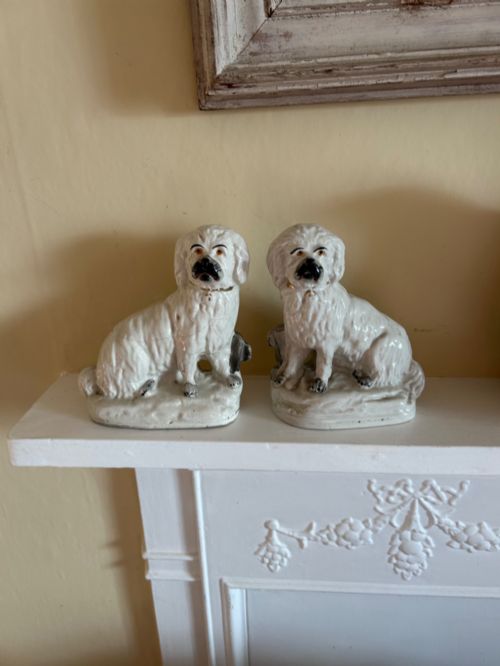
These Victorian pottery dog statues are charming ceramic figures of spaniels, greyhounds, and poodles that bring historic character to any mantelpiece.
Victorian Pottery Dog Statues
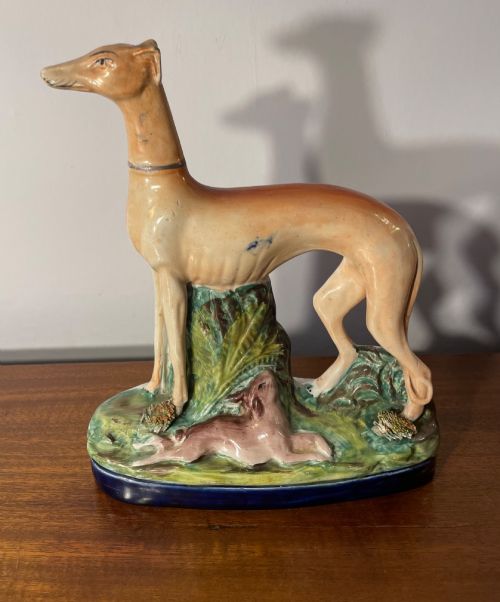
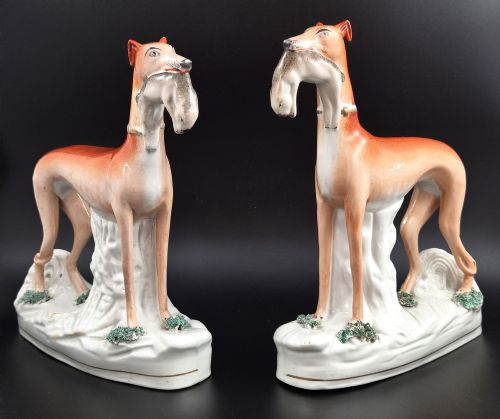
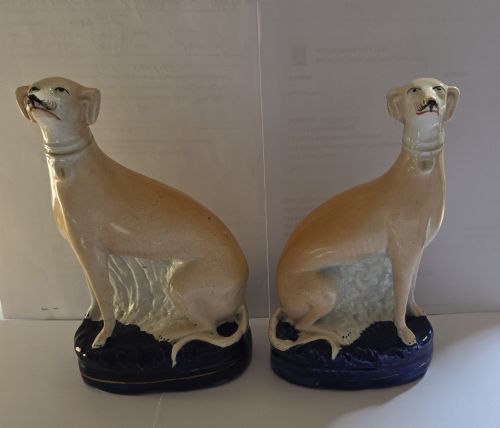
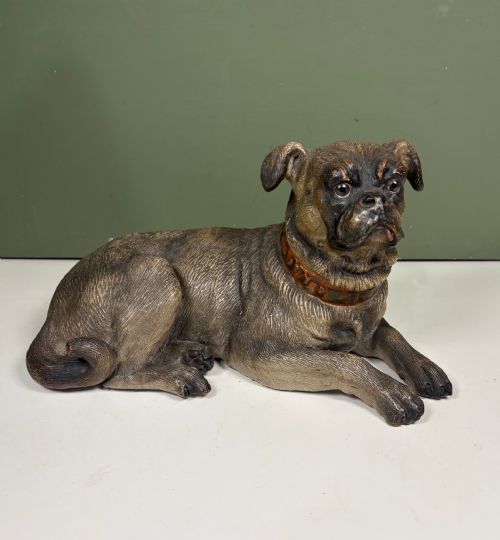
Victorian pottery dog statues encompass a variety of decorative figures, including spaniels, poodles, greyhounds, pugs, and terriers modelled throughout the nineteenth century. These ceramic pieces frequently appear as matched pairs, though individual figures and larger groups also occur.
The selections on this page span several decades of production, incorporating styles from Victorian Staffordshire to Italian Majolica and English Traditional. Makers and modellers rendered these dogs in various sizes, ranging from miniature poodles to unusually large greyhounds.
Many of these figures serve purely as decorative ornaments, while specific variants function as quill holders or desk accessories. Spaniels seated on cushions and poodles with pups represent some of the most common configurations encountered.
How they were made
Potters shaped these figures from earthenware, utilising lead glaze and enamel paint to colour the ceramic bodies. Artisans applied surface details using gilt, gold leaf, and hand-painted enamel decoration.
Moulds formed the basis of these pottery figures, allowing workshops to replicate popular dog breeds efficiently. Craftsmen then hand-finished the earthenware surfaces before firing and glazing the ceramics.
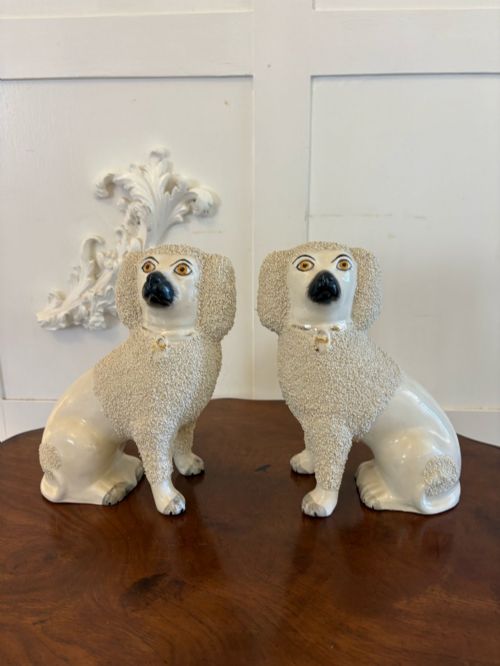
Several poodles wear curious textured coats modelled to resemble real clipped curls.
What varies in quality
The application of the enamel paint and gold leaf dictates visual appeal. Well-preserved gilding and carefully brushed hand-painted markings indicate a higher grade of manufacture, whereas worn decoration alters the character of the piece.
Royal Dux Bohemia·Beswick
The Victorian Pottery Dog Statues Glossary
- Earthenware
- Porous pottery fired at lower temperatures, commonly used for nineteenth-century figures before being glazed. It forms the structural body of most Staffordshire ceramics.
- Lead glaze
- A glossy coating applied to pottery to seal the earthenware body and impart a smooth sheen. It creates the characteristic reflective surface on Victorian figures.
- Enamel paint
- Coloured decoration applied over the glaze and fired at a lower temperature to fix the pigments. It provides the black, brown, and gold markings on the dogs.
- Quill holder
- A desk accessory featuring a hollow section or integrated trough designed to hold writing feathers. Greyhound figures sometimes incorporate this functional element.
- Majolica
- Opaque lead-glazed pottery with colourful metallic oxide colours. It represents a different regional tradition from standard English earthenware.
Victorian Pottery Dog Statues: Frequently Asked Questions
What breeds appear most often?
Spaniels, poodles, and greyhounds dominate the available figures, reflecting Victorian preferences for domestic pets and sporting hounds. Pugs and Maltese terriers also appear less frequently.
Pairs of seated spaniels and poodles with pups represent the standard configurations produced by period potteries.
Were these dogs meant for display?
Most figures functioned as mantelpiece ornaments, designed to sit in symmetrical pairs on either side of a fireplace. Their primary purpose was domestic decoration within Victorian homes.
Certain pieces combined decoration with utility, such as greyhound figures designed to serve as quill holders on writing desks.
How can I date these figures?
Dating relies on stylistic markers, glazing techniques, and recorded periods of Staffordshire production spanning the nineteenth century. Details such as flat backs on earlier pieces help distinguish manufacturing eras.
Comparative study of known period styles, ranging from Georgian precursors to late Victorian iterations, assists in narrowing the decade of creation.
What is the difference between Staffordshire dogs?
Staffordshire dogs vary by breed, size, and secondary elements such as cushions, hares, or pups. Poodles often feature textured woolly coats, while greyhounds are typically depicted with game.
Colour variations, including white with gilt, black and white, or naturalistic enamel tones, further differentiate the individual types.