
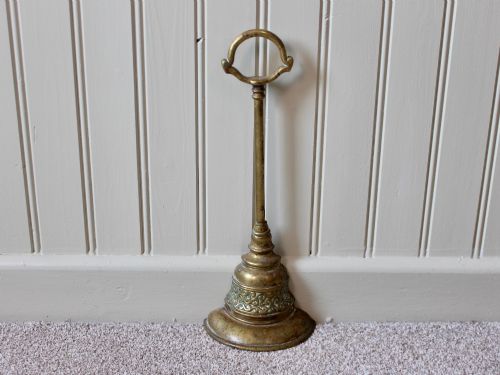


Victorian Porter Stop
A victorian porter stop holds heavy interior doors open against draughts with substantial metal weight and characterful figurative design.
Victorian Porter Stop
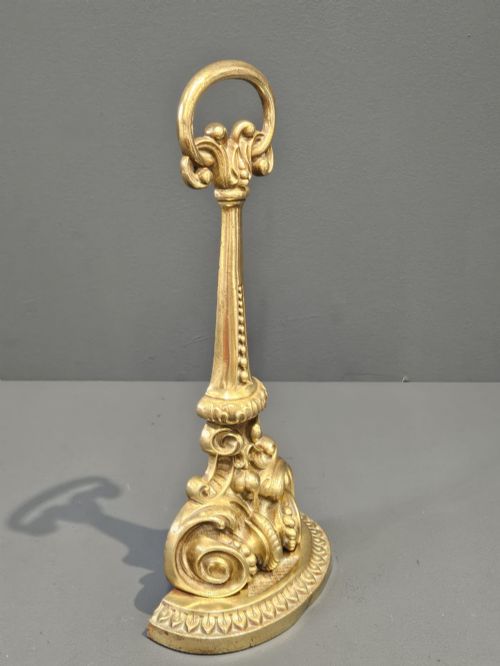
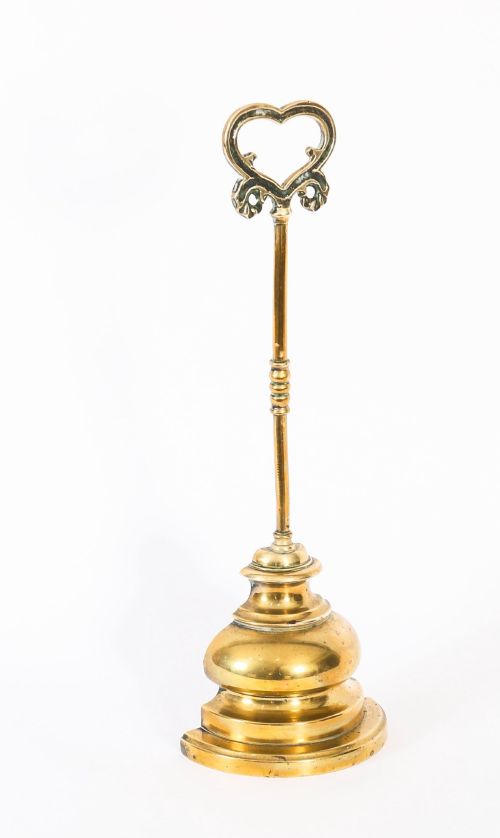
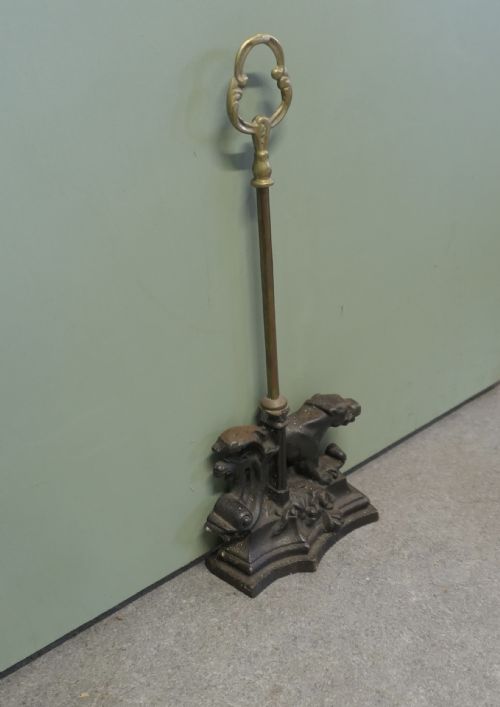
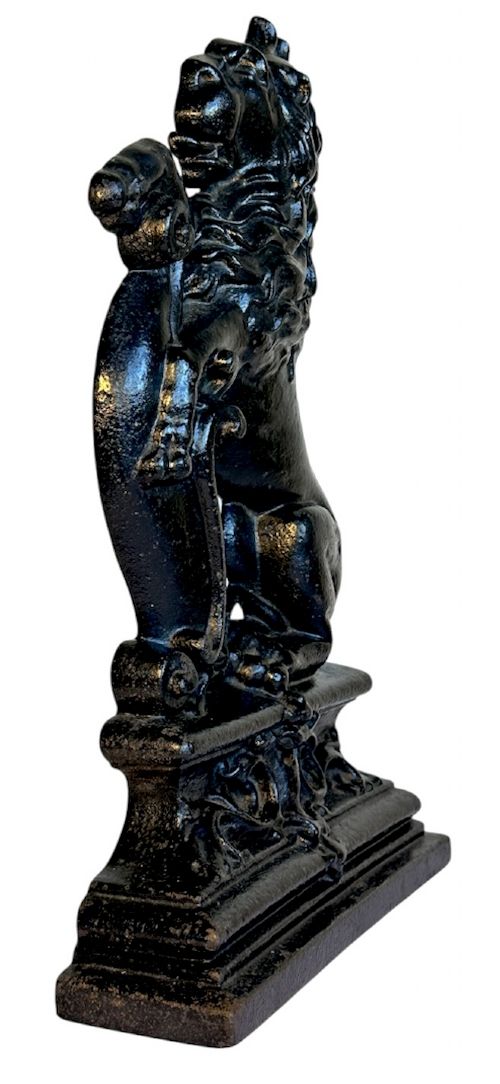
A victorian porter stop, also designated as a door porter, serves to keep heavy interior doors stationary in grand hallways and parlours. These functional household accessories appear predominantly in solid brass or heavy cast iron, often fashioned into heraldic animals, military figures, or popular theatrical characters.
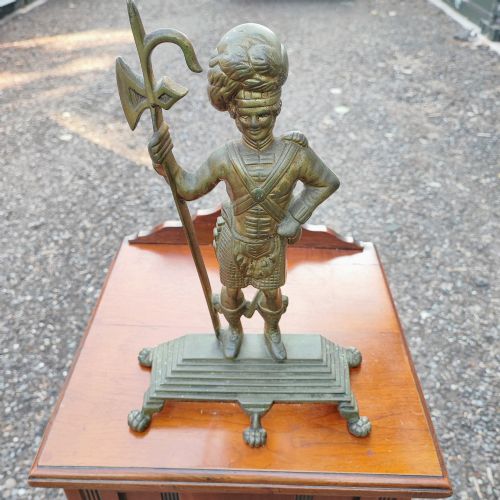
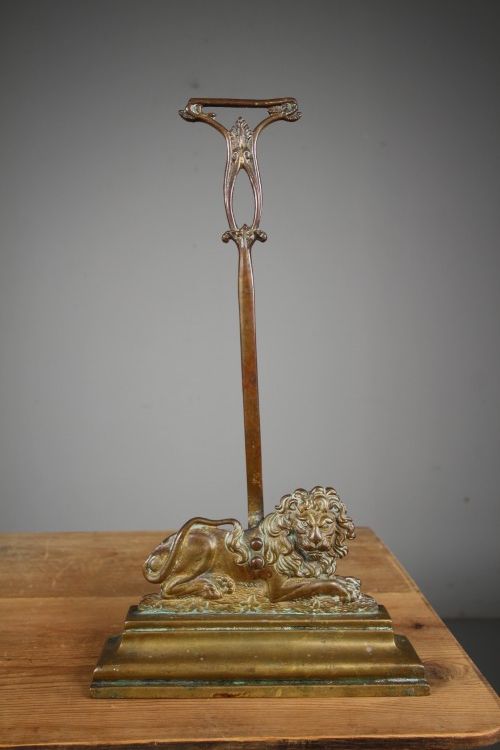
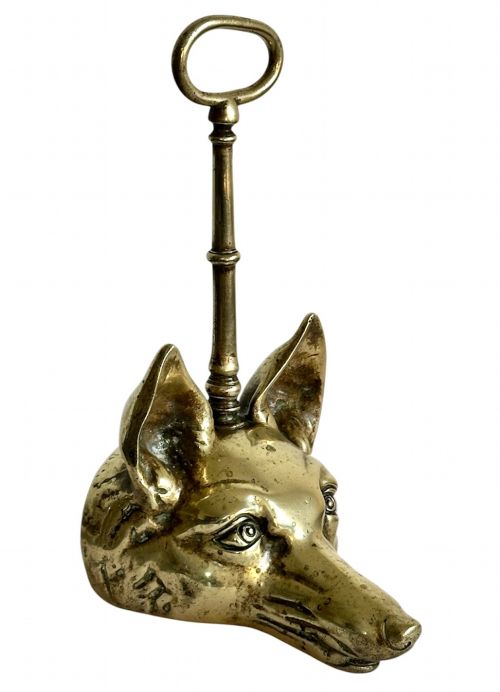
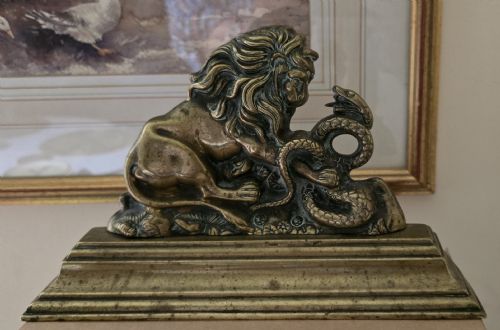
The pieces encountered most frequently on this page date from the nineteenth century, spanning from the Georgian transition through the late Victorian era. Common figurative forms include rampant lions, spaniels, dolphins, and figures such as Mr Punch or Lord Nelson. Many examples combine a substantial metal handle at the top with a weighted base designed for daily utility.
Originating largely from English country houses and town residences, these items combine utilitarian purpose with decorative presence. Makers ranged from prominent metalfounders to anonymous country workshops, producing both ornate cast brass pieces and robust painted iron versions.
Materials and casting methods
Production relied heavily on sand casting, a process where molten brass, iron, or bronze was poured into packed sand moulds created from wooden or metal patterns. This technique yielded heavy, dense objects capable of withstanding the rigours of domestic service in bustling nineteenth-century households.
Brass examples frequently utilised cast brass components screwed or pegged together, sometimes incorporating weighted iron bases for added stability. Iron pieces often received protective coats of black paint or polychrome finishes, while bronze variations appeared in more decorative or architectural contexts.
Among the menagerie of lions and soldiers, a surprisingly grumpy-looking goose holds open doors with avian dignity.
Indicators of quality and manufacture
The integrity of construction further separates standard utilitarian items from finer examples. Heavy, solid brass assemblies with original threaded fittings and integrated handles represent superior craftsmanship compared to later replacements or poorly joined composite pieces.
Tonks·William Tonks and Sons
The Victorian Porter Stop Glossary
- Porter stop
- A heavy movable weight placed on the floor to prevent a door from swinging shut. These objects are frequently interchangeable with door porters and heavy doorstops in nineteenth-century contexts.
- Sand casting
- A traditional manufacturing method using compacted sand to form moulds for molten metal. This technique leaves subtle surface textures characteristic of nineteenth-century foundry work.
- Plinth
- A solid base, often cast in iron, designed to anchor a lighter brass figure and provide necessary downward mass. It ensures the object remains stable when nudged by heavy doors.
- Figurative
- Describing an ornamental object shaped to represent a recognizable human, animal, or mythical creature. In these pieces, subjects range from domestic dogs to heraldic beasts.
Victorian Porter Stop: Frequently Asked Questions
How heavy should they be?
A genuine piece possesses considerable heft, often weighing several kilograms to effectively restrain heavy interior timber doors against draughts.
Lighter examples lack the necessary mass and typically indicate a purely decorative function or later reproduction.
Where were they placed?
These objects stood on the floor directly in the path of interior doors within grand hallways, drawing rooms, and libraries. Their integrated handles allowed servants to move them easily between rooms as needed.
They remained on the floor during the day to regulate airflow and prevent slamming in high-traffic areas.
How do I care for brass?
Maintenance requires gentle dusting and occasional cleaning with non-abrasive cloths to preserve the natural patina accumulated over generations of use.
Aggressive metal polishes strip away historical surfaces and diminish the rich character valued by collectors.
Are iron pieces painted?
Many cast iron examples originally featured painted finishes, including black japanning or polychrome details on figures like Mr Punch and soldiers.
Surviving traces of original pigment provide valuable evidence of the object's authentic nineteenth-century appearance.