




Victorian Porcelain Dog Figurines
Victorian porcelain dog figurines are decorative ceramic canines that bring charming nineteenth-century character to mantelpieces and side tables.
Victorian Porcelain Dog Figurines
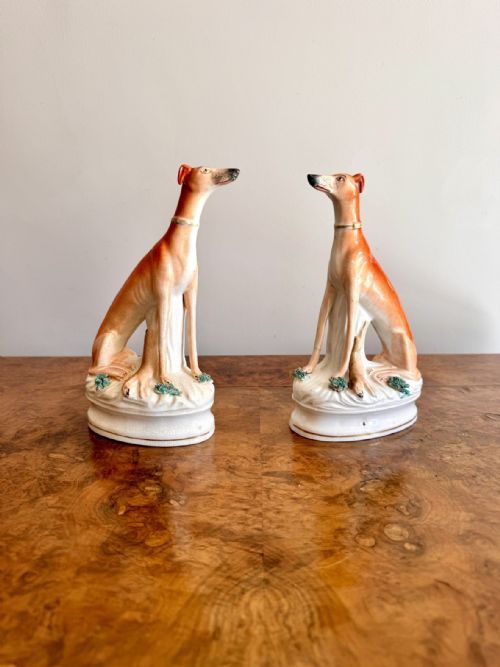
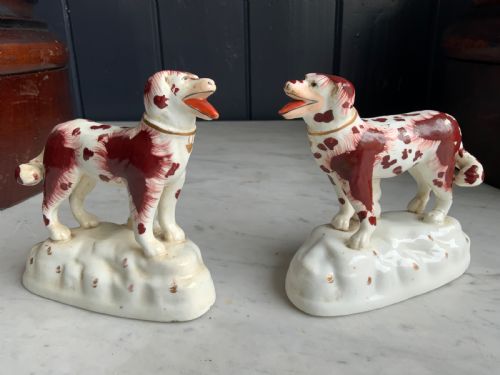
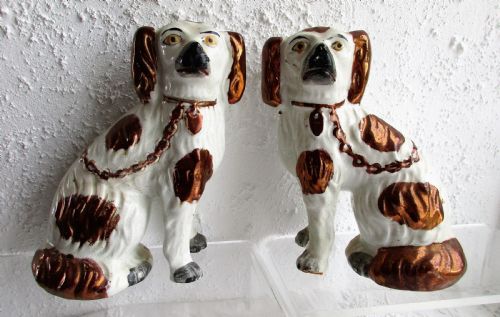
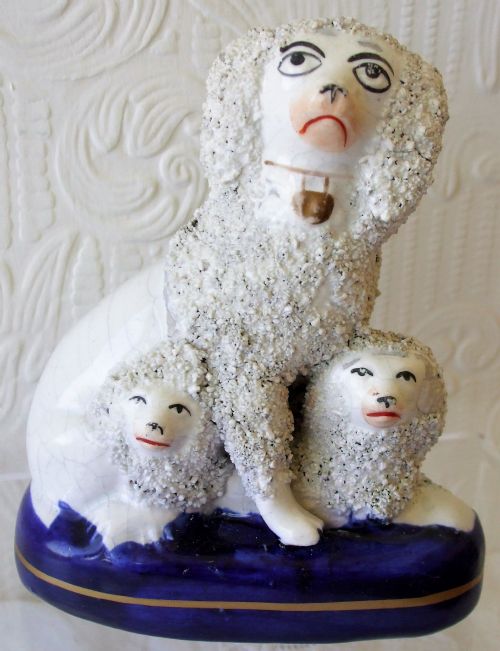
Victorian porcelain dog figurines encompass a variety of decorative figures, pottery groups, and mantel ornaments produced during the nineteenth century. The most common versions met on this page are pairs of Staffordshire spaniels, poodles, and greyhounds, often modelled seated or with pups.
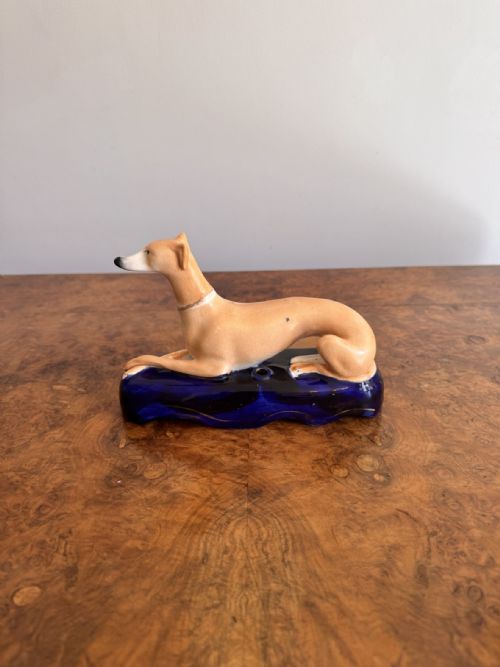
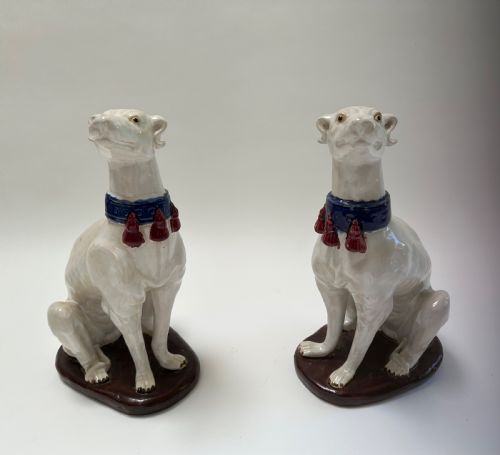
Makers and potteries created these pieces in diverse forms, ranging from miniature porcelain figures to very large pottery groups and functional quill holders. Alongside typical English Victorian Staffordshire works, continental pieces and later adaptations appear across the selections.
The objects frequently depict specific breeds associated with the period, capturing domestic pets as well as hunting dogs and greyhounds. Many examples showcase symmetrical pairs intended to flank a fireplace or centrepiece.
How They Were Made
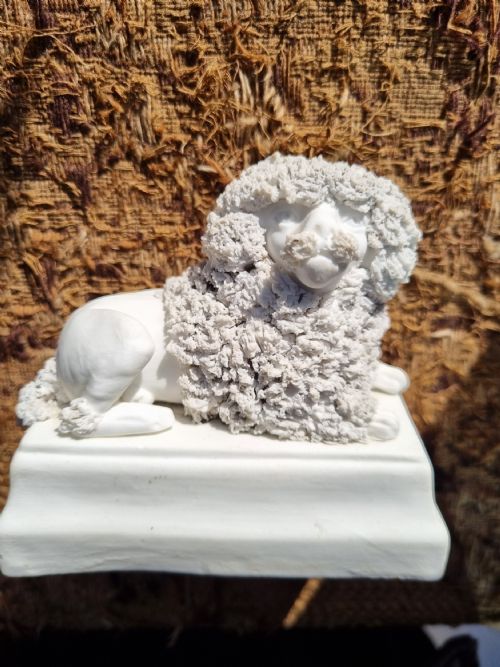
Potters utilised earthenware, porcelain, and ceramic bodies, shaping the figures through moulding and hand-modelling techniques. Parian ware also appears as an unglazed biscuit porcelain body used for sculptural groups.
Surface decoration involved hand-applied paint, enamel, copper lustre, and metallic gilt highlights over a fired glaze. Certain pieces feature detailed surface textures such as clay encrusting to represent fur or natural settings.
Victorian Porcelain Dog Figurines Retail Price Guide 2026
Typical asking prices for victorian porcelain dog figurines among the pieces listed under this phrase on Sellingantiques today, from the lower quarter to the upper quarter. They describe what is for sale here now, not the wider market.
Several poodles arrive accompanied by tiny sculpted pups clinging faithfully to their sides.
What Varies in Quality
Completeness and originality of the glaze, lustre, and gilt surfaces influence the overall aesthetic standard. Pairs that retain matching proportions and clear potting characteristics demonstrate higher atelier standards.
Thomas Parr·Royal Dux Bohemia·James Dudson
The Victorian Porcelain Dog Figurines Glossary
- Staffordshire pottery
- Earthenware and ceramic figures produced by numerous potteries in the Staffordshire region of England. These works formed the backbone of nineteenth-century domestic mantelpiece ornamentation.
- Parian ware
- A fine-grained, unglazed white biscuit porcelain resembling carved marble. Victorian makers utilised this material primarily for classical busts and sculptural animal groups.
- Quill holder
- A desk accessory incorporating a modelled figure with small apertures designed for holding writing feathers. Greyhound and dog figures were frequently adapted for this dual purpose.
- Copper lustre
- A metallic glaze technique producing a reflective, copper-coloured sheen over ceramic bodies. It was often applied to Staffordshire dog figurines to add rich visual contrast.
- Biscuits
- Fired unglazed ceramic ware that provides a porous matte surface ready for painting or glazing. White bisque pieces offer a distinct textural alternative to high-gloss finishes.
Victorian Porcelain Dog Figurines: Frequently Asked Questions
What are Staffordshire dog figurines?
Staffordshire dog figurines are ceramic mantel ornaments typically modelled as seated spaniels, poodles, or greyhounds. They were produced in pairs to decorate nineteenth-century hearths.
Potters shaped these decorative objects using earthenware and porcelain, finishing them with hand-painted details and gilt highlights.
How were these dog figures displayed?
These ceramic figures were traditionally arranged as matching pairs on mantelpieces, flanking clocks or other fireplace ornaments. Their symmetrical design suited the formal interior layouts of the period.
Some variations served practical functions, such as quill holders placed upon writing desks or lamps wired for illumination.
What materials did Victorian potters use?
Potters utilised earthenware, porcelain, and glazed ceramic bodies to create these canine sculptures. Surface decoration relied on hand-applied enamel paint, copper lustre, and metallic gilt.
Parian ware also appears, providing an unglazed white biscuit porcelain that mimics carved marble for sculptural figure groups.
How can I tell different dog breeds apart?
Makers distinguished breeds through characteristic sculptural shapes, such as the feathered ears of spaniels, the clipped coats of poodles, and the slender frames of greyhounds. Pups and baskets were often added to enhance the composition.
Details like facial expressions and posture help identify the specific canine type represented by the artisan.